Put your hand on your chest and be very still. Feel that thump? That’s your heart, and it’s been working nonstop since before you were born. It doesn’t take breaks when you sleep, and it speeds up when you run. Here’s how this amazing pump works.
A pump made of muscle
Your heart is a muscle about the size of your fist, sitting in the middle of your chest, tipped a little to the left. It squeezes to push blood out, then relaxes to fill back up, over and over. Each squeeze is one heartbeat. It beats about 100,000 times a day, and around 3 billion times in a lifetime.
Four rooms, two pumps
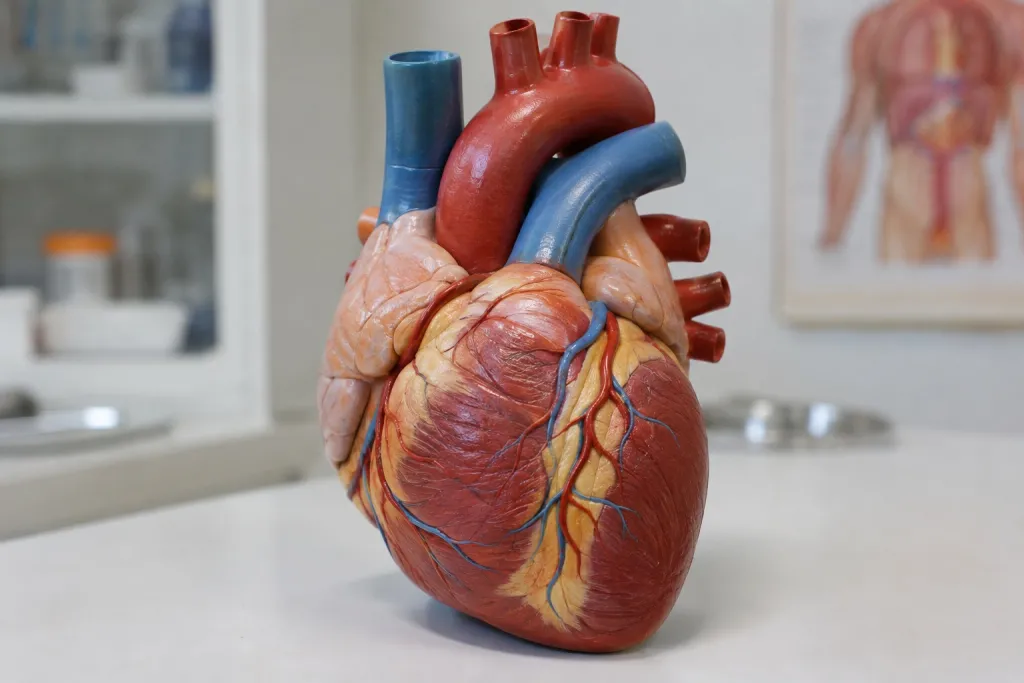
Your heart has four hollow rooms called chambers. The top two are the atria, which collect blood coming in. The bottom two are the ventricles, the strong pumps that push blood out. A wall down the middle splits the heart into a right side and a left side, so it’s really two pumps working together:
- The right side gets used blood from the body, which is low on oxygen, and pumps it to the lungs to pick up fresh oxygen.
- The left side gets oxygen-rich blood back from the lungs and pumps it out to your whole body. It has the thickest, strongest muscle because it has the biggest job.
Explain it like I’m 5
Your heart is like a squishy water pump. It squeezes to push blood all around your body, delivering air and food to every part of you. Then it relaxes and fills up again. Squeeze, relax, squeeze, relax, all day and all night!
What makes the lub-dub sound?
Between the chambers are four valves, flaps that work like one-way doors so blood can’t flow backward. When the ventricles squeeze, the valves between the top and bottom chambers snap shut: that’s the “lub.” When the ventricles finish squeezing, the valves leading out of the heart snap shut: that’s the “dub.” Doctors listen to these sounds with a stethoscope to check that the valves are working well.
Your heart’s built-in spark
Your heart has its own natural pacemaker, a tiny spot that sends out an electrical signal with every beat, telling the muscle to squeeze in just the right order. Your brain can speed it up or slow it down, which is why your heart races when you run or feel nervous and slows when you sleep.
Try it: make a stethoscope and test your heart rate
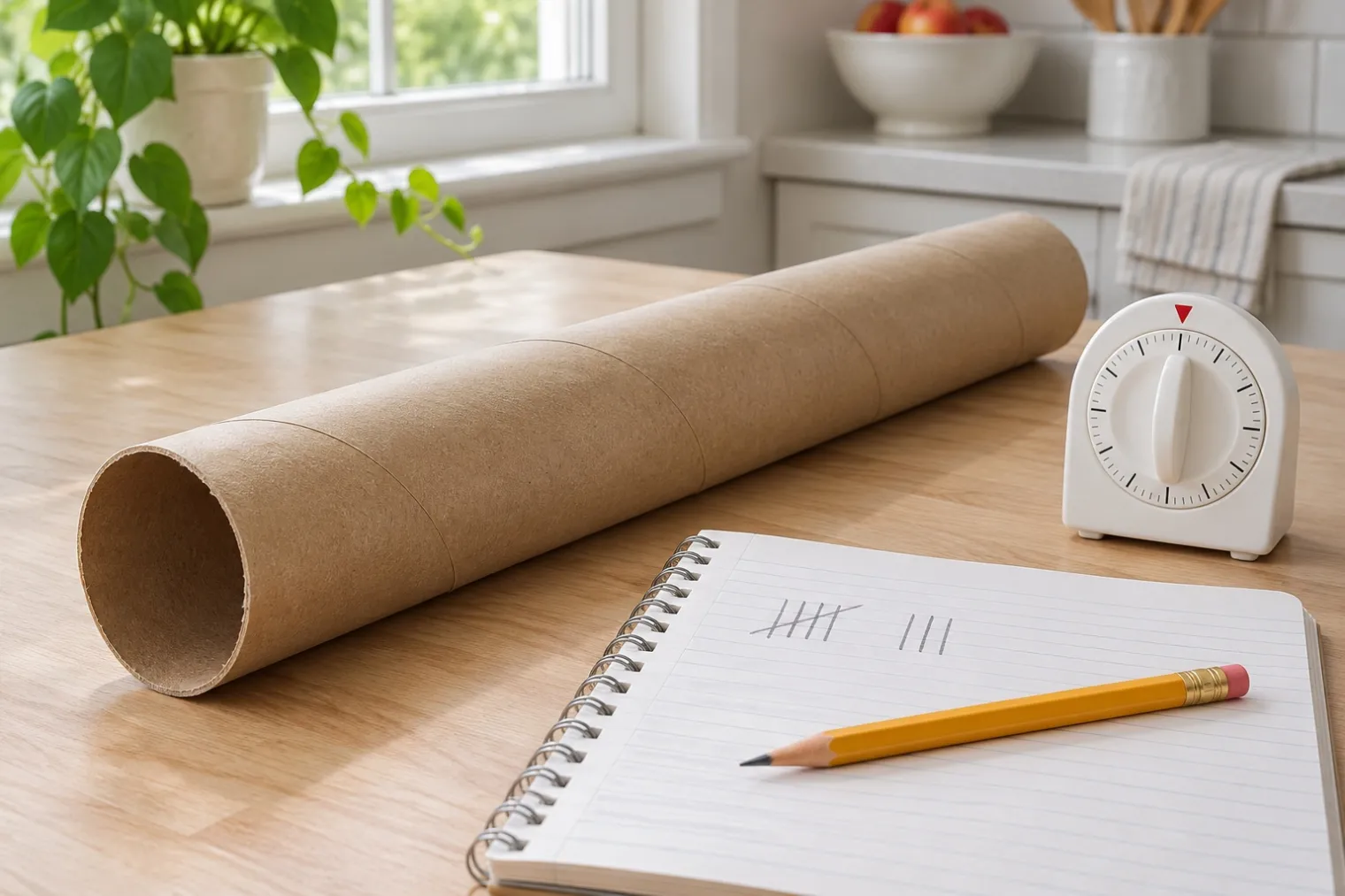
You need: a paper towel tube (or a small funnel), a quiet room, a timer and a partner.
- Have your partner sit still. Put one end of the tube on the left side of their chest and your ear to the other end. Can you hear the lub-dub?
- Count the beats for 15 seconds, then multiply by 4. That’s their heart rate in beats per minute.
- Now have them do 30 jumping jacks. Listen and count again right away.
- Wait 2 minutes, then count once more. Switch places and try it on yourself.
What’s happening: the tube carries the sound straight to your ear, just like the first stethoscope, which was a wooden tube invented in 1816. After exercise, the heart rate jumps up because working muscles need more oxygen, so the heart pumps faster. Then it slowly calms back down.
Keep exploring: Why Is Blood Red? · Why Do We Need Sleep? · How Does a Battery Work?
Words to know
- Chamber
- One of the four hollow rooms inside the heart.
- Atrium
- A top chamber that collects incoming blood. (Two are called atria.)
- Ventricle
- A bottom chamber that pumps blood out.
- Valve
- A flap that lets blood flow only one way.
- Heart rate
- How many times your heart beats in one minute.
- Stethoscope
- A tool doctors use to listen to the heart and lungs.
For grown-ups: the real science
The heart drives two circuits in series: the pulmonary circuit (right ventricle → pulmonary artery → lungs → pulmonary veins → left atrium) and the systemic circuit (left ventricle → aorta → body → venae cavae → right atrium). The first heart sound (S1) is produced by closure of the atrioventricular (tricuspid and mitral) valves at the start of ventricular systole; the second (S2) by closure of the semilunar (pulmonary and aortic) valves at the end of systole.
Each beat is initiated by the sinoatrial node and conducted through the atrioventricular node and the His–Purkinje system; autonomic input modulates rate. Typical resting heart rates are about 70–110 beats per minute for ages 6–12, falling to about 60–100 in teens and adults. René Laennec invented the stethoscope in 1816 using a rolled tube of paper, then a wooden cylinder. At rest, an adult heart pumps about 5 liters of blood per minute.
Questions kids ask next
Is my heart really shaped like a heart?
Not quite. A real heart is more like a lumpy, upside-down pear. The ❤️ shape is just a symbol.
Why do kids have faster heartbeats than adults?
Kids’ hearts are smaller, so they pump less blood with each beat. They beat faster to keep up with a busy, growing body.
How can I keep my heart healthy?
Play actively every day, eat lots of fruits and vegetables, drink water and get plenty of sleep. Exercise makes the heart muscle stronger.
Which animal has the biggest heart?
The blue whale. Its heart weighs about 400 pounds, about as much as two grown-ups. When diving deep, it can slow to just 2 beats a minute!