Most of the hair on our bodies is thin and hard to see. So why do we have two thick, fuzzy stripes right above our eyes? Eyebrows might seem like decoration, but they have important jobs.
Job 1: Keeping your eyes dry
When you run around or get caught in the rain, water and salty sweat slide down your forehead. If they got in your eyes, they’d sting and make it hard to see. Eyebrows are like little rain gutters on a roof:
- Their arch shape sends drips down toward the sides of your face.
- The hairs point sideways, toward your ears, guiding water along with them.
- Your brow bone sticks out a bit, so eyebrows also help shade your eyes from sunlight and catch bits of dust.
Explain it like I’m 5
Eyebrows are like tiny umbrellas for your eyes. They keep sweat and rain from dripping in. They also go up and down to show if you’re surprised, happy or grumpy!
Job 2: Showing how you feel
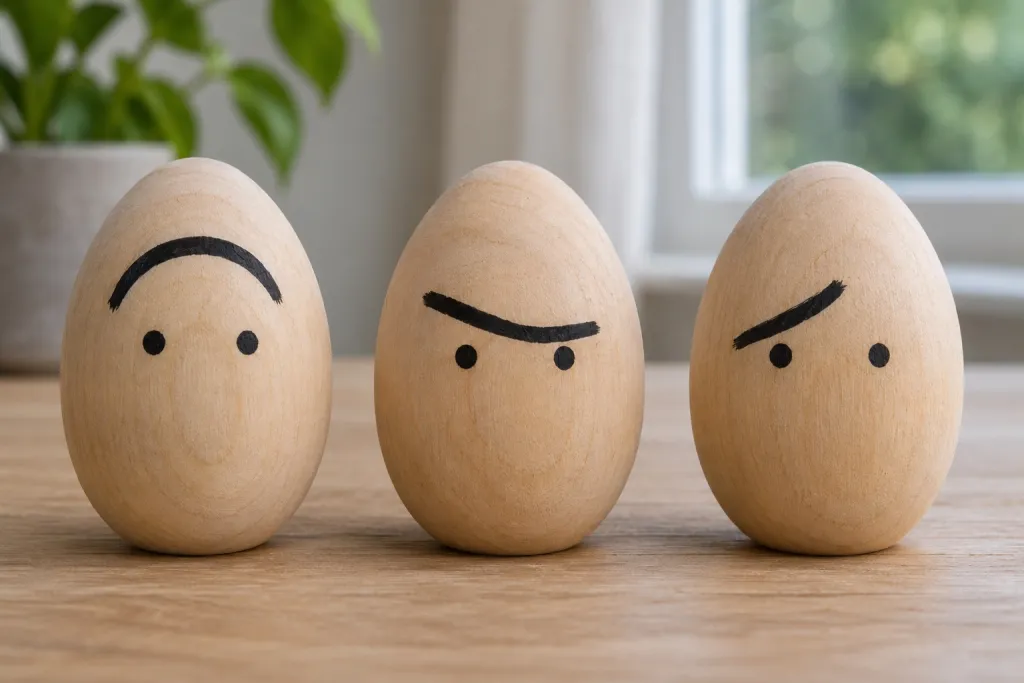
Eyebrows are some of the most expressive parts of your face. Muscles in your forehead can lift them, lower them, pinch them together or raise just one. People read those movements instantly:
- Both up high: surprise or excitement.
- Pulled down and together: anger or concentrating hard.
- Inner ends tilted up: worry or sadness.
- One up: “Really? Are you sure about that?”
People all over the world quickly flash their eyebrows up when they see someone they know, a friendly “hi” that lasts less than half a second. Most people do it without even noticing.
Job 3: Helping us recognize faces
In a 2003 study, scientists showed people photos of famous faces with parts erased. People had a harder time recognizing faces with the eyebrows removed than faces with the eyes removed! Eyebrows are a big part of what makes each face look like itself.
Try it: the eyebrow emotion game
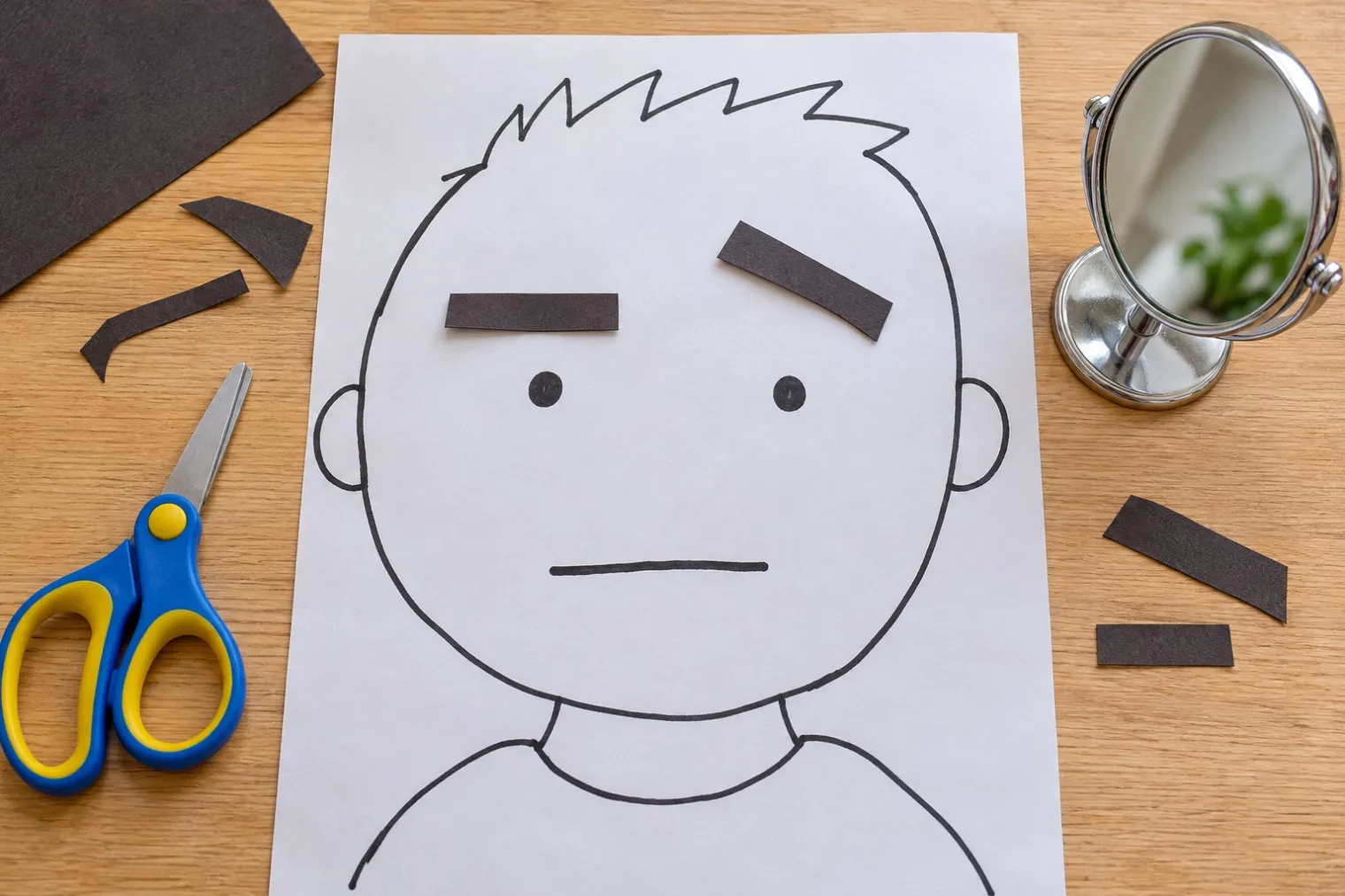
You need: paper, a marker, scissors, a mirror and a partner.
- Draw a big face with eyes and a plain straight mouth, but no eyebrows.
- Cut two eyebrow shapes out of dark paper.
- Take turns placing the eyebrows in different ways: high, low, slanted in, slanted out, one up. Your partner guesses the feeling.
- Now try making the same faces in the mirror with your real eyebrows.
What’s happening: even with the same mouth, the face seems to change feelings just by moving the eyebrows. Your brain is an expert at reading eyebrow messages.
Keep exploring: Why Do We Get Goosebumps? · Why Does Hair Turn Gray? · Why Do We Sneeze?
Words to know
- Brow ridge
- The bony bump above your eyes where your eyebrows sit.
- Expression
- A look on your face that shows how you feel.
- Nonverbal communication
- Sharing messages without words, like with faces and gestures.
- Sweat
- Salty water your skin makes to cool you down.
For grown-ups: the real science
The traditional functional explanation is that eyebrows divert sweat and rain laterally around the orbits, aided by their curvature and the lateral orientation of the hairs. Facial expression is controlled by the frontalis (raises brows), corrugator supercilii (draws them together) and procerus and orbicularis oculi (lower them). The “eyebrow flash” greeting was documented across cultures by ethologist Irenäus Eibl-Eibesfeldt.
Sadr, Jarudi and Sinha (Perception, 2003) found that removing eyebrows from celebrity photos impaired recognition more than removing the eyes. Godinho, Spikins and O’Higgins (Nature Ecology & Evolution, 2018) proposed that as the heavy brow ridges of earlier humans were lost, mobile eyebrows became important for subtle social signaling, such as friendliness and sympathy.
Questions kids ask next
Why don’t eyebrows grow long like hair on your head?
Eyebrow hairs have a very short growing phase, only a few weeks to months, so they stop growing at a short length, fall out and get replaced.
Why can some people raise just one eyebrow?
It takes control of the muscles on each side separately. Some people can do it naturally, and many others can learn with practice in a mirror.
Do animals have eyebrows?
Not like ours, but dogs have a special muscle that lifts the inside of their brows, making “puppy dog eyes” that people find hard to resist.
What about eyelashes?
Eyelashes are the eyes’ other bodyguards. They catch dust and trigger a blink when something gets too close.