Look at a photo of your grandparents when they were young, then look at them now. Their hair has probably changed from brown, black, red or blond to gray or white. Hair doesn’t actually turn gray. Instead, new hairs grow in without any color. Here’s why.
Where hair color comes from
Each hair grows from a tiny pocket in your skin called a follicle. Inside the follicle are color-making cells called melanocytes (say it: muh-LAN-uh-sites). They make a pigment called melanin and pass it into the hair as it grows, like squeezing paint into a tube.
There are two kinds of melanin. One is dark brown and black. The other is red and yellow. The mix you have decides your hair color. Lots of dark melanin makes black hair; a little makes blond hair; lots of the red kind makes red hair.
Why the color fades
Hairs don’t grow forever. Each one grows for a few years, falls out and gets replaced by a new hair from the same follicle. Every time a new hair starts, the follicle needs fresh color-making cells. Those come from a small supply of helper cells called stem cells.
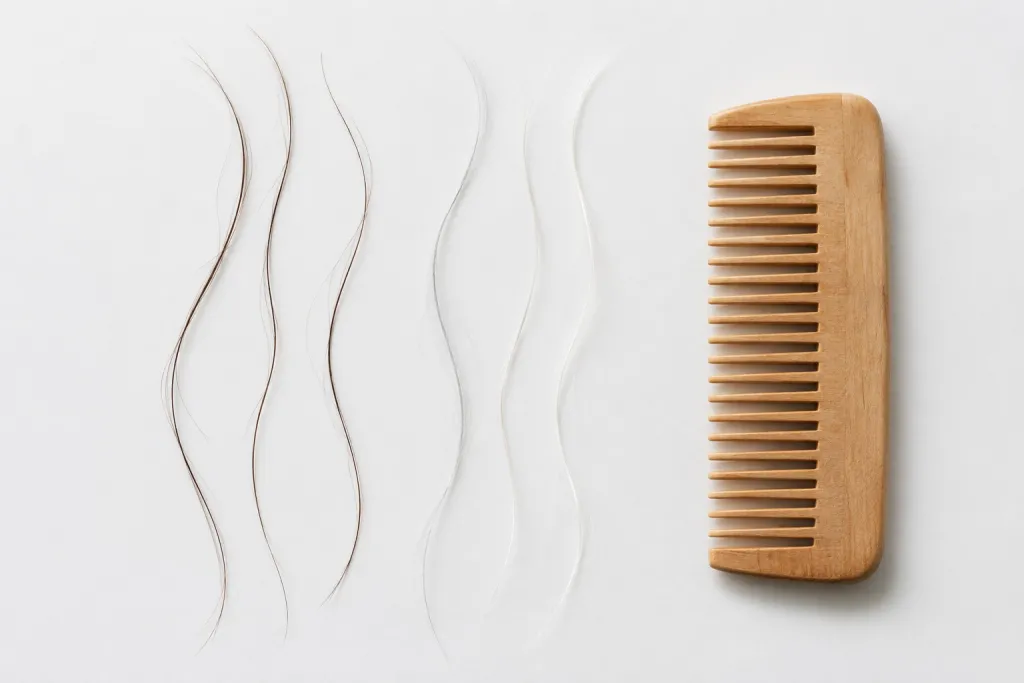
As we get older, that supply slowly runs low or the cells stop working properly. With fewer color-making cells, new hairs grow in lighter, and eventually with no melanin at all. A hair with no color isn’t really gray. It’s see-through, and light bouncing off it makes it look gray, silver or white. Gray-looking heads are usually a mix of colored and colorless hairs.
Explain it like I’m 5
Every hair has tiny helpers that color it in, like crayons. When people get older, the helpers get tired and stop coloring. So new hairs grow in without color, and they look gray or white.
When do people go gray?
It’s different for everyone, and it mostly depends on your genes, the instructions you inherit from your parents. If your parents went gray early, you might too. Many people find their first gray hairs in their 30s, but some notice them in their teens and others not until their 60s.
Can stress make your hair gray?
Maybe a little. In 2020, scientists found that in mice, extreme stress could use up the stem cells that make hair color, causing gray fur. Scientists are still studying how much this happens in people. But one popular story isn’t true: hair can’t turn white overnight, because hair that has already grown out can’t lose its color.
Try it: the family hair survey
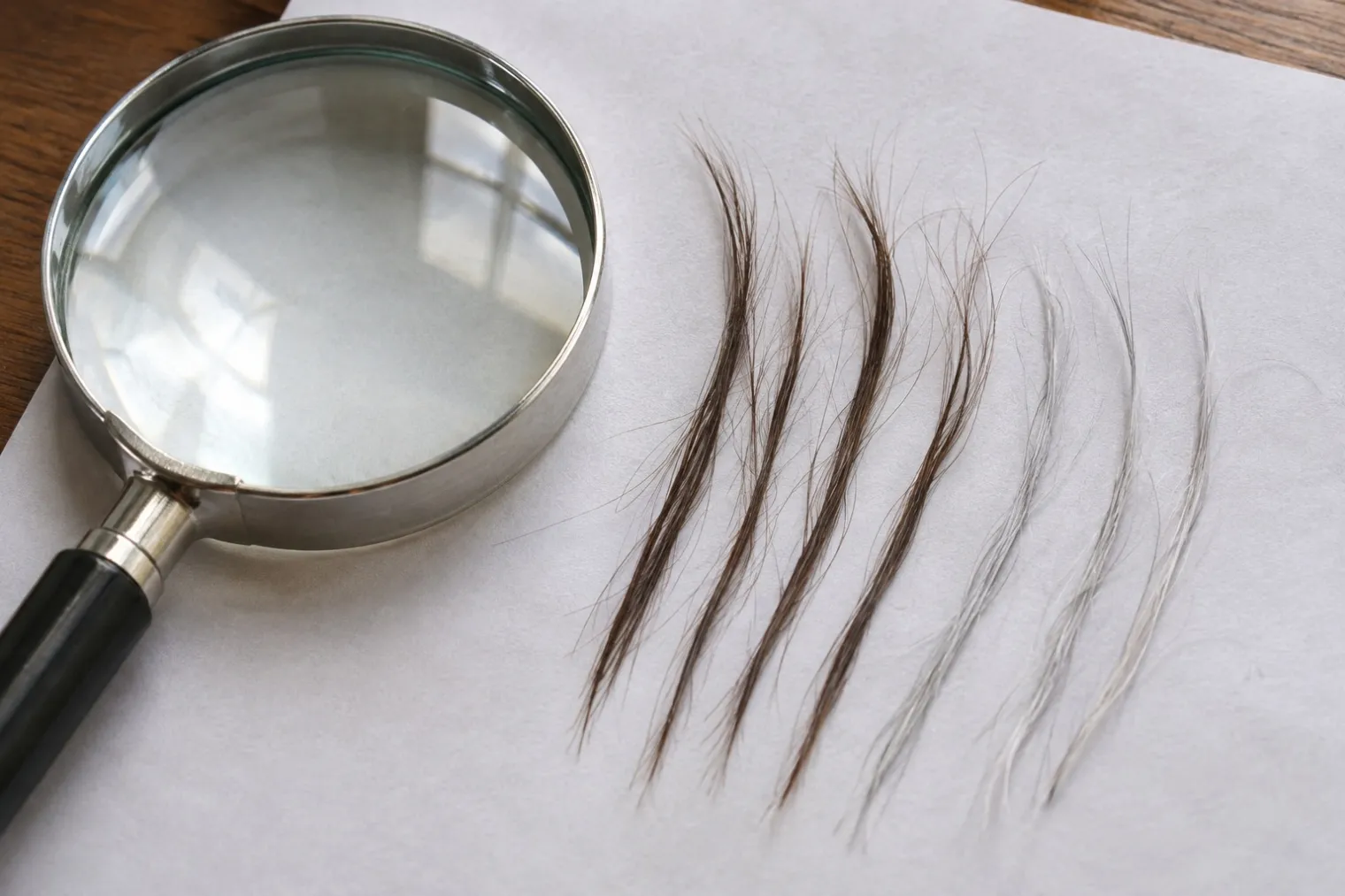
You need: a notebook, family members to interview (in person or by phone) and a magnifying glass.
- Make a chart: name, hair color when young, age they found their first gray hair.
- Interview parents, grandparents, aunts and uncles. (Ask nicely!)
- If someone has a gray hair they don’t mind sharing, look at it next to a colored hair under the magnifying glass. How is it different?
- Look for patterns. Did people in the same family go gray at similar ages?
What’s happening: you’re studying heredity, how traits pass down in families. If relatives went gray at similar ages, that’s genes at work. Up close, the gray hair looks clear or white because it has no melanin inside.
Keep exploring: Why Do We Get Goosebumps? · Why Do We Have Eyebrows? · Why Is Blood Red?
Words to know
- Melanin
- The natural pigment that colors your hair, skin and eyes.
- Melanocyte
- A cell that makes melanin.
- Follicle
- The tiny pocket in your skin that a hair grows from.
- Stem cell
- A helper cell that can make new cells of a certain kind.
- Genes
- Instructions inside your cells that you inherit from your parents.
For grown-ups: the real science
Hair pigmentation comes from follicular melanocytes producing eumelanin (brown-black) and pheomelanin (red-yellow), which are transferred to keratinocytes in the growing hair shaft. Each anagen (growth) phase requires differentiated melanocytes regenerated from melanocyte stem cells (McSCs) in the bulge. Graying (canities) results from McSC depletion or dysfunction. Sun et al. (Nature, 2023) showed that McSCs normally shuttle between follicle compartments and that with age many become stuck in the bulge, unable to mature into pigment-producing cells.
Zhang et al. (Nature, 2020) showed in mice that acute stress activates sympathetic nerves, releasing norepinephrine that drives McSCs into rapid, irreversible depletion. Human data link stress with graying and suggest partial, temporary repigmentation is possible in some cases (Rosenberg et al., eLife, 2021). The timing of graying is strongly heritable; IRF4 was the first gene associated with graying in a large genome-wide study (2016).
Questions kids ask next
If you pull out a gray hair, do two grow back?
No, that’s a myth. Only one hair grows from each follicle. But pulling hairs can damage the follicle, so it’s better to leave them alone.
Can kids get gray hair?
Occasionally, yes. A few gray hairs in a kid are usually just genes and nothing to worry about, though a doctor can check if lots appear.
Do animals go gray?
Many do! Older dogs often get gray muzzles, and older gorillas and chimpanzees go gray too.
Why do eyebrows and beards go gray at different times?
Each follicle has its own supply of color-making cells, so different hairs, and different parts of the body, can run out at different times.