You breathe in and out about 20,000 times every day. All that air goes into your lungs, so what’s in it matters. Most of the time you can’t see what’s floating around in the air, but sometimes you can: a gray haze over a city, smoke from a wildfire, or the dark puff behind an old truck. That’s air pollution.
What is air pollution?
Clean air is mostly two gases, nitrogen and oxygen, plus small amounts of others. Air pollution happens when harmful stuff gets mixed into that air. Some pollution is made of tiny solid bits, like soot, dust and smoke. Some is made of gases you can’t see at all.
The harmful things are called pollutants. A few of the main ones are tiny particles called particulate matter, ground-level ozone (the main part of smog), nitrogen dioxide, sulfur dioxide and carbon monoxide.
Explain it like I’m 5
Air is like a big invisible soup we all share. When we burn things, we drop yucky bits into the soup. Too many yucky bits make the air harder to breathe.
Where does air pollution come from?
- Cars, trucks, planes and ships. Engines that burn gasoline or diesel give off exhaust gases and soot.
- Power plants and factories. Burning coal, oil and gas to make electricity and products releases smoke and gases.
- Fires. Wildfires, burning trash and wood stoves fill the air with smoke.
- Farms. Animal waste and fertilizers give off a gas called ammonia, and plowing kicks up dust.
- Nature. Volcanoes, dust storms and even pollen add things to the air too.
- Inside your home. Cooking smoke, candles, cleaning sprays and fresh paint can pollute indoor air.
10 air pollution facts for kids
- The World Health Organization says almost everyone on Earth, about 99 out of every 100 people, breathes air that’s more polluted than its health guidelines recommend.
- The most harmful pollution particles, called PM2.5, are about 30 times thinner than a human hair. They’re small enough to travel deep into your lungs.
- Smog is a mix of the words smoke and fog. Today’s smog forms when sunlight cooks car and factory pollution into ozone.
- Ozone is helpful high up in the sky, where it blocks the sun’s harmful rays. Down near the ground, it’s a pollutant that irritates lungs.
- Air pollution doesn’t stay put. Wind can carry wildfire smoke and dust thousands of miles, even across oceans.
- Kids breathe faster than adults and take in more air for their size, so polluted air affects them more.
- Air inside buildings can be more polluted than outdoor air. Opening windows and using kitchen fans helps.
- Pollution in the air can mix with rain and make acid rain, which harms lakes, forests and old stone buildings.
- Clean-air laws work. In the United States, the main air pollutants have dropped a lot since the Clean Air Act was passed in 1970, even with many more cars on the road.
- Trees and plants help clean the air by trapping dust on their leaves and taking in some polluting gases.
What is the Air Quality Index?
The Air Quality Index, or AQI, is like a weather report for pollution. In the U.S., it goes from 0 to 500, and the higher the number, the dirtier the air. Each range has a color:
- Green (0 to 50): good. Go play outside!
- Yellow (51 to 100): moderate. Fine for most people.
- Orange (101 to 150): unhealthy for sensitive groups, including kids and people with asthma.
- Red (151 to 200): unhealthy. Take it easy outdoors.
- Purple and maroon (201 and up): very unhealthy to hazardous. Stay inside.
Weather apps and the website AirNow.gov show the AQI where you live. Check it together on a hot summer day or when there’s wildfire smoke.
How can kids help keep air clean?
- Walk, bike or scooter for short trips instead of driving.
- Ask grown-ups not to idle the car while waiting at school pickup.
- Turn off lights and screens when you leave a room, so power plants burn less fuel.
- Plant a tree or start a garden.
- Never burn trash or leaves.
Try it: catch air pollution
Make sticky pollution catchers and find out where the air around your home is dirtiest.
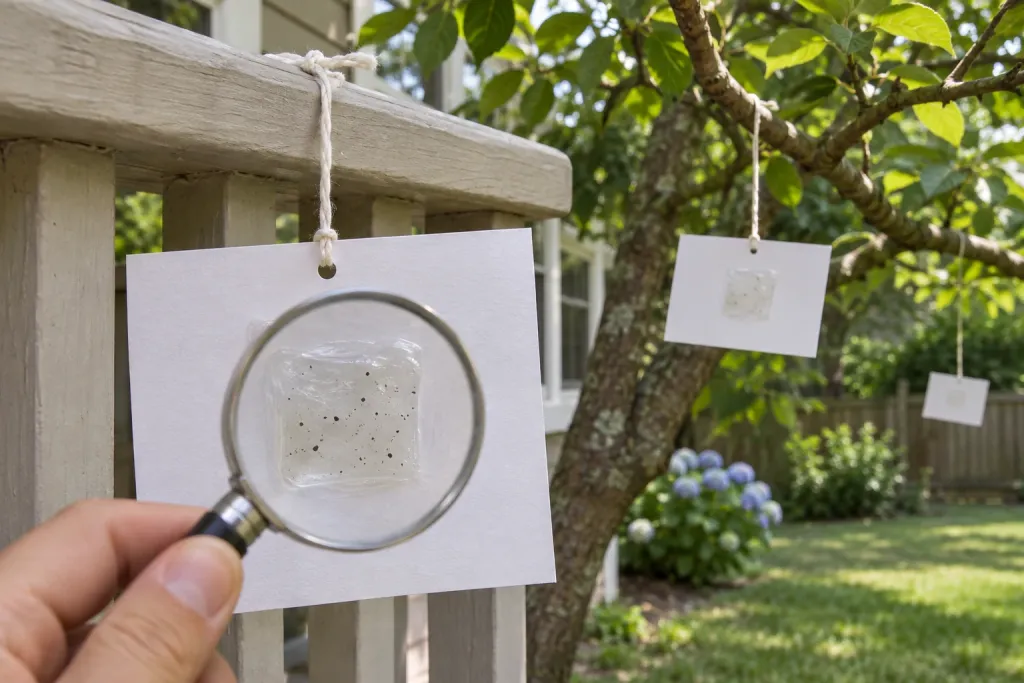
- Take 4 or 5 white index cards. Punch a hole in the top of each and tie on a piece of string.
- Write a location on each card, like “front porch,” “by the road,” “backyard tree” and “kitchen.”
- Spread a thin layer of petroleum jelly in a square in the middle of each card.
- Predict: which card will catch the most dirt?
- Hang each card in its spot, out of the rain, for one week.
- Collect the cards and look at them with a magnifying glass. Rate each from 1 (clean) to 5 (super dirty), and count specks inside a small square.
What’s happening: tiny particles floating in the air bump into the sticky jelly and get stuck. Cards near busy roads usually catch the most, because car exhaust and road dust put lots of particles into the air. You’ll probably also catch pollen and bits of soil, which are natural, not pollution. The very smallest particles are too tiny to see, even with a magnifying glass, so the real amount is more than you can count.
Keep exploring: Make a Lung Model · DIY Water Filter · Oil Spill Experiment
Words to know
- Pollutant
- Something harmful that gets into air, water or soil.
- Exhaust
- The gases and soot that come out of an engine.
- Smog
- A brownish haze made when sunlight reacts with pollution.
- Particulate matter
- Tiny bits of solid or liquid floating in the air, like soot and dust.
- Ozone
- A gas that protects us high in the sky but is a pollutant near the ground.
- AQI
- The Air Quality Index, a number and color that tell how clean the air is today.
For grown-ups: the real science
The U.S. EPA regulates six “criteria” pollutants: particulate matter (PM10 and PM2.5), ground-level ozone, nitrogen dioxide, sulfur dioxide, carbon monoxide and lead. Ozone is a secondary pollutant: it isn’t emitted directly but forms when nitrogen oxides and volatile organic compounds react in sunlight, which is why ozone peaks on hot, sunny afternoons. PM2.5 is considered the most harmful to health because it penetrates deep into the lungs and can enter the bloodstream.
The World Health Organization links outdoor and household air pollution together to millions of premature deaths each year, making it one of the largest environmental health risks worldwide. Children are more vulnerable because their lungs are still developing and they breathe more air per pound of body weight. On high-AQI days, limiting strenuous outdoor play, keeping windows closed during smoke events and running a HEPA air purifier indoors all reduce exposure.
Questions kids ask next
What are the main causes of air pollution?
Burning fuels is the biggest cause: gasoline and diesel in vehicles, and coal, oil and gas in power plants and factories. Fires, farming, and natural sources like volcanoes and dust storms add more.
Can you see air pollution?
Sometimes. Smoke, haze and smog are visible, but many pollutant gases, like carbon monoxide, are invisible. That’s why scientists use special sensors to measure air quality.
Is air pollution the same as climate change?
They’re connected but different. Air pollution is stuff in the air that harms health right where it is. Climate change is caused mostly by greenhouse gases like carbon dioxide trapping heat around the whole planet. Burning fossil fuels causes both.
Do plants really clean the air?
Trees outdoors help by trapping dust and taking in some gases. A few houseplants make your room nicer, but they can’t clean indoor air nearly as well as opening a window or using a fan.