This post contains affiliate links. As an Amazon Associate, TryScience earns from qualifying purchases, at no extra cost to you. Learn more.
Take a deep breath. Did you feel your chest get bigger? You just used a muscle most people have never heard of, and in this experiment kids build a model that shows exactly how it works. A plastic bottle becomes your chest, a balloon becomes your lung, and when you pull on the “diaphragm,” the lung fills with air all by itself.
It takes about 20 minutes, costs almost nothing, and makes breathing make sense. Stick around for the bonus: a way to measure how much air your own lungs can hold.
Grown-up safety check
- A grown-up cuts the bottle. Plastic edges can be sharp, so cover the cut edge with a strip of tape.
- Balloons and balloon pieces are a choking hazard for little kids, and some people are allergic to latex. Use latex-free balloons if needed.
What you need
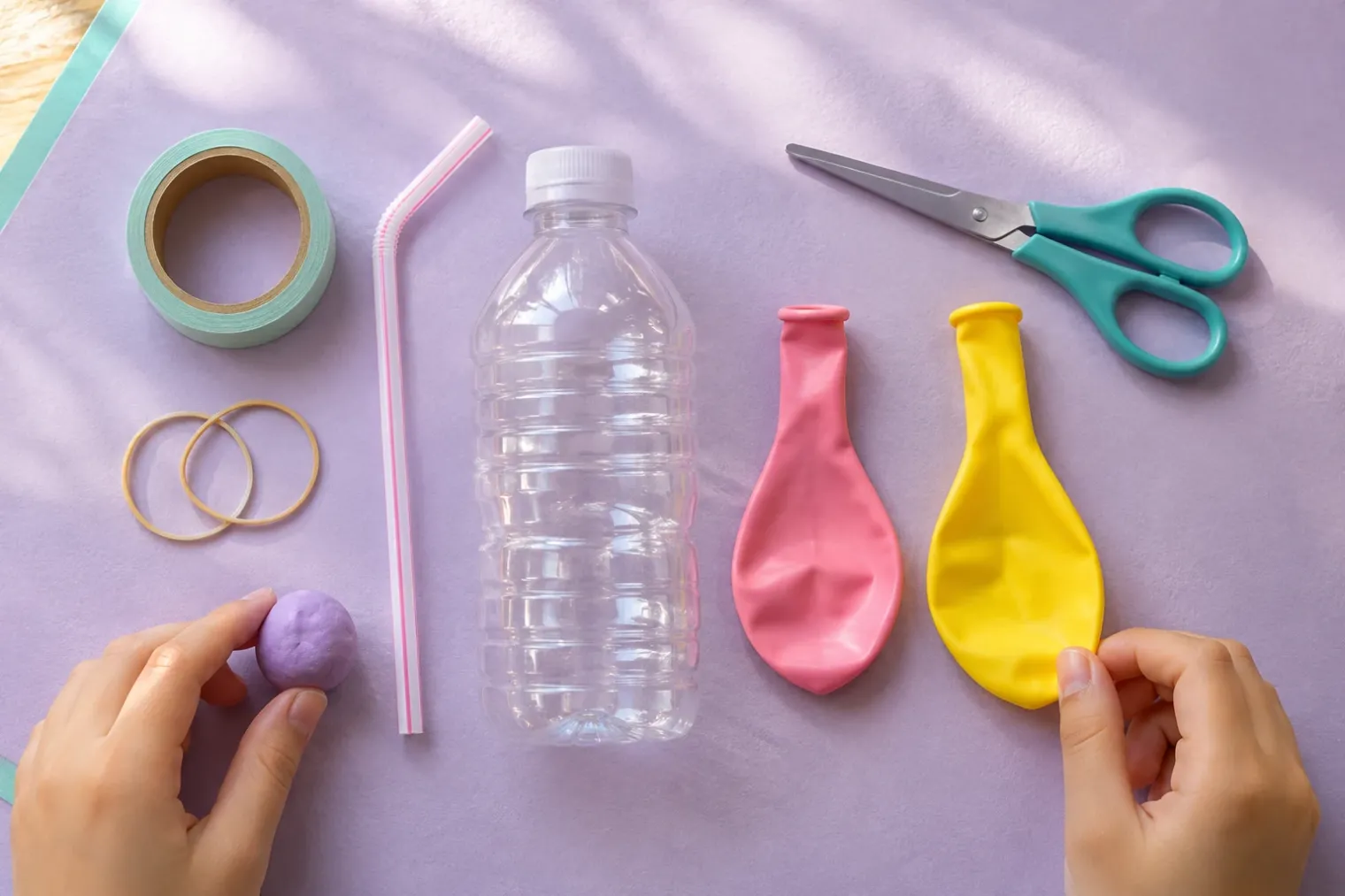
- An empty plastic water or soda bottleA 16-ounce to 1-liter bottle works best.you have this
- 2 balloonsRegular party balloons. One is the lung and one is the diaphragm.Shop balloons
- Scissors or a craft knifeFor a grown-up to cut the bottle.you have this
- Tape and a rubber bandTo seal everything airtight.you have this
- For two lungs (optional)A bendy straw, a second balloon and some modeling clay.you have this
Let’s build a lung
Cut the bottle
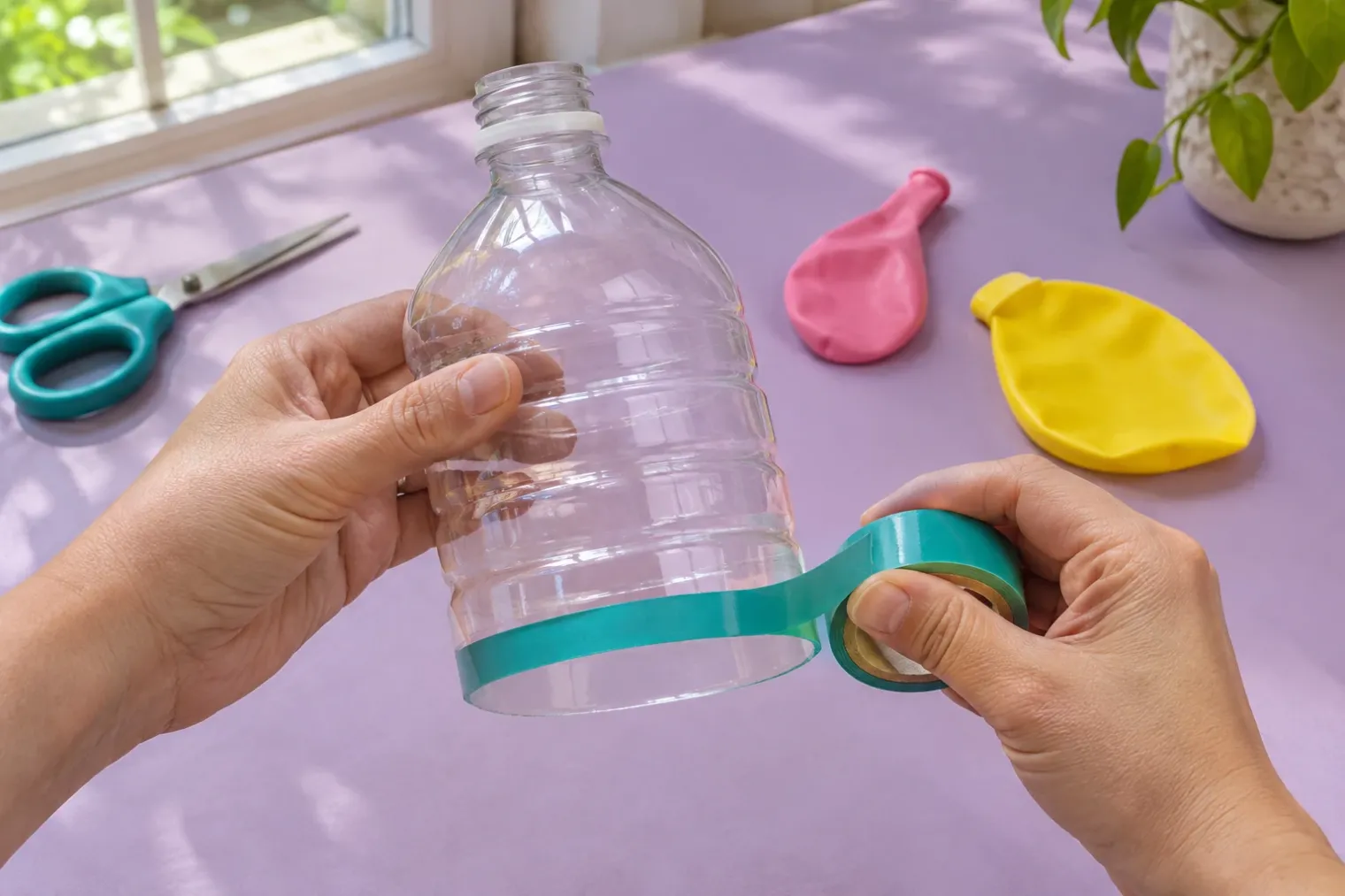
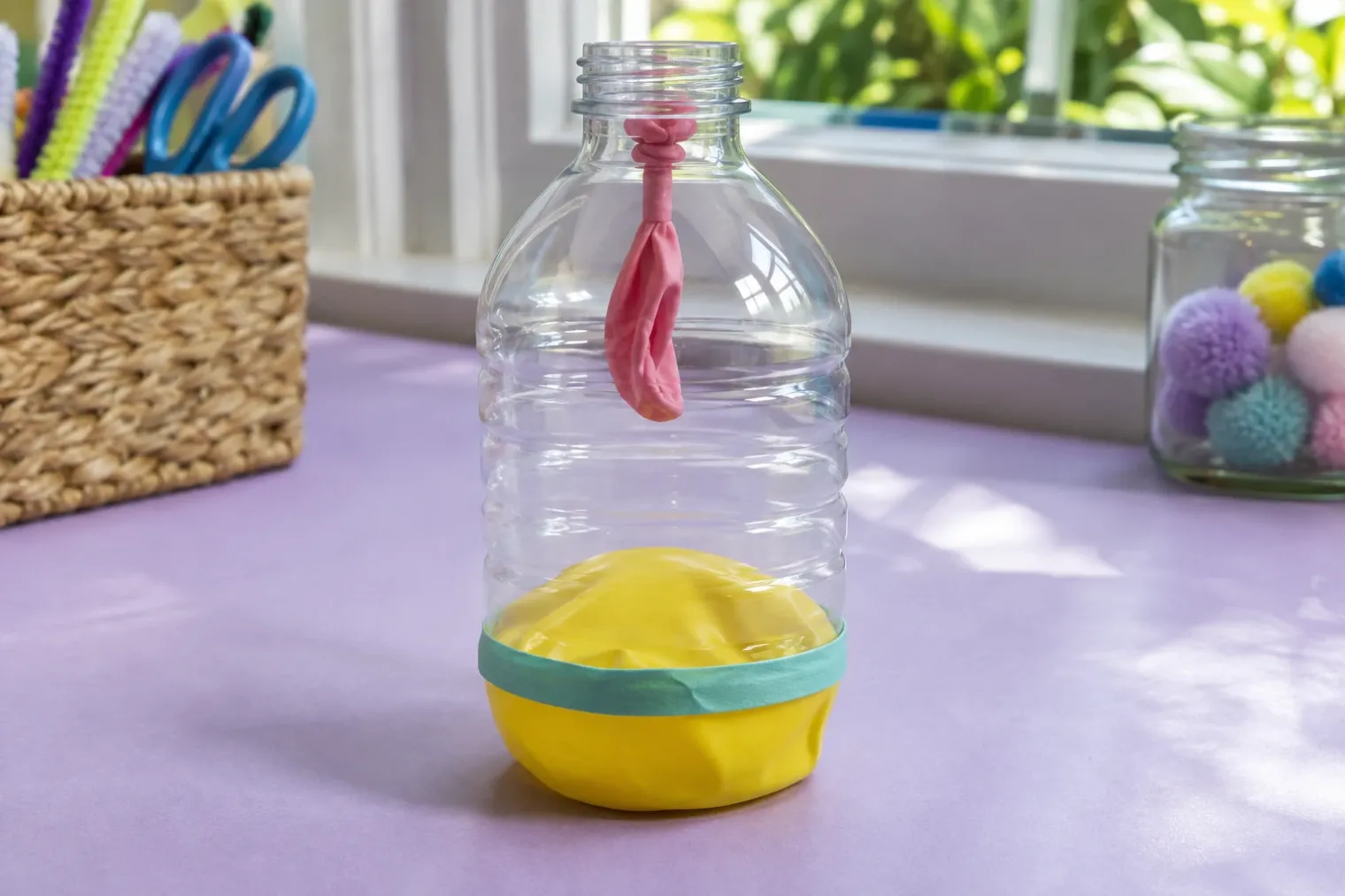
A grown-up cuts the bottom off the bottle, about a third of the way up. Keep the top part with the opening. Cover the cut edge with tape.
Add the lung
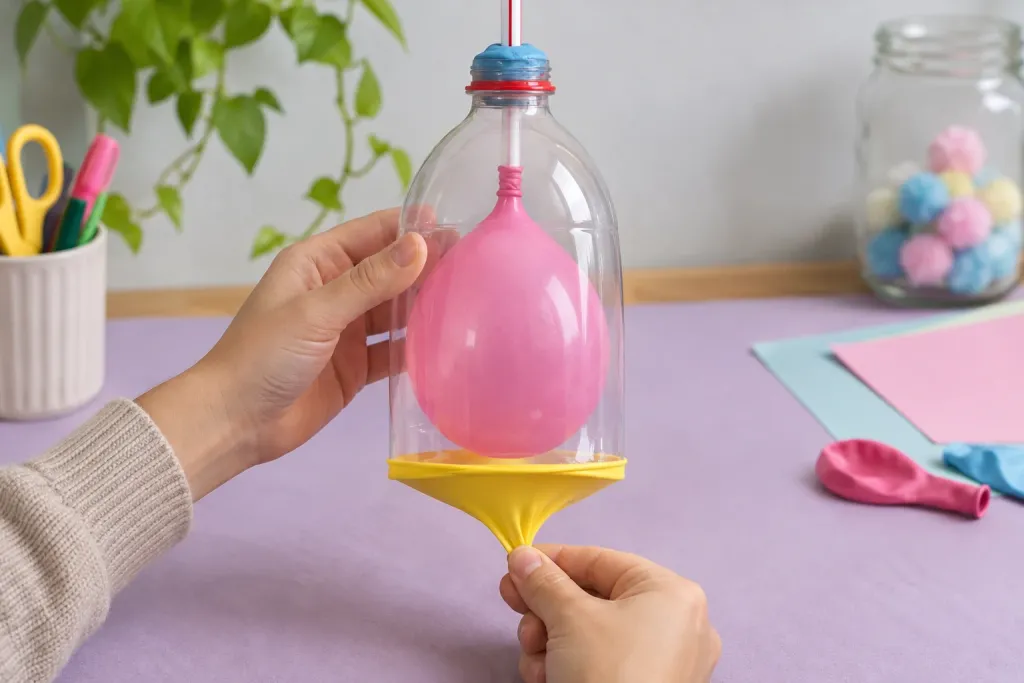
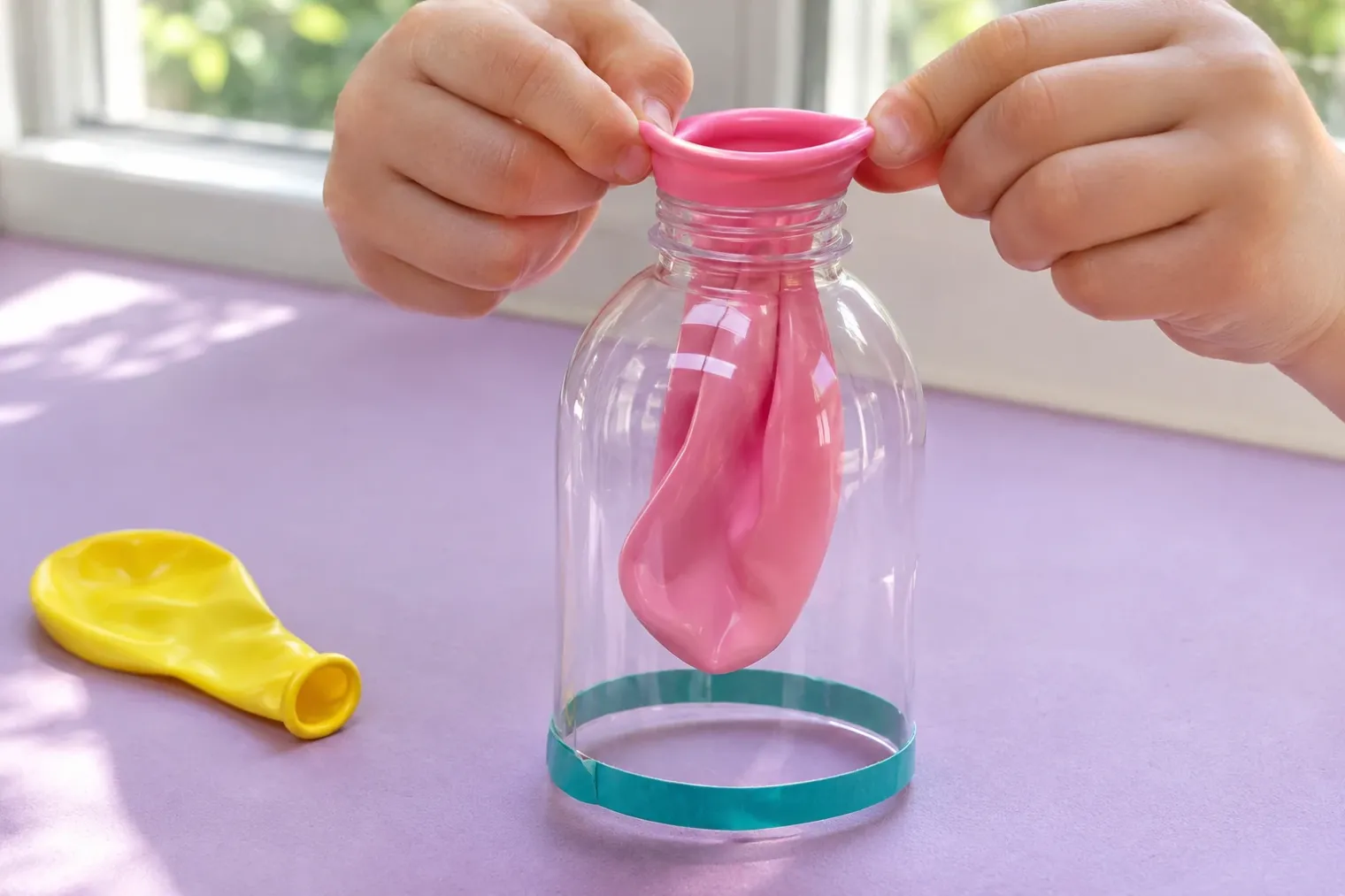
Push one balloon down inside the bottle through the cut end, then stretch its neck up and over the bottle’s mouth so it hangs inside. This balloon is your lung, and the bottle opening is your windpipe.
Make the diaphragm
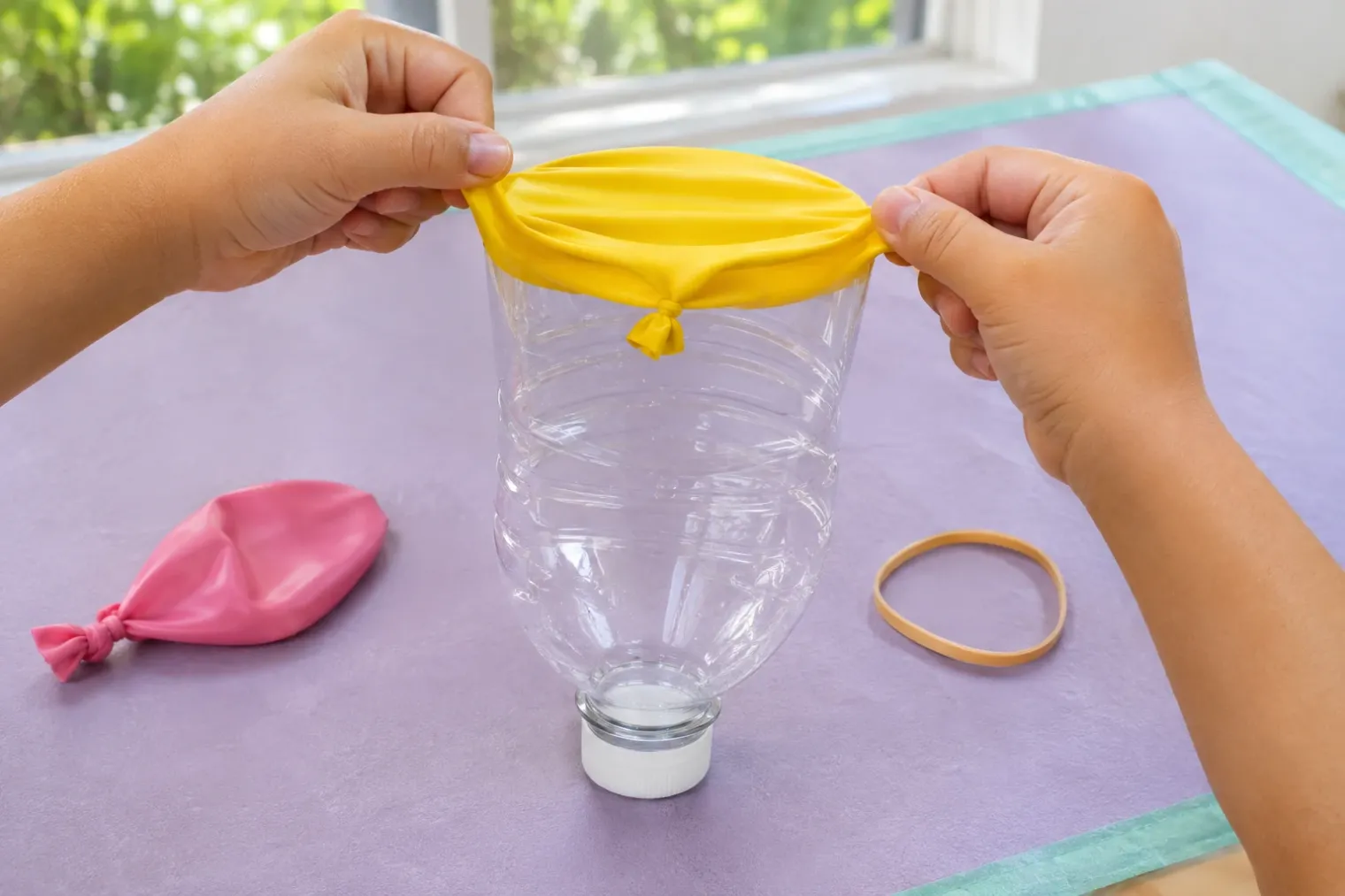
Tie a knot in the neck of the second balloon, then cut off the top of the round part. Stretch the cut balloon over the open bottom of the bottle like a drum, with the knot hanging down. Wrap a rubber band or tape around it so no air can sneak in.
It must be airtight. If air leaks in, the lung won’t move.
Breathe in
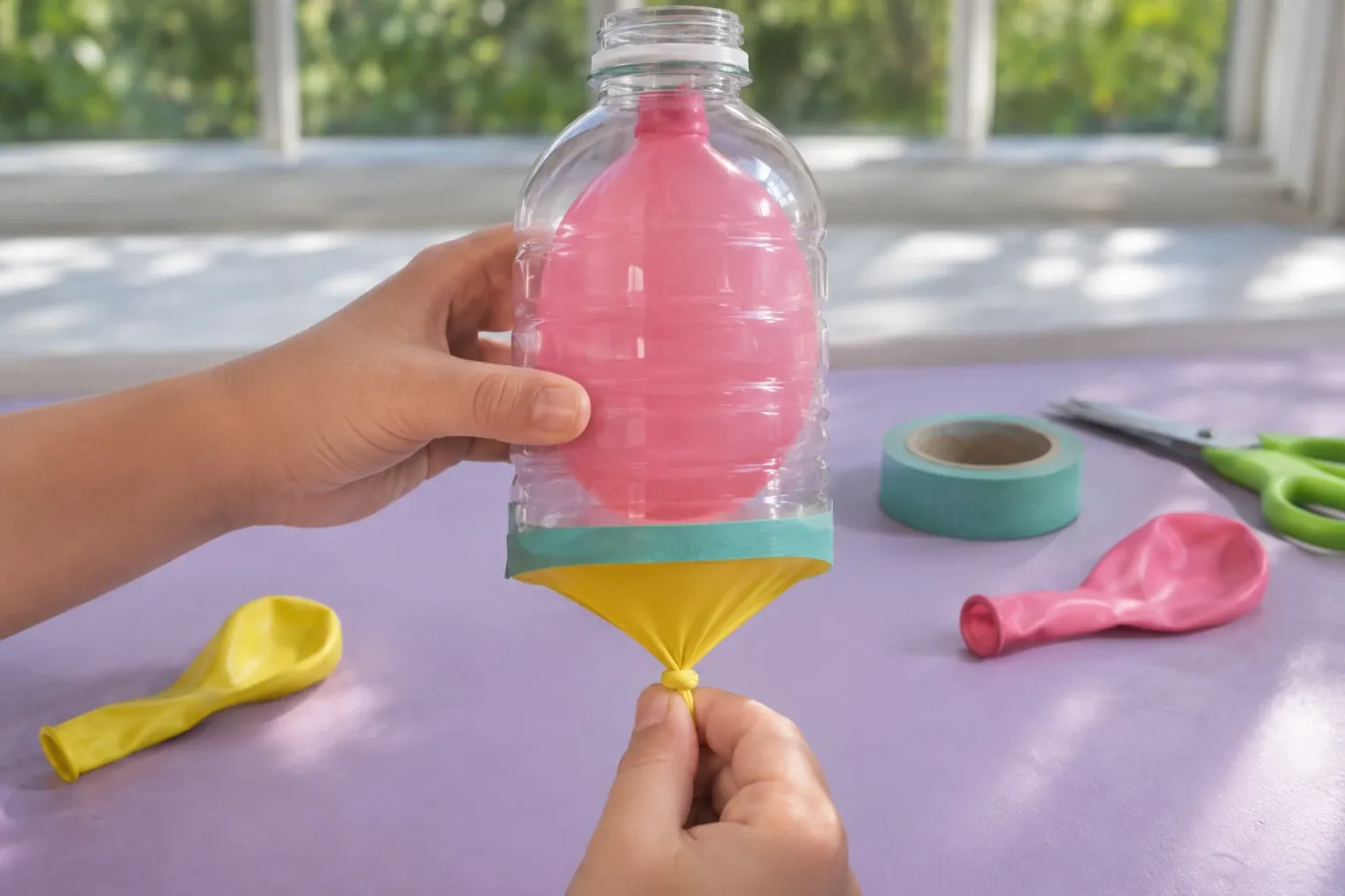
Gently pull down on the knot. Watch the balloon inside the bottle puff up with air. You just made your model breathe in!
Breathe out
Let go of the knot, or push it gently up into the bottle. The lung shrinks as air rushes back out. Pull and release a few times and breathe along with your model.
Bonus: give it two lungs
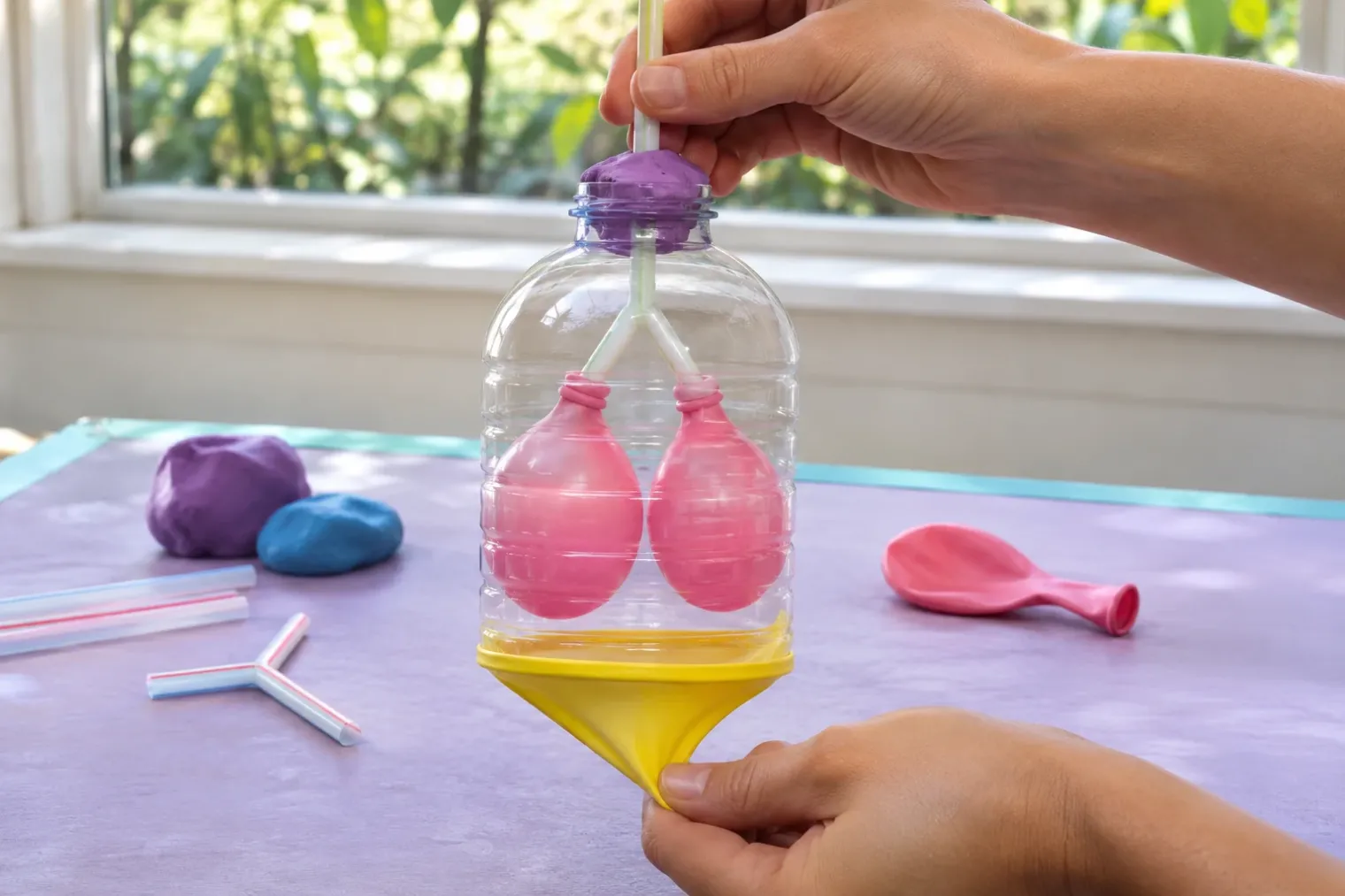
You have two lungs, not one. Cut a bendy straw into a Y shape by taping two short straw pieces to the end of a longer one, put a balloon on each short end, and seal the long end through the bottle opening with modeling clay. Now pull the diaphragm and watch both lungs fill.
What’s happening?
Your lungs don’t have muscles of their own, so they can’t suck in air by themselves. Instead, a dome-shaped muscle under your lungs called the diaphragm does the work.
When the diaphragm pulls down, it makes more room inside your chest. More room means the air inside spreads out and its pressure drops, so air from outside rushes in through your nose and mouth to fill your lungs. When the diaphragm relaxes and moves back up, it squeezes the space smaller and pushes the air back out. Your model works the same way: pulling the balloon diaphragm makes more space inside the bottle, and air rushes into the balloon lung.
Your ribs help too. Muscles between your ribs lift them up and out when you take a big breath, making even more room. Put your hands on your ribs and breathe deeply to feel them move. Breathing works hand in hand with your heart, which pumps the fresh oxygen around your body. Learn more in how does the heart work?
For grown-ups: a little deeper
This model demonstrates Boyle’s law: at a constant temperature, the pressure of a gas falls as its volume increases. Contracting the diaphragm and the external intercostal muscles enlarges the thoracic cavity, lowering intrapleural and then alveolar pressure below atmospheric pressure, so air flows in. Quiet exhalation is mostly passive, from elastic recoil of the lungs and chest wall. The model isn’t perfect: real lungs are attached to the chest wall by the pleural membranes, there’s no empty space around them, and the chest wall moves too, not just the diaphragm. A typical adult moves about half a liter of air per relaxed breath, and a deep breath can move several liters.
Bonus experiment: measure your lung capacity
How much air can you blow out in one breath? That’s called your vital capacity, and you can measure it with a big plastic bottle and a sink or a tub of water.
- Mark lines on the side of an empty 2-liter bottle every 100 milliliters, using a measuring cup of water to get them right.
- Fill the bottle to the top with water, cover the opening with your hand, and turn it upside down in a sink or tub with a few inches of water. Take your hand away underwater. The bottle should stay full.
- Slide one end of a bendy straw or a piece of clean aquarium tubing up into the bottle’s mouth.
- Take the biggest breath you can, then blow out through the tube in one long breath. Your air pushes water out of the bottle.
- Read how much air is trapped at the top. That’s how much air you breathed out!
Compare with family members. Does a taller person hold more air? Try it again after running in place for a minute. Use a fresh straw or tube for each person.
Make it a real experiment
- Leaky lungPoke a tiny hole in the bottle and try again. Why does the lung stop filling? (This is a little like what happens when a real lung collapses.)
- Bottle sizeBuild models with a small and a large bottle. Which one fills the balloon more?
- Breaths per minuteCount your breaths for a minute sitting still, then after jumping jacks. What changes?
Questions and troubleshooting
Why won’t my balloon lung inflate?
There’s almost always an air leak, usually around the diaphragm balloon or the bottle opening. Add more tape and a tight rubber band so the bottle is completely sealed.
What does each part of the lung model represent?
The bottle is your chest, the balloon inside is a lung, the bottle opening is your windpipe (trachea), and the stretched balloon on the bottom is your diaphragm. In the two-lung version, the Y-shaped straw stands in for the tubes that branch into each lung, called bronchi.
What is the diaphragm?
It’s a dome-shaped muscle that sits under your lungs and separates your chest from your belly. When it tightens and flattens, you breathe in. When it relaxes, you breathe out. Hiccups happen when it twitches by surprise!
How much air do kids’ lungs hold?
It depends a lot on how big you are. Many kids can blow out one to two liters in one big breath, and adults often blow out three to five. Your measurement from the bonus experiment is your own personal number.