This post contains affiliate links. As an Amazon Associate, TryScience earns from qualifying purchases, at no extra cost to you. Learn more.
A terrarium is a tiny garden inside a clear container. Seal the lid and something amazing happens: the plants water themselves. Water evaporates, drips down the glass like rain, and soaks back into the soil, over and over. Some closed terrariums have kept going for decades with almost no care.
Here’s how to make a terrarium with kids, which plants to pick, and the science that keeps your mini world alive.
Grown-up safety check
- Wear gloves when handling potting soil, and wash hands afterward. Soil can contain bacteria and fungi.
- Use a plastic container for young kids, or have a grown-up handle glass jars.
- Check that your plants aren’t toxic to pets if a cat or dog might nibble them.
What you need
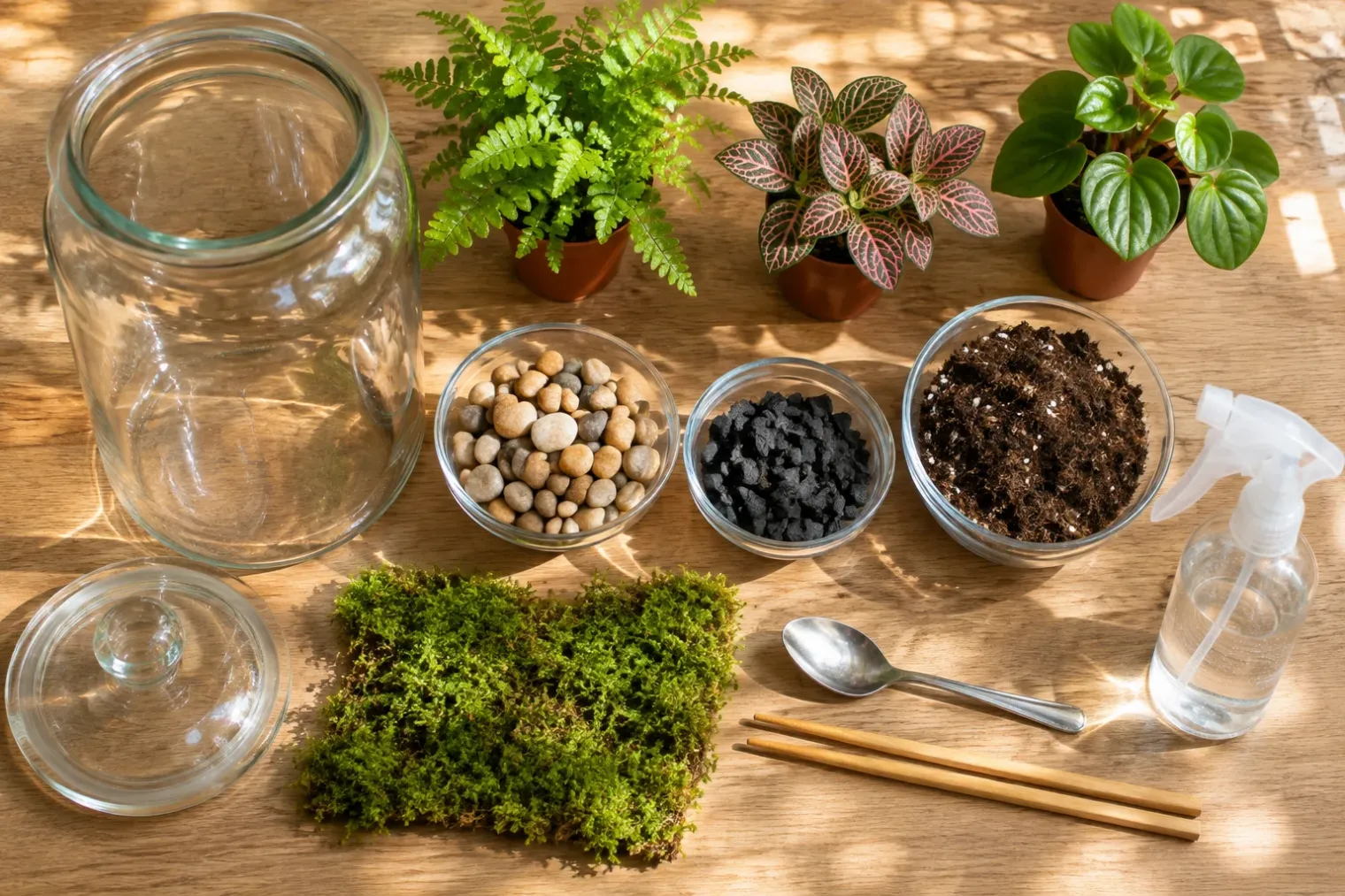
- A clear container with a wide mouthA big mason jar, a fishbowl, a clear plastic jar or a glass jar with a lid.Shop jars
- Small pebbles or aquarium gravelFor the drainage layer.you have this
- Activated charcoal (optional)A thin layer helps keep a closed terrarium fresh.Shop charcoal
- Moss (sheet or live moss)Keeps soil from sinking into the gravel and looks great.you have this
- Potting soilRegular indoor potting mix for closed terrariums, cactus mix for open ones.you have this
- 2 to 4 small plantsSee the plant list below.you have this
- A spoon, a chopstick and a spray bottleFor placing soil, poking holes and misting.you have this
- Or grab a kitA kids’ terrarium kit comes with the jar, soil, seeds and decorations.Shop kits
How to make a terrarium
Clean the jar
Wash the container with warm, soapy water and rinse it well. A clean jar helps stop mold from growing later.
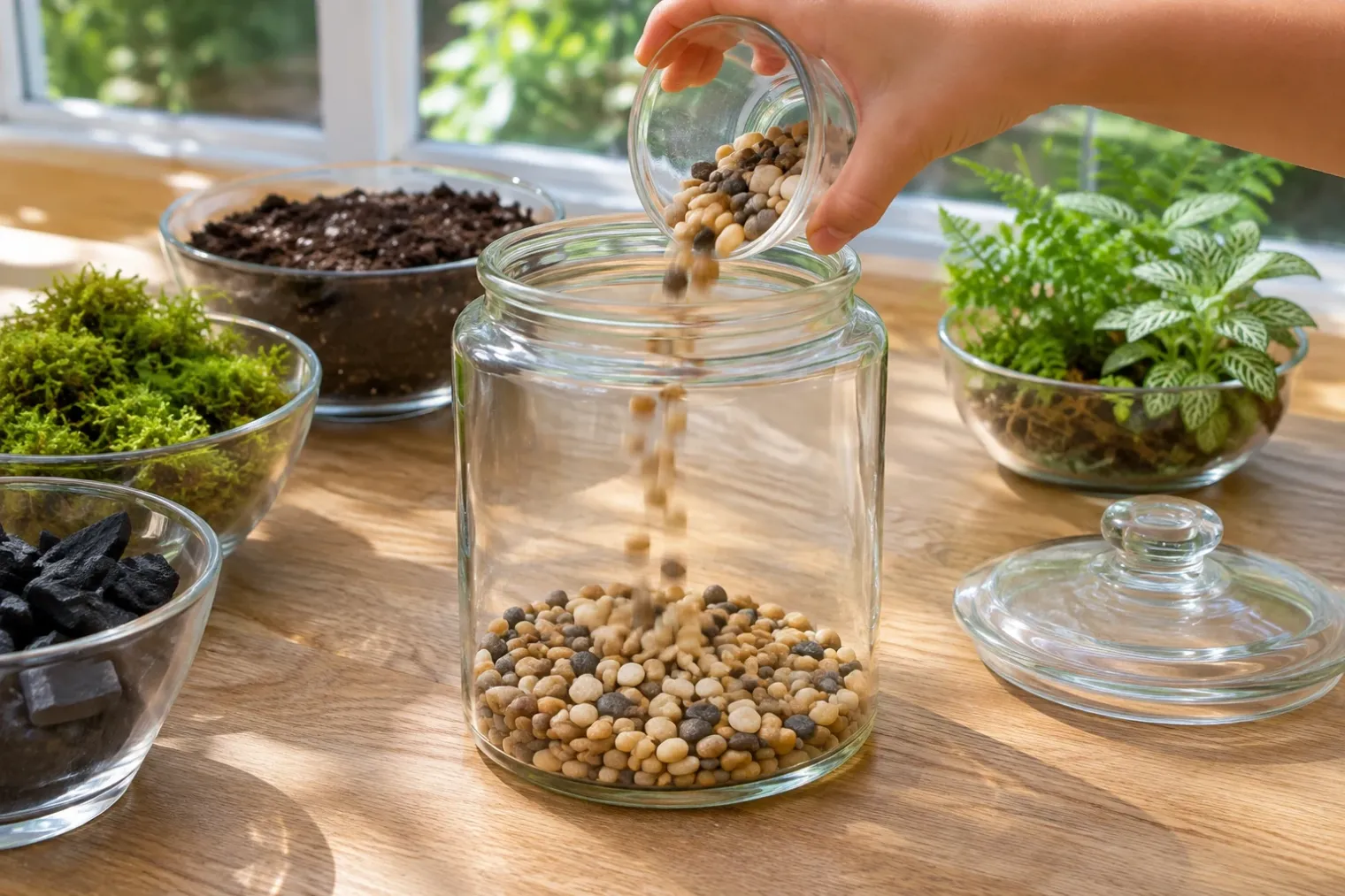
Add the drainage layer
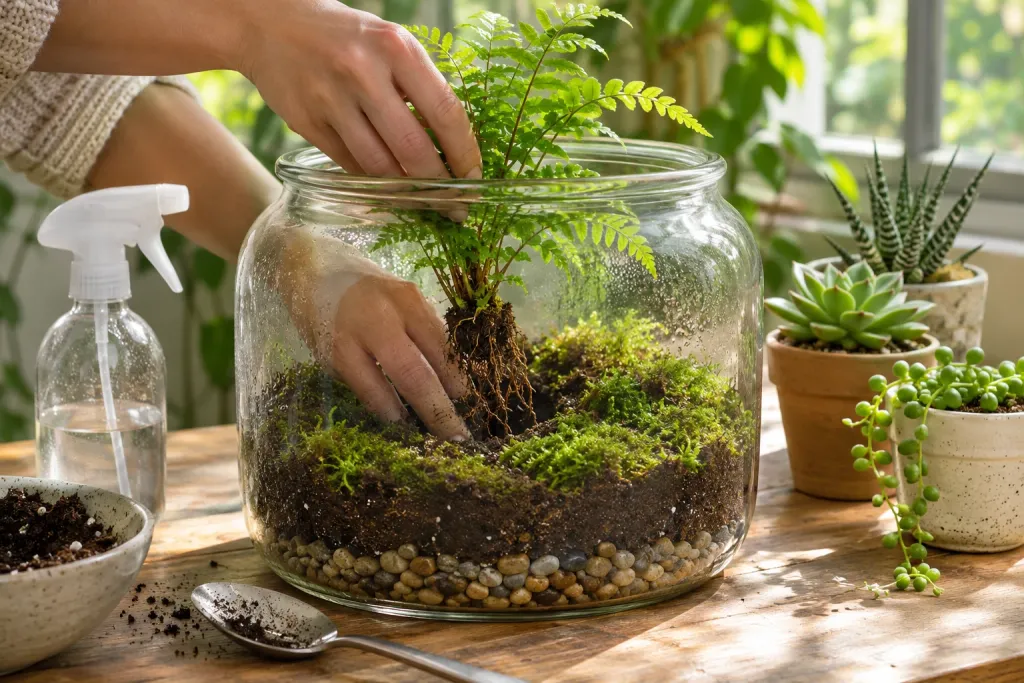
Pour in about 1 inch of pebbles or gravel. Terrarium jars have no hole in the bottom, so extra water collects here instead of drowning the roots.
Add charcoal and moss
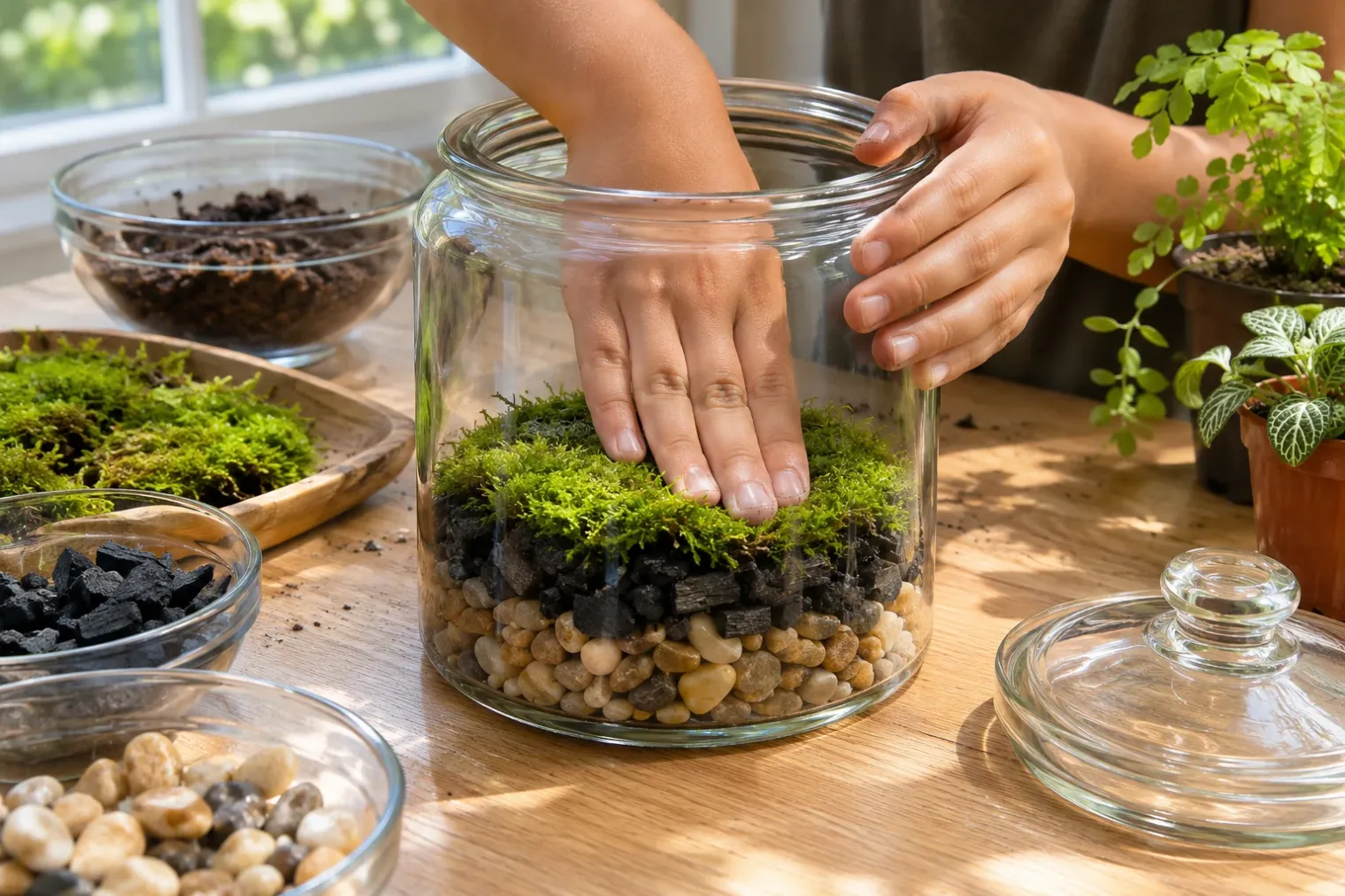
Sprinkle a thin layer of activated charcoal over the pebbles if you have it. Then lay a flat piece of moss on top, green side down, to make a barrier between the rocks and the soil.
Add the soil
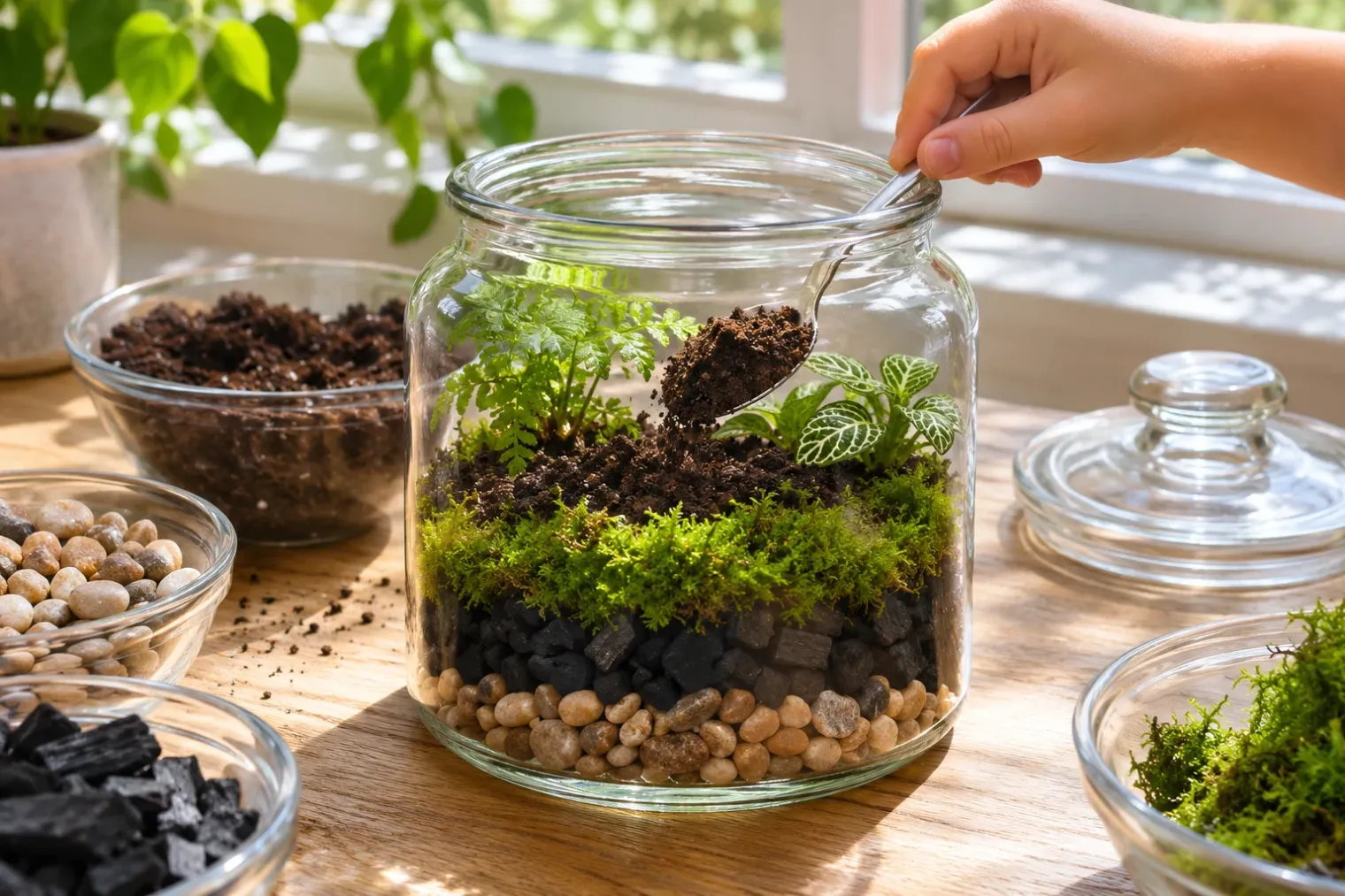
Spoon in 2 to 3 inches of slightly damp potting soil. Make it deep enough to cover the plants’ roots. You can slope it higher in the back to make little hills.
Plant your plants
Poke a hole with a chopstick, gently loosen each plant’s roots, and press it into the soil. Put taller plants in the back and smaller ones up front. Leave space so leaves don’t press against the glass.
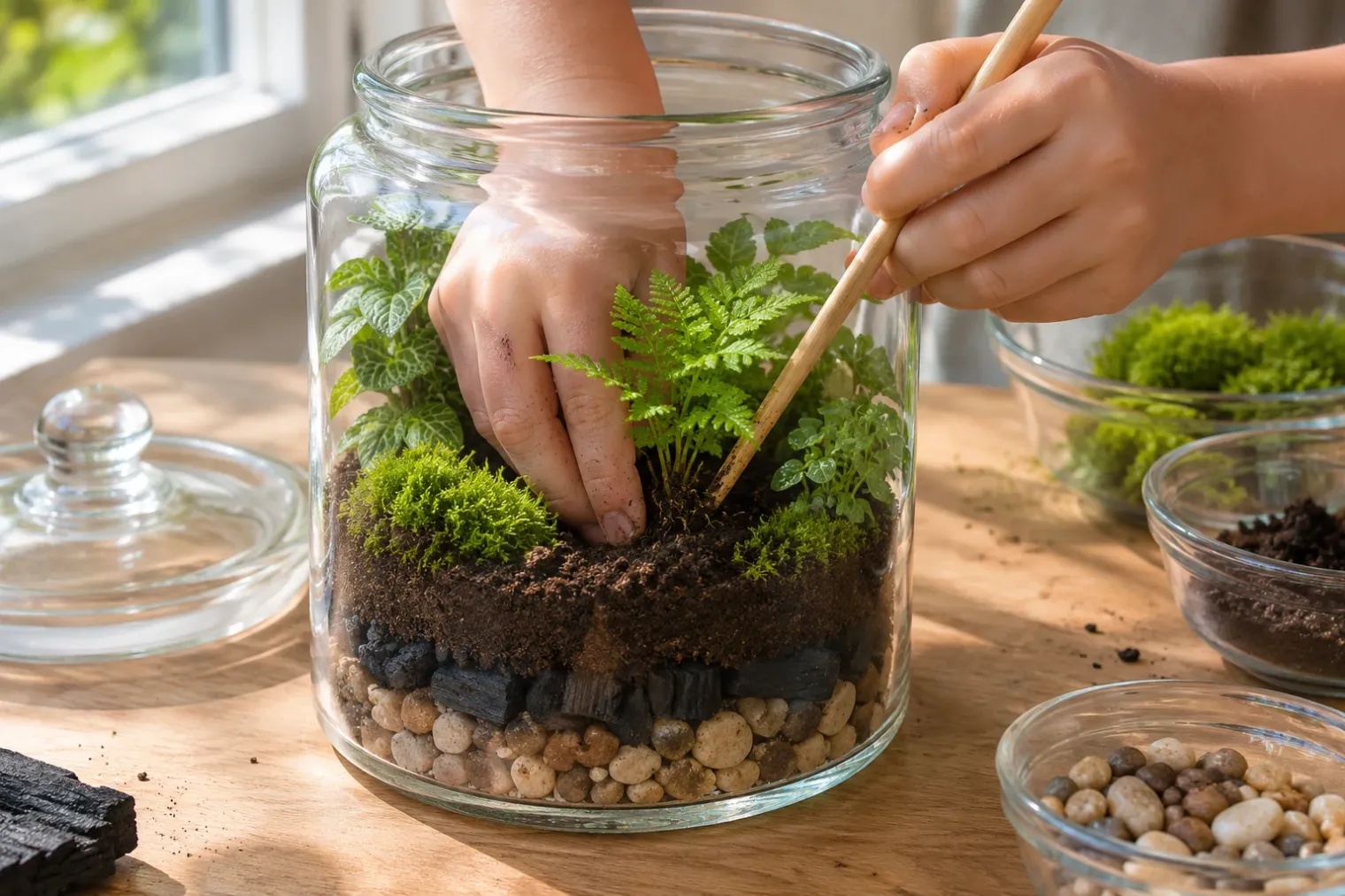
Narrow jar? Use long tweezers or chopsticks to set plants in place.
Decorate
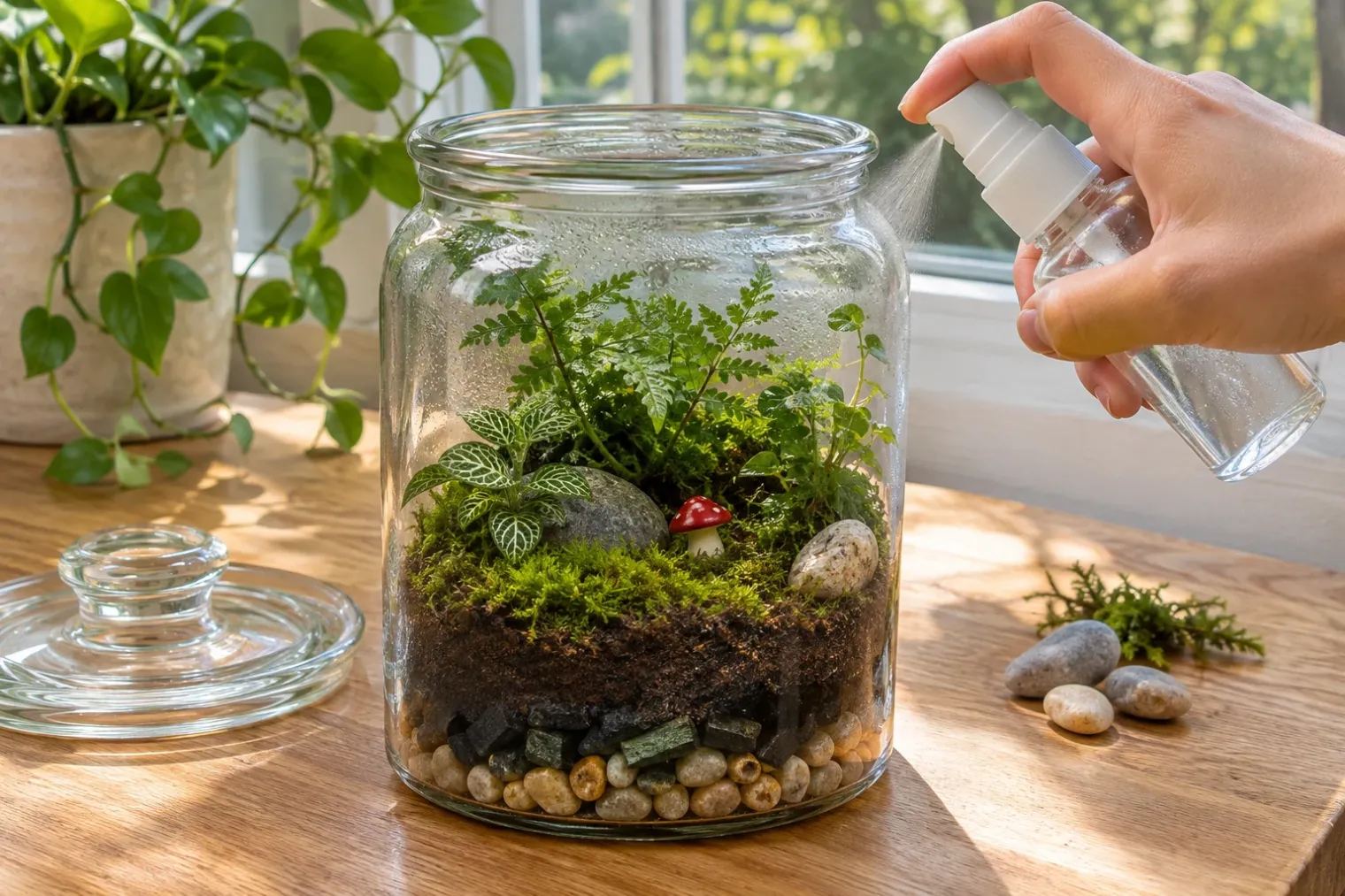
Add moss around the plants, a few pretty stones, a small piece of bark, or a tiny toy figure to make it a little world.
Water lightly and close it
Mist the plants and soil a few times with a spray bottle. Don’t flood it. For a closed terrarium, put the lid on. Set it in bright light, but not direct sun, which can cook the plants inside the glass.
Watch the weather
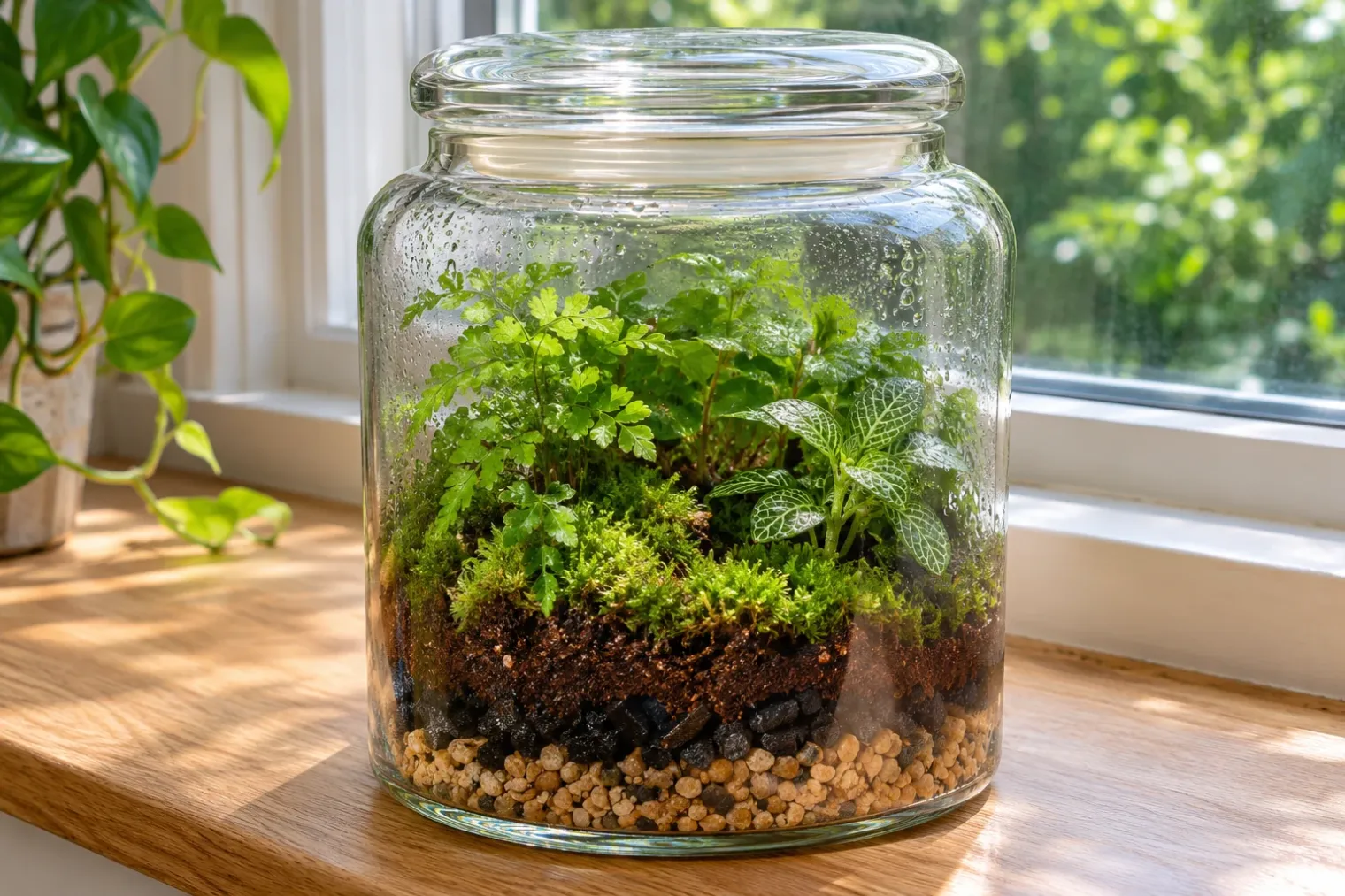
Check your terrarium every morning. You’ll see water droplets form on the glass and drip back down. Keep a terrarium journal: draw what you see and note how foggy the glass is each day.
Best plants for a terrarium
- Closed terrarium (likes it humid)Moss, fittonia (nerve plant), baby tears, small ferns, peperomia and polka dot plant.
- Open terrarium (likes it dry)Succulents like echeveria, haworthia and jade, plus small cacti. Keep the lid off.
- Grow from seedGrass, clover, radish or wheat seeds sprout fast in a closed jar, so kids see results in days.
Don’t mix the two kinds. Succulents rot in a humid closed jar, and ferns dry out in an open one.
What’s happening?
A closed terrarium is a tiny copy of the water cycle. Light warms the jar, and water evaporates from the soil and the leaves. When the water vapor touches the cooler glass, it turns back into droplets. That’s condensation, the same thing that makes clouds. The droplets slide down the glass like rain and soak back into the soil, where the roots drink them up again.
The plants recycle air too. In the light, they use carbon dioxide to make food and give off oxygen through photosynthesis (learn more in Why Are Plants Green?). At the same time, plants and tiny soil creatures use oxygen and give off carbon dioxide. Together they keep the air inside balanced.
For grown-ups: a little deeper
A sealed terrarium is a nearly closed ecosystem: energy (light) enters, but matter mostly cycles internally. Water moves through evaporation, transpiration, condensation and precipitation. Carbon cycles between photosynthesis and respiration by plants and decomposers like bacteria, fungi and, if you add them, springtails and isopods (the “bioactive” approach). The terrarium was invented by accident around 1829 by London doctor Nathaniel Bagshaw Ward, whose sealed glass “Wardian cases” were later used to ship live plants around the world. One famous bottle garden, planted by David Latimer in 1960, was reportedly watered only once, in 1972.
Make it a real experiment
- Light testMake two matching terrariums. Put one in a bright window and one in a dim corner. Compare growth after two weeks.
- Open vs. closedLeave one lid off. Which one needs watering first?
- Fog trackerRate the glass from 0 (clear) to 3 (totally foggy) every morning and afternoon. When does the most condensation form?
Keep exploring: DIY Water Filter · Why Are Plants Green? · Strawberry DNA Extraction
Questions and troubleshooting
How often do you water a closed terrarium?
Hardly ever. If you see some droplets on the glass most mornings, it has enough water. Only mist it if the glass stays completely dry for several days and the soil looks pale.
Why is my terrarium too foggy?
It has too much water. Take the lid off for a few hours, or a day, to let some dry out, then close it again.
There’s white fuzz or mold. What do I do?
Scoop out the moldy part, remove any dead leaves, and leave the lid off for a day to dry out. Mold usually means too much water or not enough airflow.
What’s the difference between an open and a closed terrarium?
A closed terrarium has a lid and stays humid, so it recycles its own water and suits moss and ferns. An open terrarium has no lid and stays dry, so it suits succulents and cacti, which need occasional watering.