Grass, trees, ferns, broccoli: so much of the living world is green. It’s such a normal color that we hardly notice it. But there’s a reason almost every plant picked green, and it has to do with how plants eat.
Plants make their own food
You get energy by eating. Plants make their own food using sunlight, water from the soil and a gas from the air called carbon dioxide. This amazing process is called photosynthesis (say it: foe-toe-SIN-thuh-sis), which means “putting together with light.” It makes sugar for the plant and gives off oxygen, the gas we breathe.
Chlorophyll catches the light
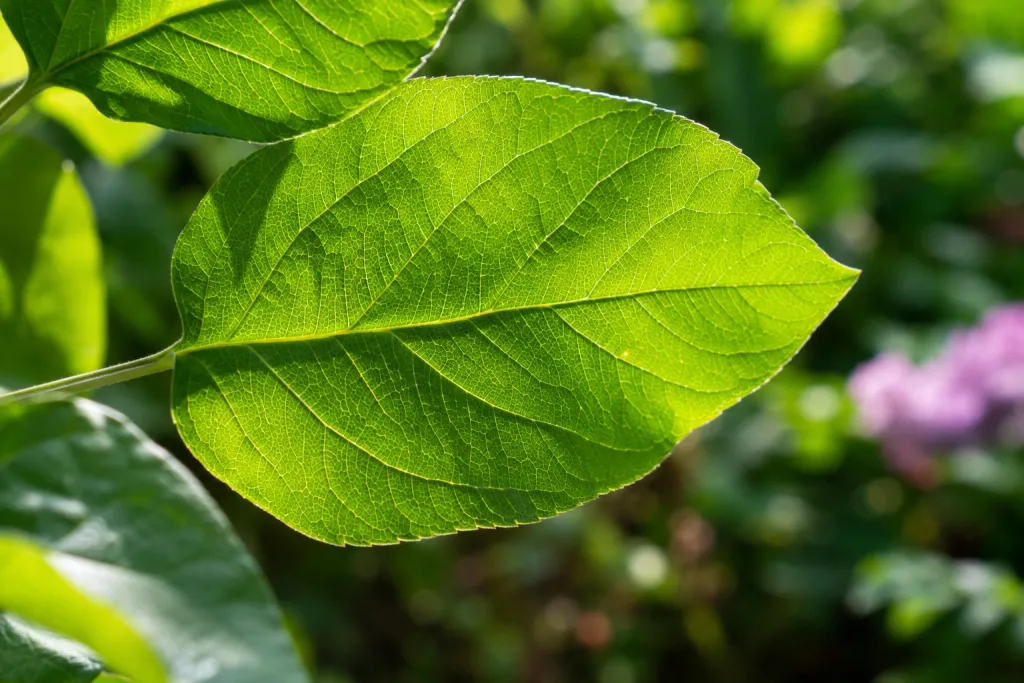
To do photosynthesis, leaves need something to catch sunlight. That’s the job of chlorophyll (say it: KLOR-uh-fill), a pigment packed into tiny parts of leaf cells called chloroplasts.
Sunlight looks white, but it’s made of all the colors of the rainbow. Chlorophyll is great at soaking up red and blue light. It doesn’t absorb much green light, so the green bounces off the leaf, and that’s the color that reaches your eyes. A leaf is green because green is the color it’s not using much.
Explain it like I’m 5
Leaves eat sunlight to make food. They gobble up the red and blue parts of the light, but they don’t eat the green part. The green bounces back to your eyes, so leaves look green.
Hidden colors in every leaf
Leaves also contain yellow and orange pigments called carotenoids, the same family of colors that makes carrots orange. In summer, there’s so much green chlorophyll that it covers them up. In fall, as days get shorter and colder, trees stop making chlorophyll. The green fades, and the yellows and oranges that were there all along finally show. Some trees also make new red and purple pigments in fall, which is why maples blaze red.
Are all plants green?
Not all of them. Some plants, like red cabbage, purple basil and red-leaf lettuce, have extra red or purple pigments covering their chlorophyll, but they still have chlorophyll inside. A few unusual plants, like the white ghost pipe, have no chlorophyll at all and get food from fungi in the soil instead.
Try it: find the hidden colors in a leaf
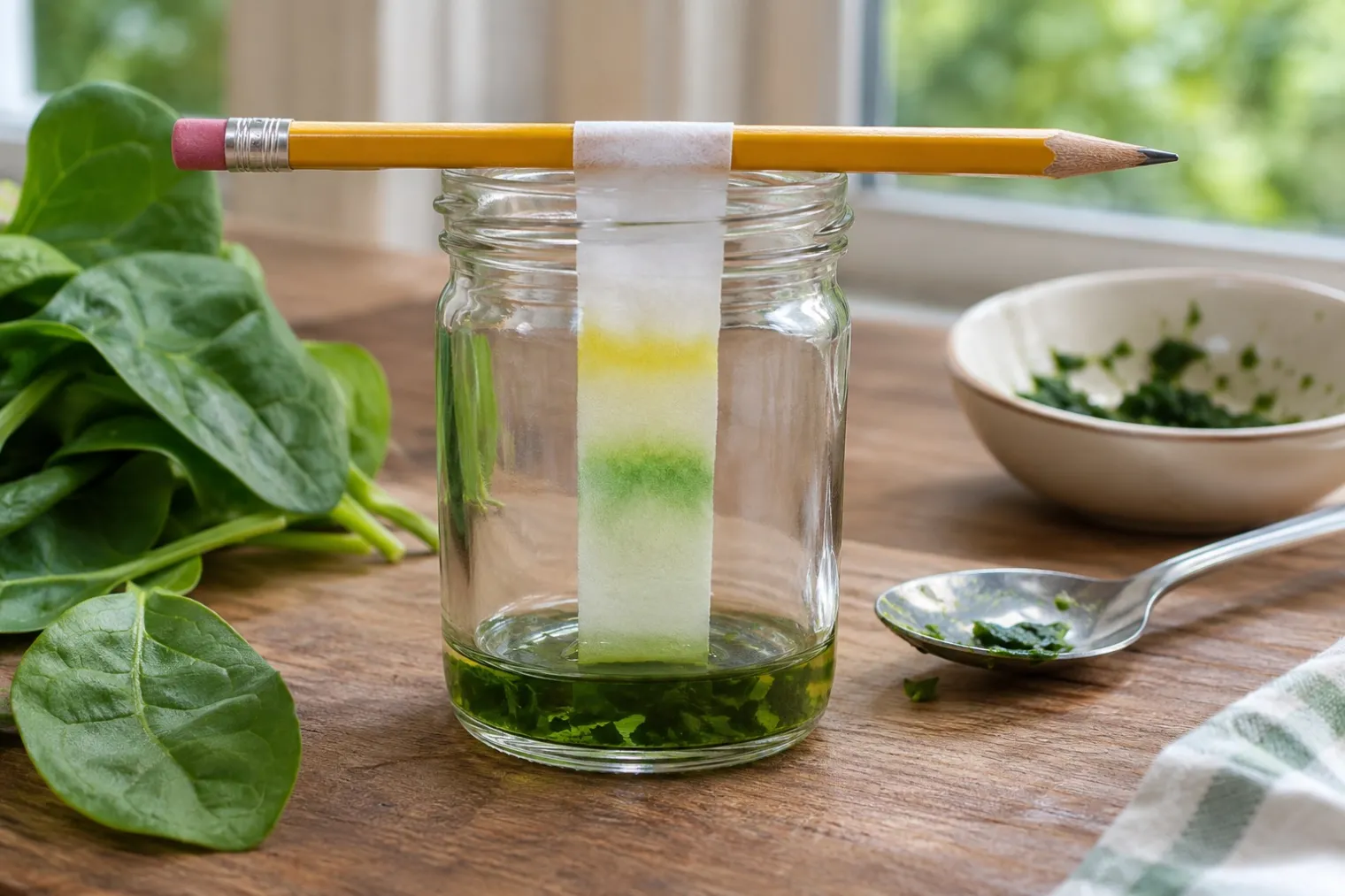
You need: a few dark green leaves (spinach works great), a small glass jar, rubbing alcohol (a grown-up handles it), a spoon, a white coffee filter cut into a strip, tape and a pencil.
- Tear the leaves into tiny pieces and put them in the jar.
- A grown-up adds just enough rubbing alcohol to cover them. Mash them with the spoon for a few minutes until the liquid turns dark green.
- Tape the top of the coffee filter strip to a pencil and rest the pencil across the jar so the bottom of the strip just touches the green liquid.
- Wait 30 to 60 minutes and watch the liquid climb the paper. Look closely: do you see more than one color?
What’s happening: as the alcohol climbs the paper, it carries the different pigments different distances, so they separate into bands. You’ll usually see green chlorophyll and a band of yellow or orange carotenoids, the fall colors hiding in a summer leaf. This method is called chromatography. Keep the alcohol away from flames.
Keep exploring: Why Are Flamingos Pink? · Why Is the Sky Blue? · How Do Bees Make Honey?
Words to know
- Photosynthesis
- How plants use sunlight, water and air to make their own food.
- Chlorophyll
- The green pigment in plants that catches sunlight.
- Chloroplast
- A tiny part of a plant cell where photosynthesis happens.
- Carotenoids
- Yellow and orange pigments found in leaves, carrots and more.
- Chromatography
- A way of separating mixed colors so you can see each one.
For grown-ups: the real science
Chlorophylls a and b absorb strongly in the blue (around 430–460 nm) and red (around 640–665 nm) parts of the spectrum and weakly in the green, which is reflected and transmitted. Leaves still absorb a substantial fraction of green light through multiple scattering within the tissue, so “plants don’t use green” is an oversimplification. Why plants are not black (absorbing everything) is an active research question; one model (Arp et al., Science, 2020) suggests chlorophyll’s absorption peaks help keep energy input steady under fluctuating light, reducing damage.
Carotenoids act as accessory pigments and protect against excess light. In autumn, chlorophyll is broken down and its nitrogen reabsorbed before leaf drop, unmasking carotenoids; red anthocyanins are newly synthesized in some species. In paper chromatography, pigments separate based on their solubility in the solvent and attraction to the cellulose; carotenes typically travel farthest.
Questions kids ask next
Can plants grow without sunlight?
Most plants need light to make food. Indoors, special grow lights can replace the Sun. A plant kept in the dark grows pale and weak.
Why do some leaves stay green all winter?
Evergreens like pines have tough, waxy needles that survive the cold, so they keep their chlorophyll and keep working all year.
Do plants breathe?
In a way! They take in carbon dioxide through tiny holes in their leaves and give off oxygen during photosynthesis. They also use some oxygen, just like we do.
Why aren’t animals green?
Most animals don’t have chlorophyll, because they get energy by eating. A few sneaky sea slugs steal chloroplasts from the algae they eat and turn green!