This post contains affiliate links. As an Amazon Associate, TryScience earns from qualifying purchases, at no extra cost to you. Learn more.
Can you turn muddy, leafy water into water that looks clean? With a cut-up plastic bottle and a few layers of sand, gravel and charcoal, you can. This DIY water filter is a classic science project because the results are so easy to see, and it shows kids how the water coming out of their faucet gets cleaned in the first place.
Grown-up safety check
- Do not drink the filtered water. It may look clear, but it can still have germs and chemicals in it. A homemade filter is for learning, not for drinking.
- A grown-up should cut the bottle. Cut edges can be sharp, so cover them with tape.
- Wash hands after handling the dirty water and filter materials.
What you need
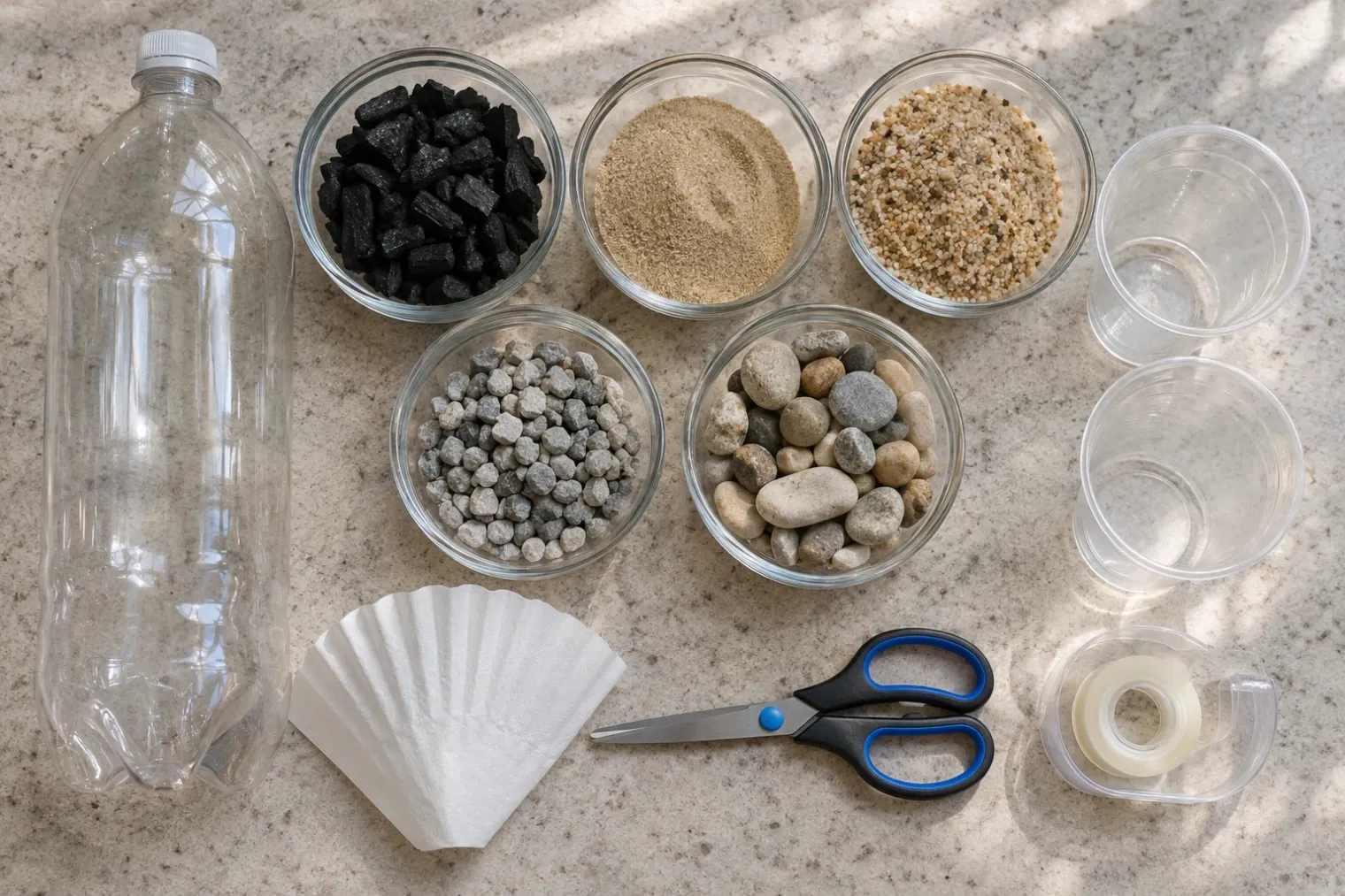
- A 2-liter plastic bottlePlus a jar or cup that the bottle top can sit in.you have this
- A coffee filter or cotton ballsFor the bottom layer.you have this
- Activated charcoalAquarium charcoal works best. Grill briquettes don’t work and shouldn’t be used.Shop charcoal
- Fine sand and coarse sandPlay sand works for fine sand. Rinse it first.you have this
- Small gravel and larger pebblesAquarium gravel or rinsed pebbles from outside.you have this
- Dirty waterMix water with soil, leaves, bits of grass and a few drops of food coloring.you have this
- Scissors, tape and 2 clear cupsOne for a “before” sample to compare with the filtered water.you have this
Let’s build a water filter
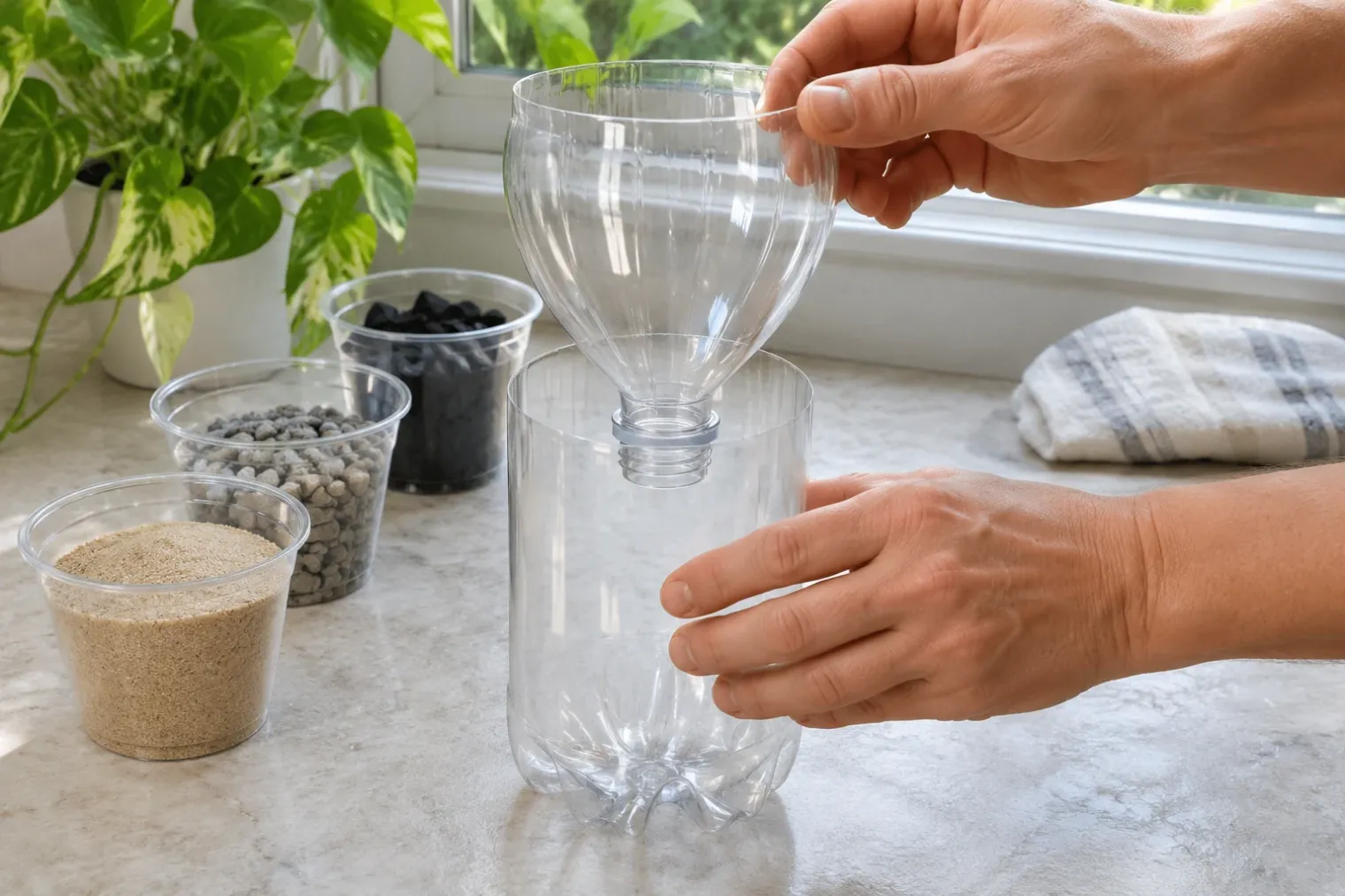
Cut the bottle
A grown-up cuts the bottle in half. Take the cap off the top half and turn it upside down like a funnel. Set it inside the bottom half or in a jar so filtered water can drip out.
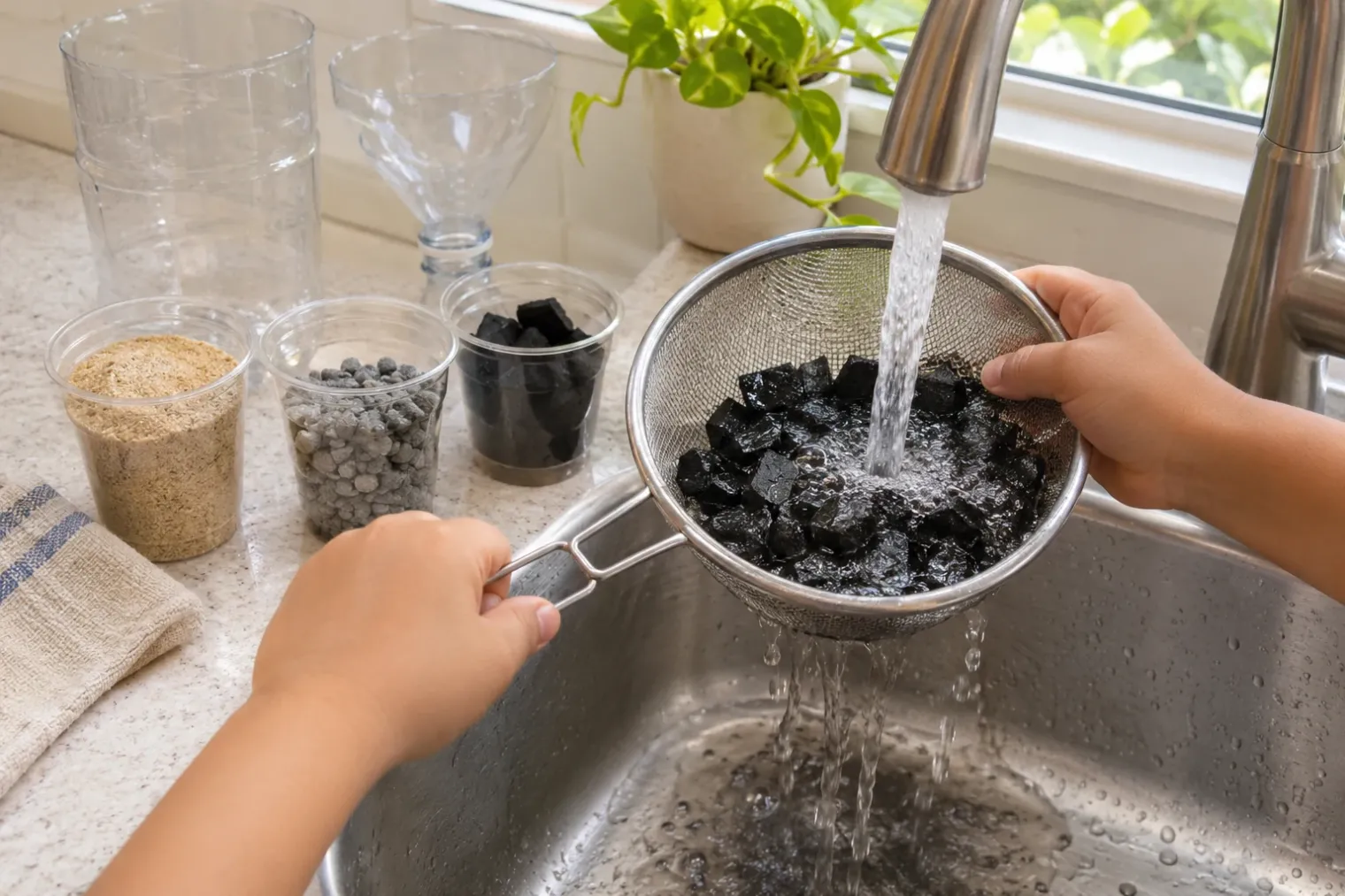
Rinse your layers
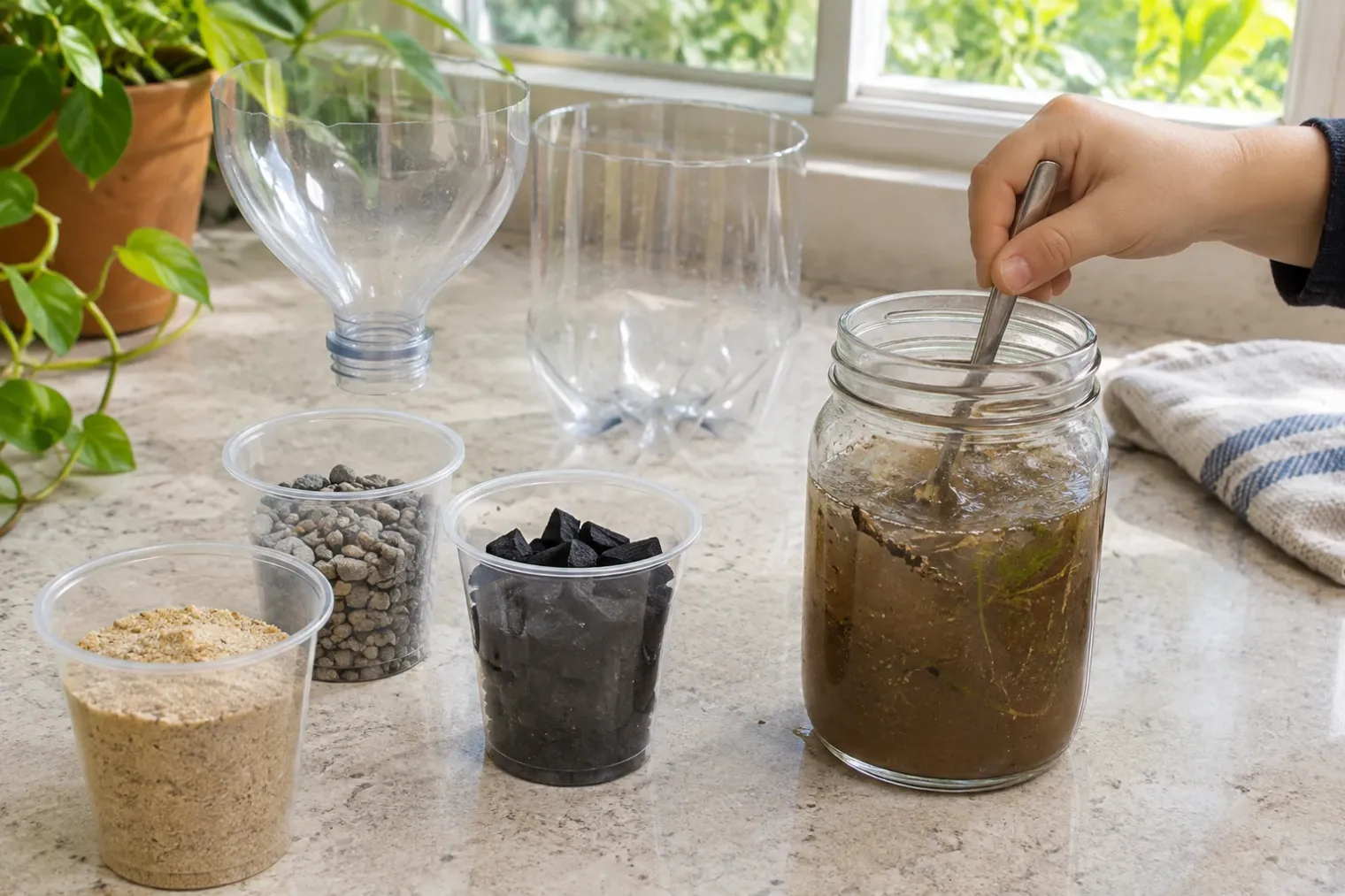
Rinse the charcoal, sand and gravel in a strainer until the water runs clear. Charcoal especially is dusty, and skipping this step will turn your “clean” water black.
Build the layers
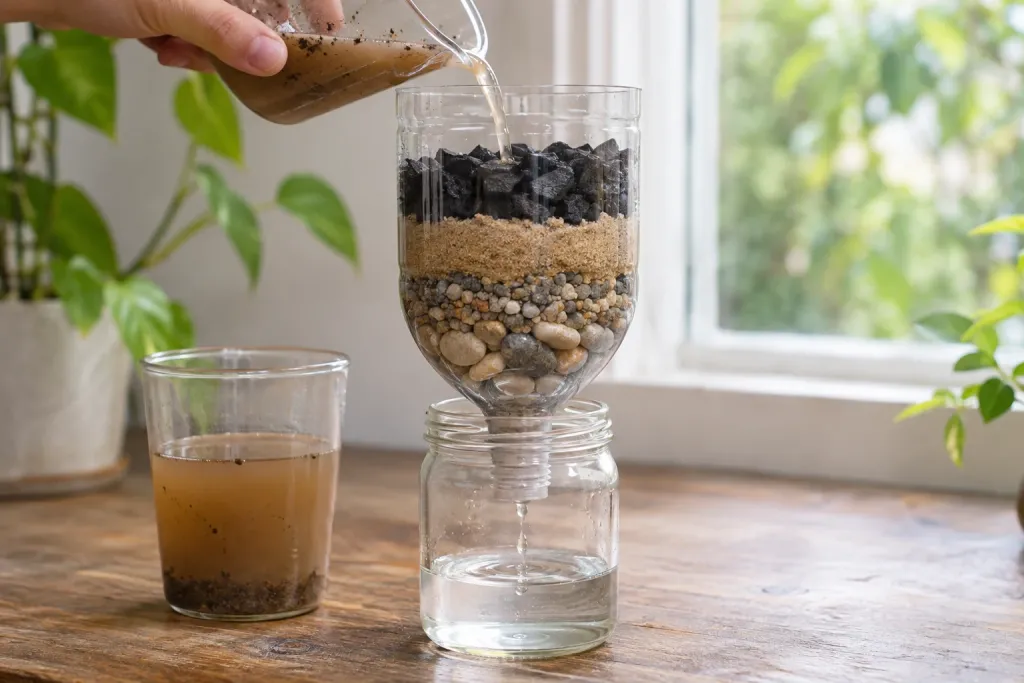
Stuff a coffee filter or cotton balls into the neck of the funnel. Then add layers about one inch thick each, from the bottom up: activated charcoal, fine sand, coarse sand, small gravel and big pebbles on top.
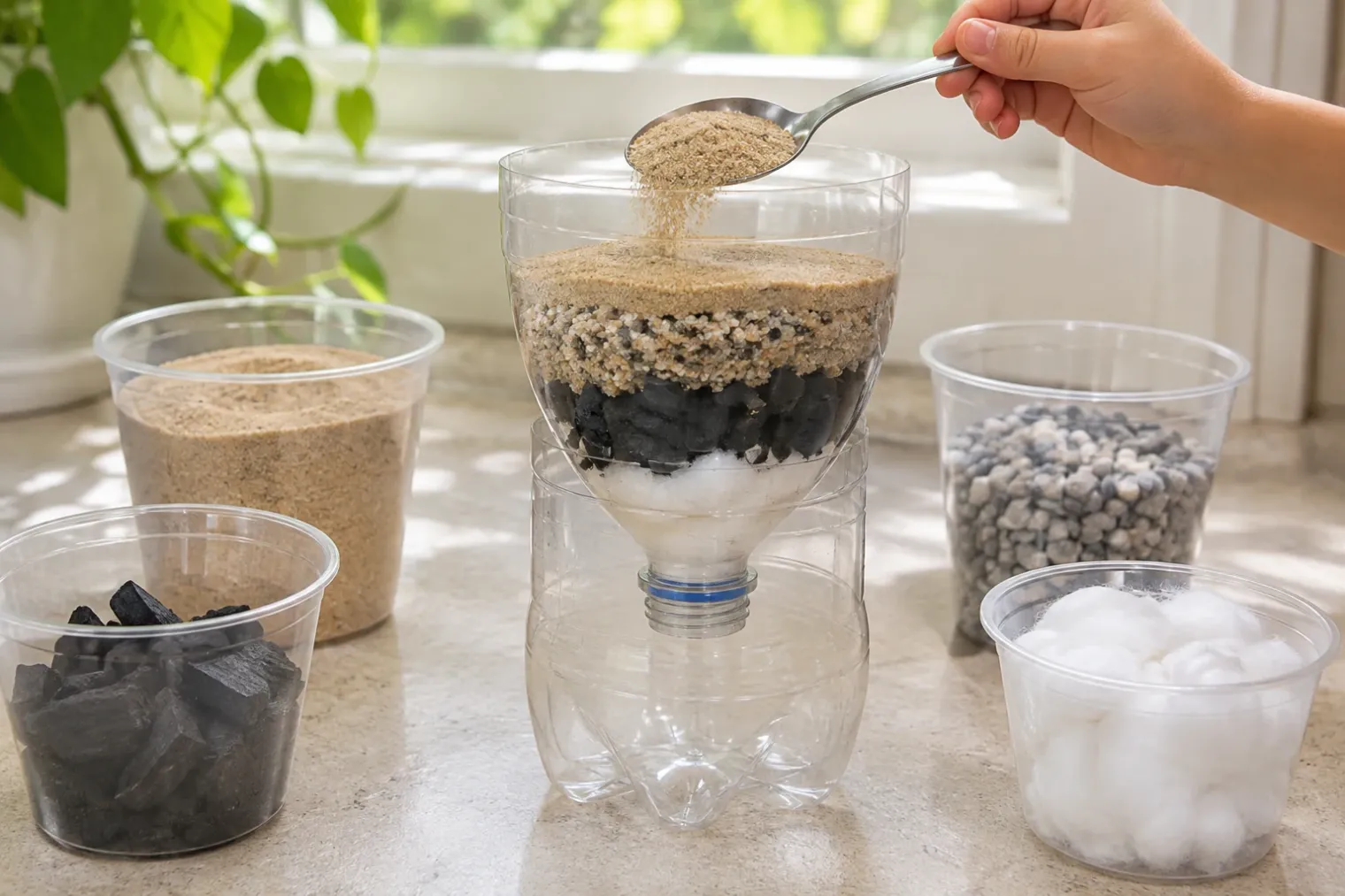
The biggest pieces go on top and the tiniest go at the bottom. Each layer catches smaller dirt than the one above it.
Make dirty water
Stir soil, leaves, grass bits and a drop or two of food coloring into a few cups of water. Pour a little into a clear cup and save it as your “before” sample.
Pour it through
Slowly pour the dirty water over the pebbles. Watch it trickle down through each layer. It can take a few minutes to drip out the bottom.
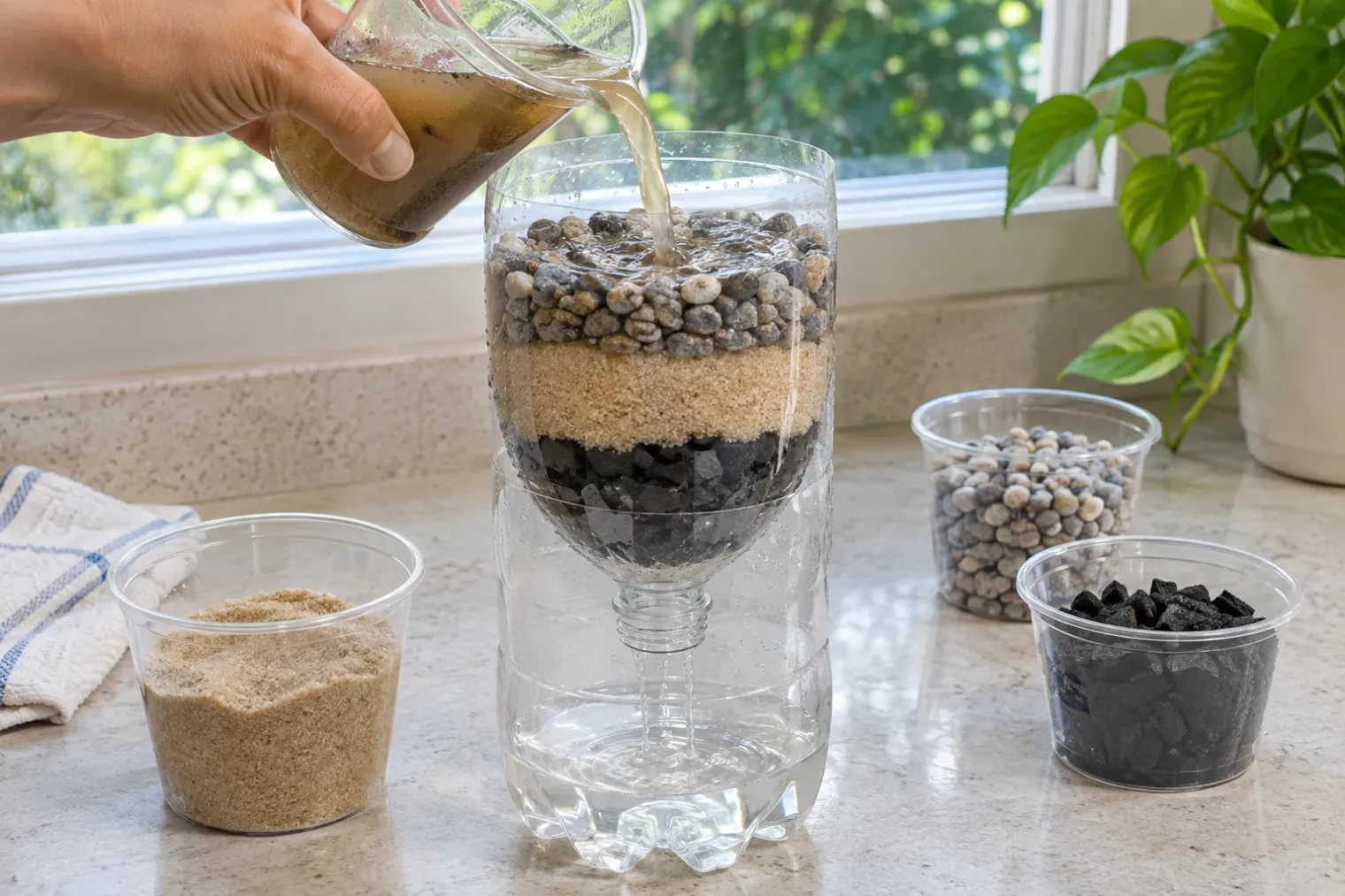
Pour gently so you don’t mix the layers together.
Compare before and after
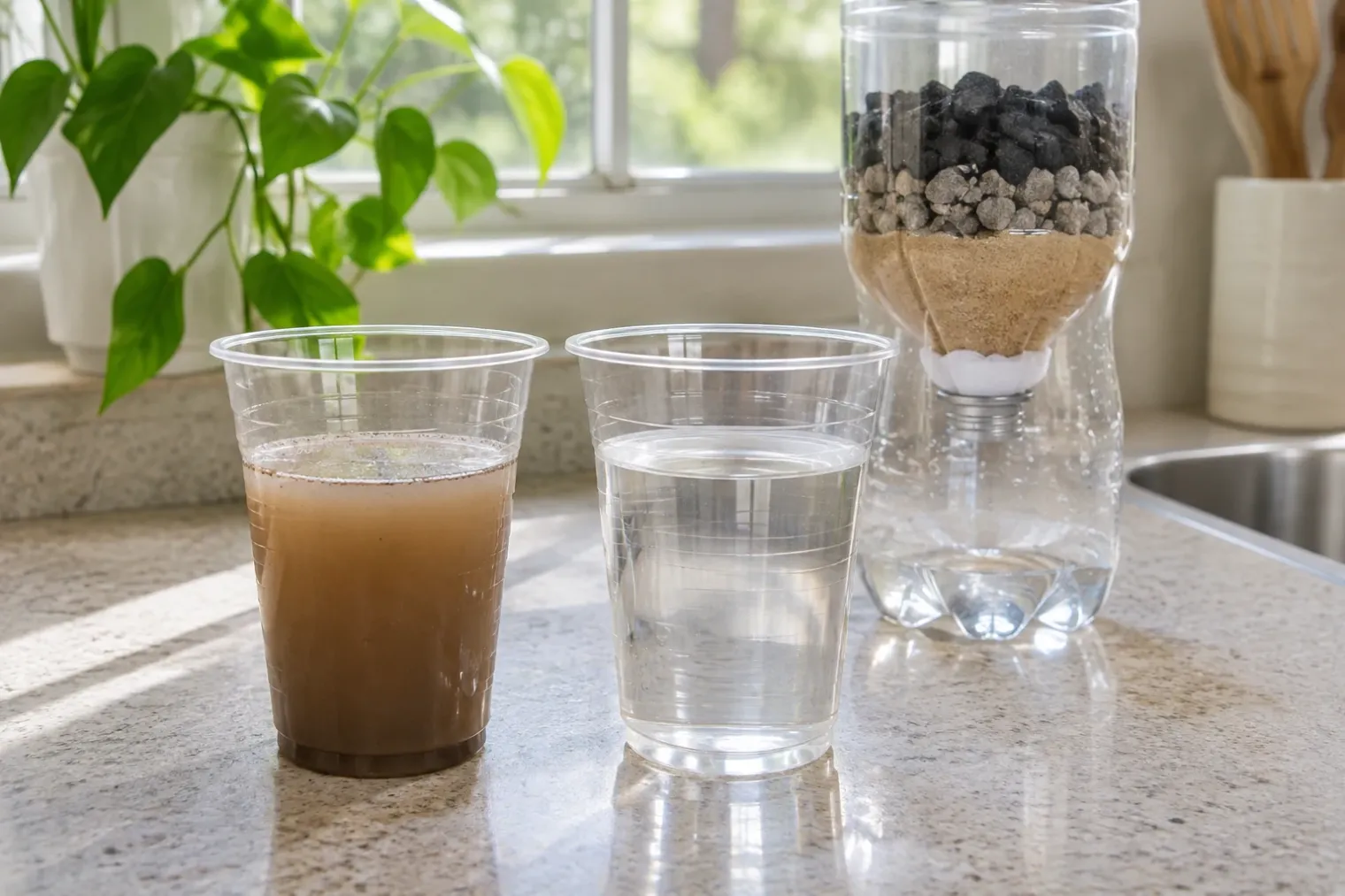
Pour the filtered water into the second clear cup and hold it next to your “before” sample. How much clearer is it? If it’s still cloudy, pour it through again. Most filters work better after two or three passes.
What’s happening?
Each layer works like a sieve with smaller and smaller holes. The pebbles and gravel catch leaves, sticks and big clumps. The sand traps fine bits of dirt that slip through the gravel. The charcoal does something different: it’s covered in millions of tiny pores, and some of the color and smell in the water sticks to its surface. This sticking is called adsorption.
Nature filters water the same way. Rain soaks down through soil, sand and rock, which strain it before it reaches underground water called groundwater. That’s why water from deep wells is often clearer than water from a pond.
But clear isn’t the same as safe. Germs like bacteria are far too small for sand to catch. That’s why real water treatment plants add a final step to kill germs before the water is safe to drink.
For grown-ups: a little deeper
Municipal treatment typically runs coagulation and flocculation (chemicals that clump fine particles together), sedimentation, filtration through sand, gravel and often granular activated carbon, then disinfection with chlorine, chloramine, ozone or UV light. The sand layer in this project mirrors slow sand filtration, where, in real systems, a biological layer called the schmutzdecke forms on top and removes many pathogens over time. A homemade filter has no such layer and no disinfection step, so its output should never be consumed. Activated carbon removes many organic compounds, odors and some dyes by adsorption, but it doesn’t remove dissolved salts, most metals or microbes.
Make it a science fair project
- Layer orderBuild two filters with the layers in opposite order. Which one makes cleaner water?
- Remove one layerLeave out the charcoal, or the sand. Which layer matters most?
- Speed vs. cleanTime how fast each filter drips. Do slower filters make cleaner water?
- Measure clarityTape a printed word behind each cup. Can you still read it? Rate each sample from 1 (can’t read it) to 5 (crystal clear).
Keep exploring: Oil Spill Experiment · Air Pollution Facts · How to Make a Terrarium
Questions and troubleshooting
Can you drink water from a homemade water filter?
No. A homemade filter makes water look clearer, but it can’t remove germs, so the water isn’t safe to drink. Real drinking water also needs to be disinfected.
What is the best order of layers in a water filter?
From top to bottom: pebbles, gravel, coarse sand, fine sand, activated charcoal, then a coffee filter or cotton. Big pieces catch big dirt first so the small layers don’t clog.
Why is my filtered water black or gray?
The charcoal wasn’t rinsed enough. Rinse it until the water runs clear, or pour plain water through the filter a few times before adding the dirty water.
Can I make it without charcoal?
Yes. Sand and gravel alone still remove dirt and make water clearer. The charcoal mostly helps with color and smell, so comparing filters with and without it makes a great experiment.