This post contains affiliate links. As an Amazon Associate, TryScience earns from qualifying purchases, at no extra cost to you. Learn more.
Real engineers test buildings on giant shake tables before anyone ever moves in. In this experiment, kids build their own mini shake table from cardboard and marbles, construct towers from toothpicks and marshmallows, and then let the earthquake begin. Which towers stand? Which ones crumble? And what simple changes make a building survive?
It’s a hands-on way to learn what causes earthquakes and how engineers keep people safe when they happen.
Grown-up safety check
- Toothpicks are pointy and marbles are a choking hazard. Keep both away from toddlers and count marbles at cleanup.
- A grown-up should cut the cardboard if you use a craft knife.
- Marshmallows that have been building materials aren’t snacks. Set aside a few clean ones for eating.
What you need
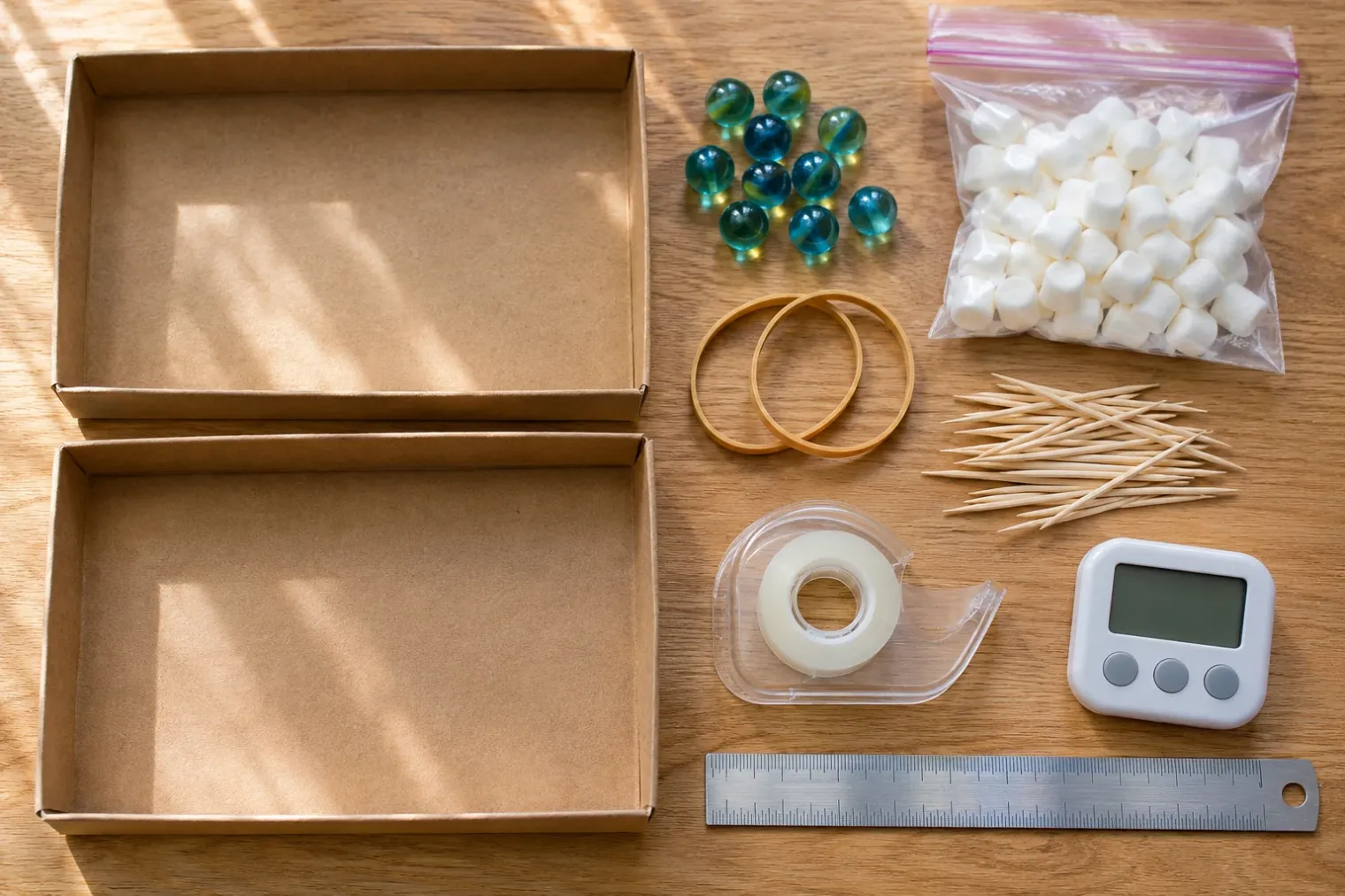
- 2 pieces of sturdy cardboard, the same sizeAbout 12 by 12 inches. The lids of two shoe boxes work great.you have this
- 4 to 6 marbles or small bouncy ballsThey let the top board slide like the ground in an earthquake.you have this
- 2 thick rubber bandsTo pull the top board back after each shake.you have this
- Toothpicks and mini marshmallowsOr gumdrops. One bag of each builds several towers.you have this
- Tape, a ruler and a timerFor setting up fair tests.you have this
- Building blocks (optional)Wooden blocks or magnetic tiles make great extra test buildings.Shop blocks
Let’s make an earthquake
Build the shake table
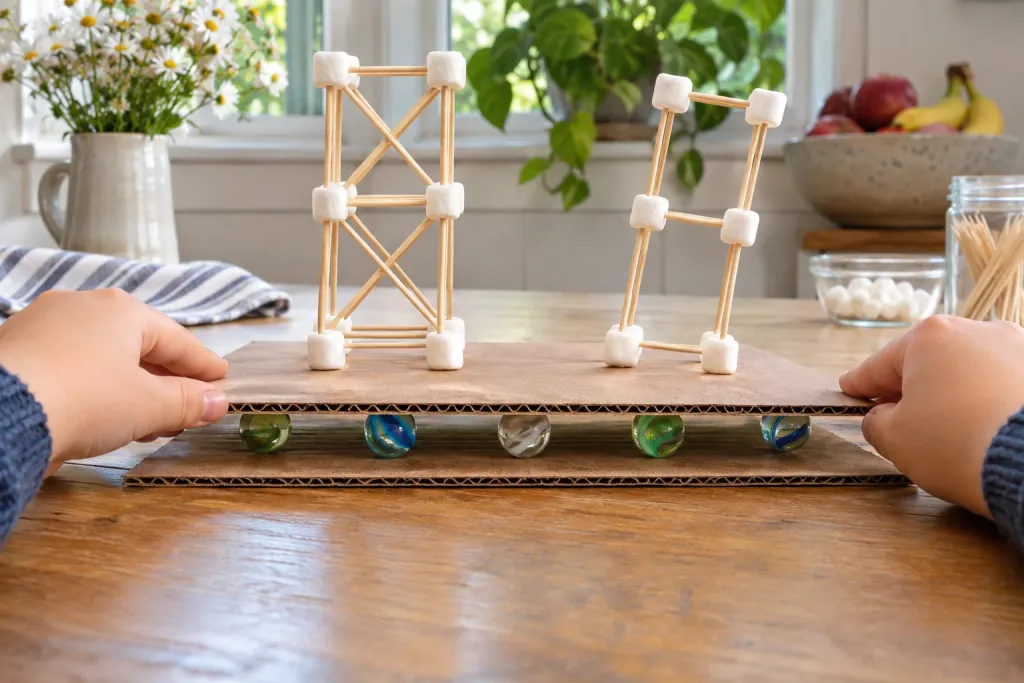
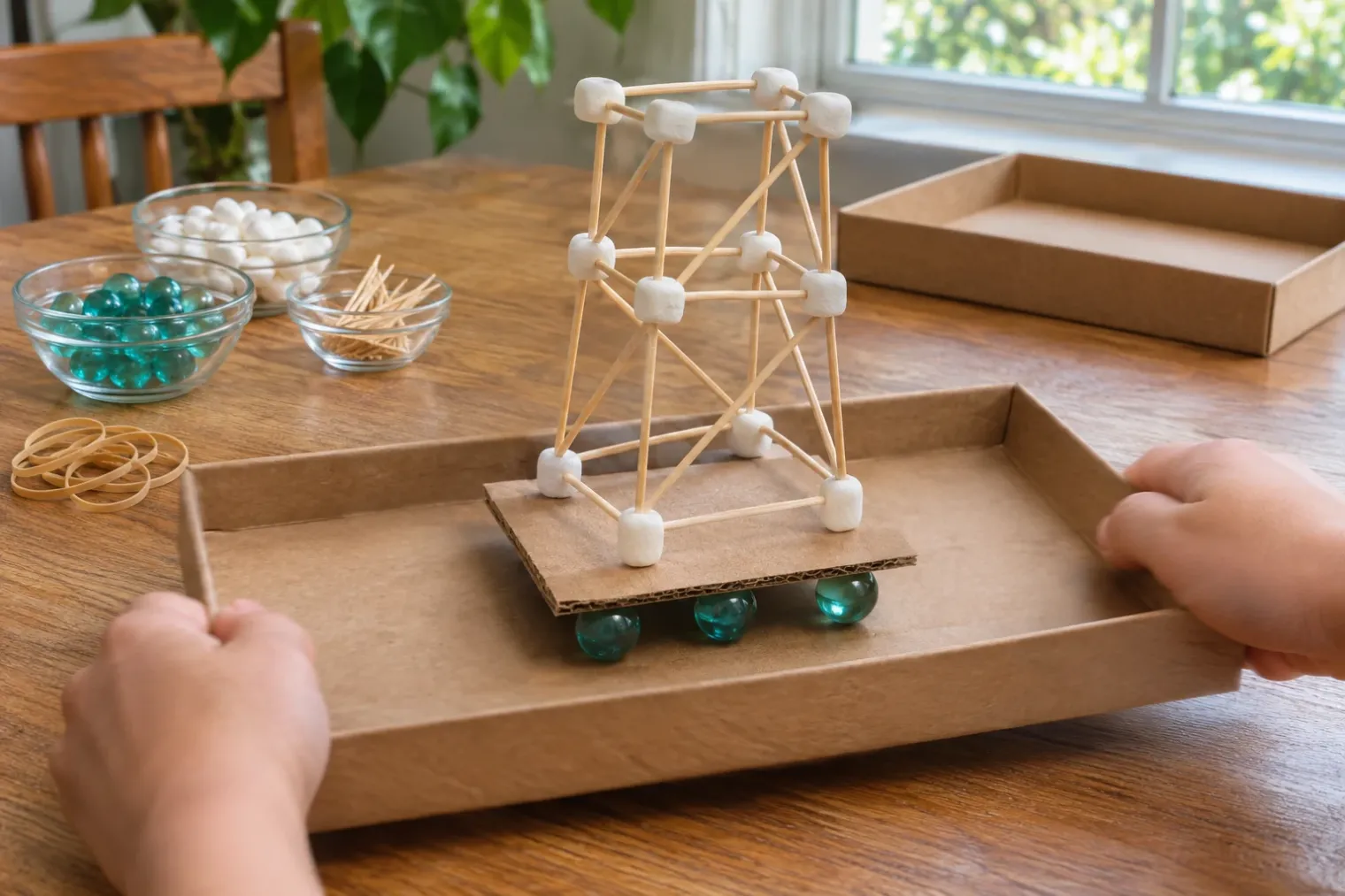
Lay one piece of cardboard flat. Set the marbles on it, spread out near the corners, and lay the second piece on top so it rolls freely. Stretch two rubber bands around both boards, one near each end, so the top board snaps back to the middle when you pull it.
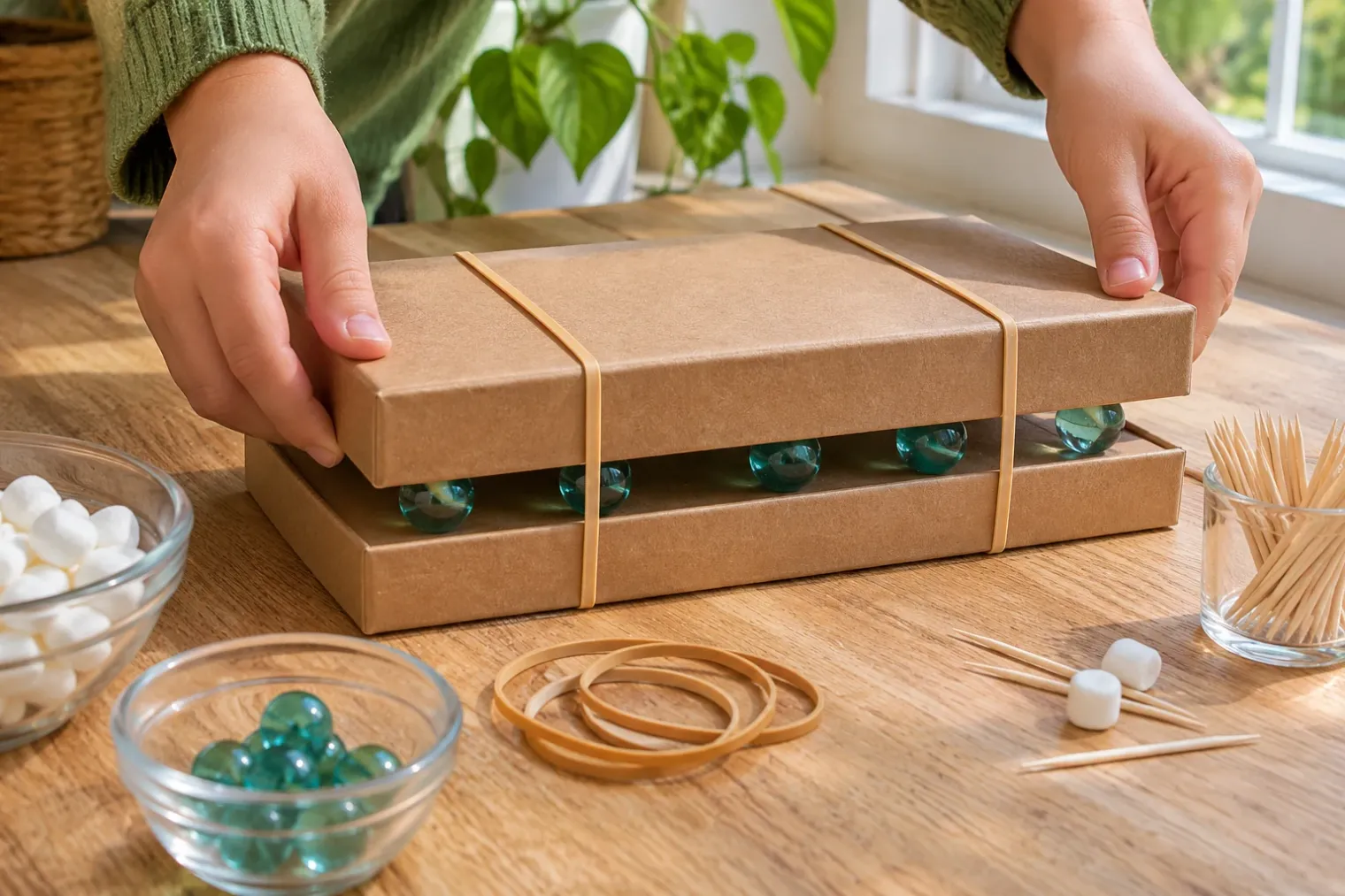
Tape a little cardboard rim around the bottom board so the marbles can’t roll away.
Build a simple tower
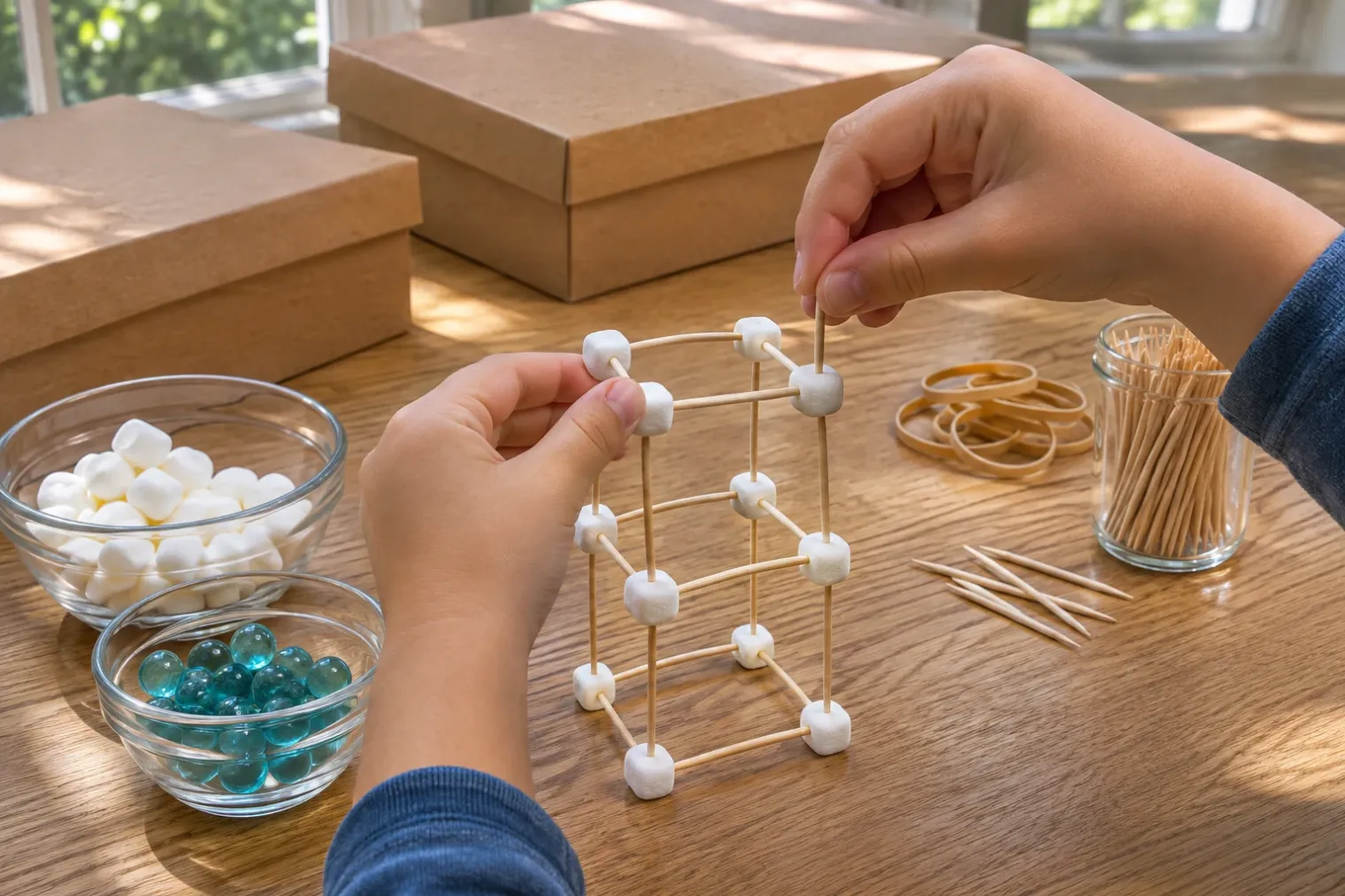
Use toothpicks and marshmallows to build a tower made of cubes stacked two or three stories high. Squares only for now. This is your “before” building.
Set off the earthquake
Set the tower in the middle of the shake table. Pull the top board about one inch to the side and let go, then repeat for 10 seconds. That’s a small quake. For a big one, pull 2 inches. Watch how the tower sways, leans and falls.
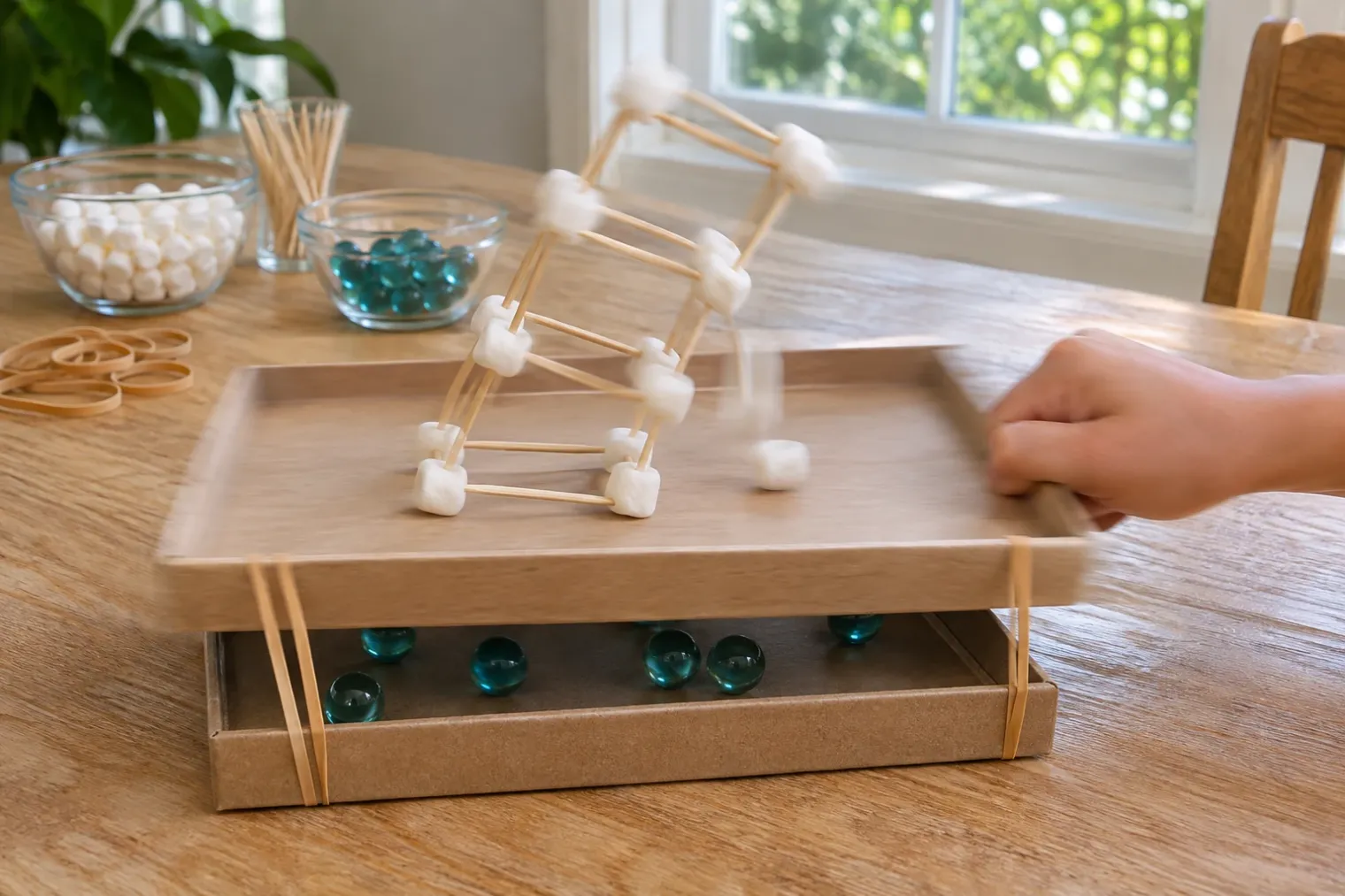
Keep each quake the same: same pull, same time. That makes it a fair test.
Add cross-bracing
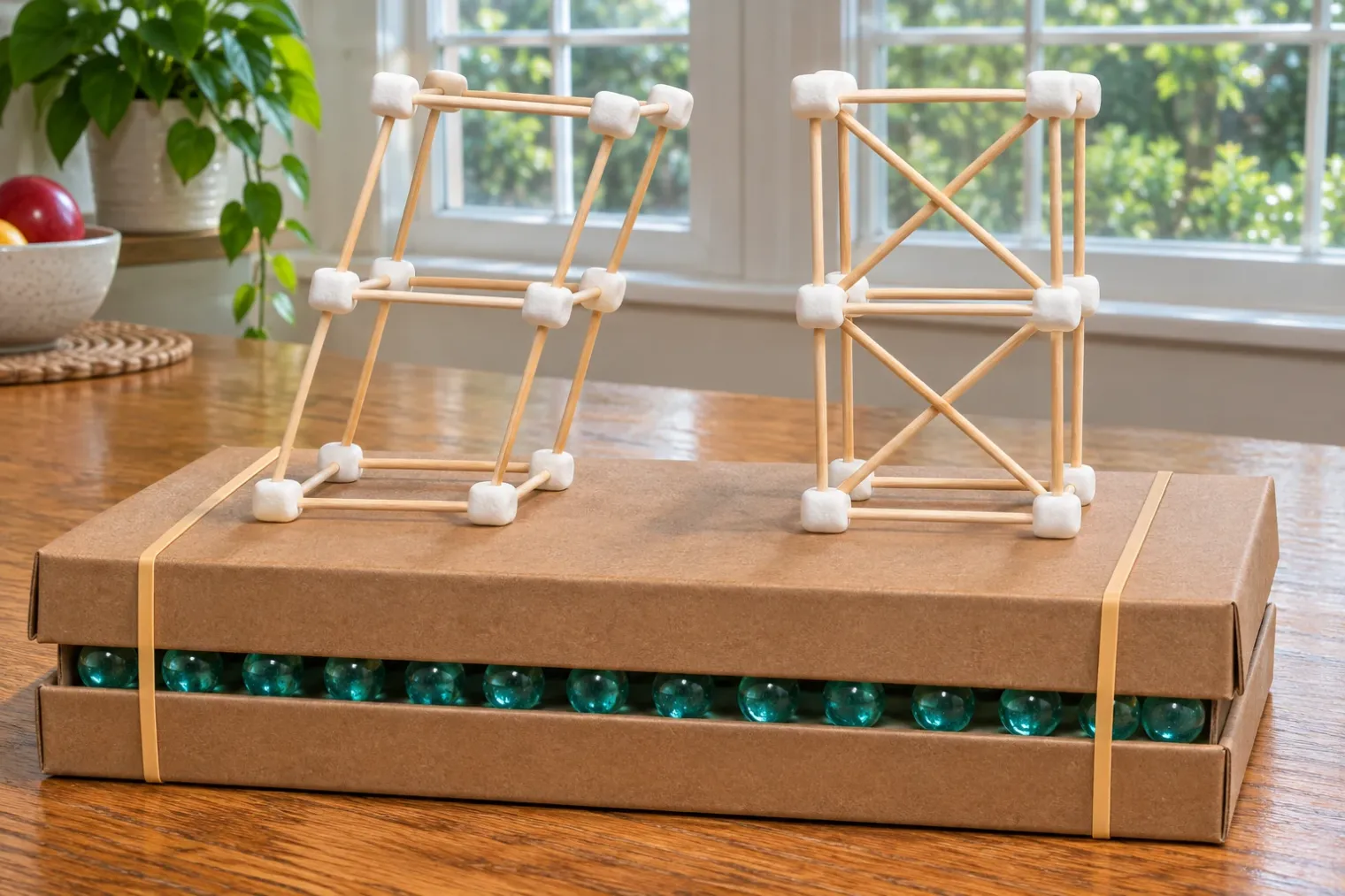
Build a new tower, but add a diagonal toothpick across each square face so it becomes two triangles. Shake it the same way. Does it hold its shape better?
Try a wider base
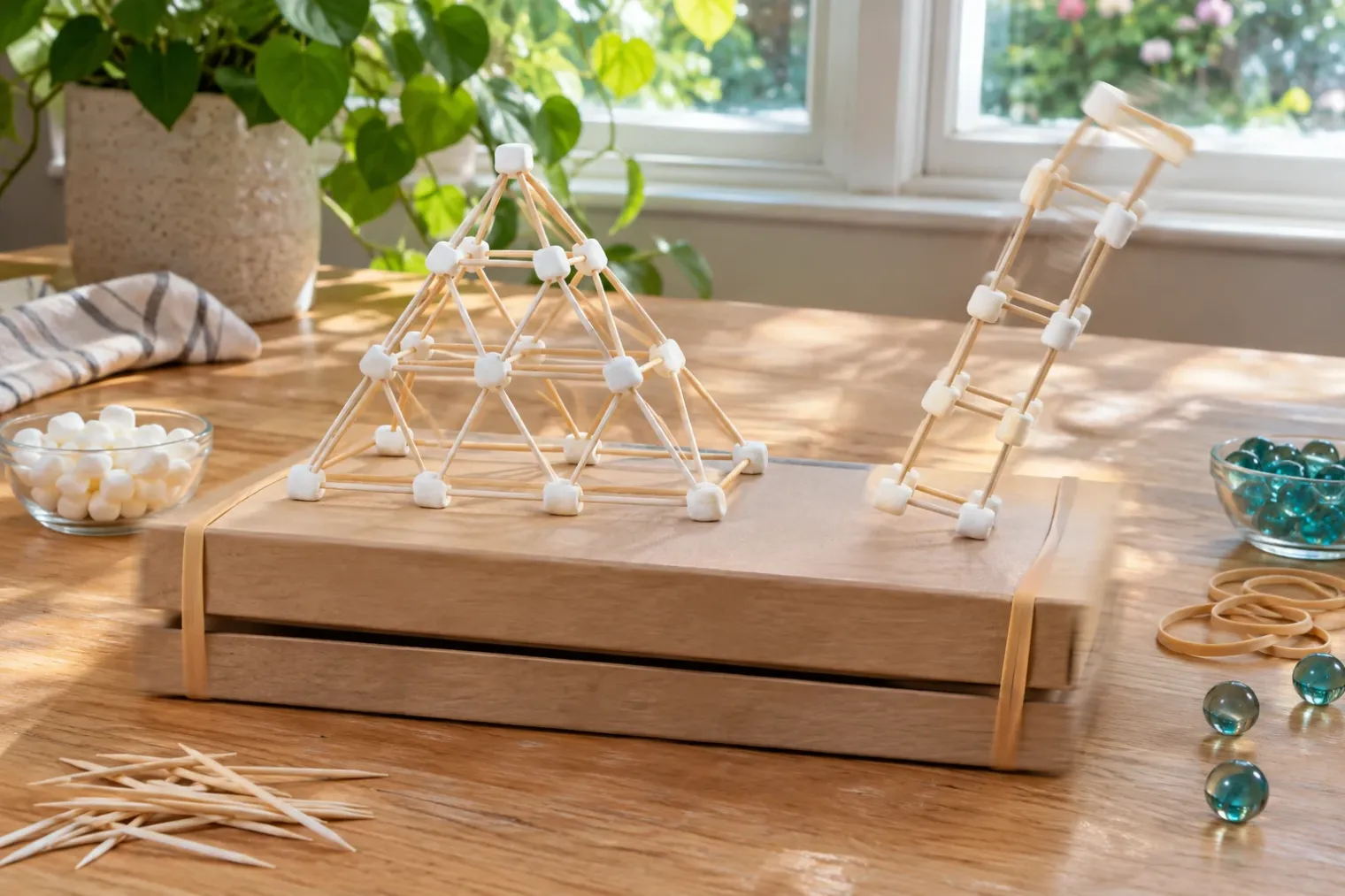
Build a tower that’s wide at the bottom and narrower at the top, like a pyramid, and shake it again. Then try a tall, skinny tower. Which shape survives the biggest quake?
Give it a base isolator
Set your best tower on a small square of cardboard resting on a few more marbles, a sponge or a layer of mini marshmallows, so the building can slide a little. Shake again. Many real skyscrapers sit on special bearings that let the ground move underneath them.
Rate each building
Score each tower after each quake: 3 = no damage, 2 = leaning, 1 = partly collapsed, 0 = flat. Which design scored best, and why do you think it worked?
What’s happening?
During an earthquake, the ground moves back and forth quickly. The bottom of a building moves with the ground, but the top tries to stay where it was, thanks to inertia. That makes the building bend and sway, and the joints at the corners take a lot of stress.
Squares are easy to push into a slanted diamond shape, so square frames fold over. Adding diagonal braces turns squares into triangles, which can’t change shape without breaking, so the building stays straight. Wide, low buildings are more stable than tall, skinny ones because their weight sits close to the ground. Base isolators work differently: they let the ground slide underneath so less of the shaking reaches the building at all.
For grown-ups: a little deeper
Earthquakes are mostly a lateral-load problem: horizontal ground acceleration produces inertial forces in the structure that are largest where the mass is. Engineers resist them with braced frames, shear walls and moment-resisting frames, and they try to avoid resonance, when the shaking frequency matches a building’s natural frequency and sways grow larger with each cycle. Base isolation (bearings of layered rubber and steel, or sliding pendulum bearings) lengthens the building’s natural period so less energy transfers upward. Some tall towers also use tuned mass dampers, huge pendulums near the top that swing opposite the building’s sway. Real shake tables, like the large outdoor one at the University of California San Diego, test full-size building sections.
How to build an earthquake-proof structure
- Brace with trianglesAdd diagonal toothpicks on every side. X-bracing across a whole wall is even stronger.
- Go wide at the bottomA wider base and lighter top keep the building from tipping.
- Make it symmetricalBuildings that are the same on every side shake evenly instead of twisting.
- Let it slideA base that can roll or slip a little keeps the shaking from reaching the top.
Make it a real experiment
- Height testBuild towers 2, 4 and 6 stories tall with the same design. How does height change the damage?
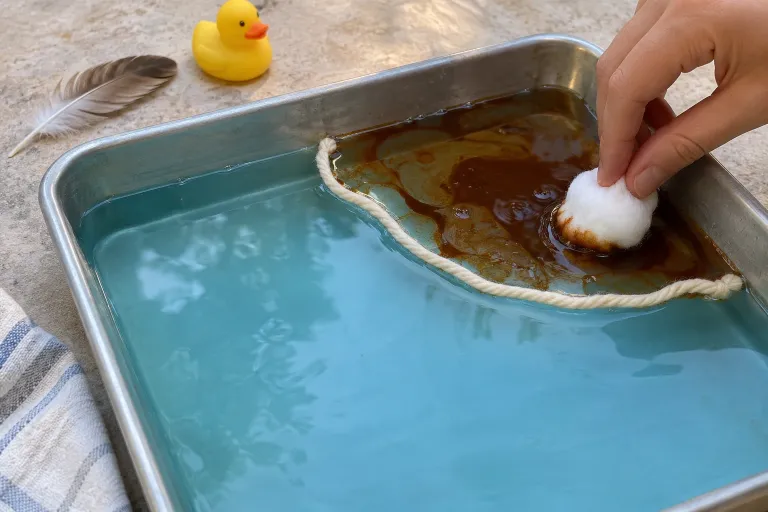
- Ground testFill a baking pan with gelatin and stand towers on it. How does soft, wobbly ground change things?
- Quake strengthShake with 1-inch, 2-inch and 3-inch pulls. At what strength does each design fail?
Questions and troubleshooting
How do you make a simple shake table?
Put marbles between two same-sized pieces of cardboard and wrap rubber bands around both boards. Pull the top board sideways and let go to make it shake back and forth like the ground in an earthquake.
What makes a building earthquake-proof?
No building is completely earthquake-proof, but engineers make them earthquake-resistant with diagonal bracing, strong connections, symmetrical shapes, flexible materials and sometimes base isolators that let the ground move beneath the building.
My shake table doesn’t move smoothly. What’s wrong?
The marbles may be bunched up or the boards may be bent. Spread the marbles out, use flatter cardboard, or switch to two thin wooden boards from the craft store.
Is this a good science fair project?
Yes. Change one thing at a time, like bracing, height or base, keep the quake the same, and score the damage. That’s a perfect fair test, and photos of the before and after make a great display board.