When a ship or an oil well leaks oil into the ocean, cleaning it up is one of the hardest jobs there is. In this oil spill experiment, kids make their own mini spill in a baking pan, then become the cleanup crew. Spoons, cotton balls, sponges, string and dish soap all get tested. Which tool works best? And how clean can you really get the water?
Grown-up safety check
- Use vegetable oil only, never motor oil or anything from the garage.
- Oily floors are slippery. Work on a tray or outside, and wipe up drips right away.
- Don’t pour the oily water down the sink. Soak it up with paper towels and put it in the trash.
What you need
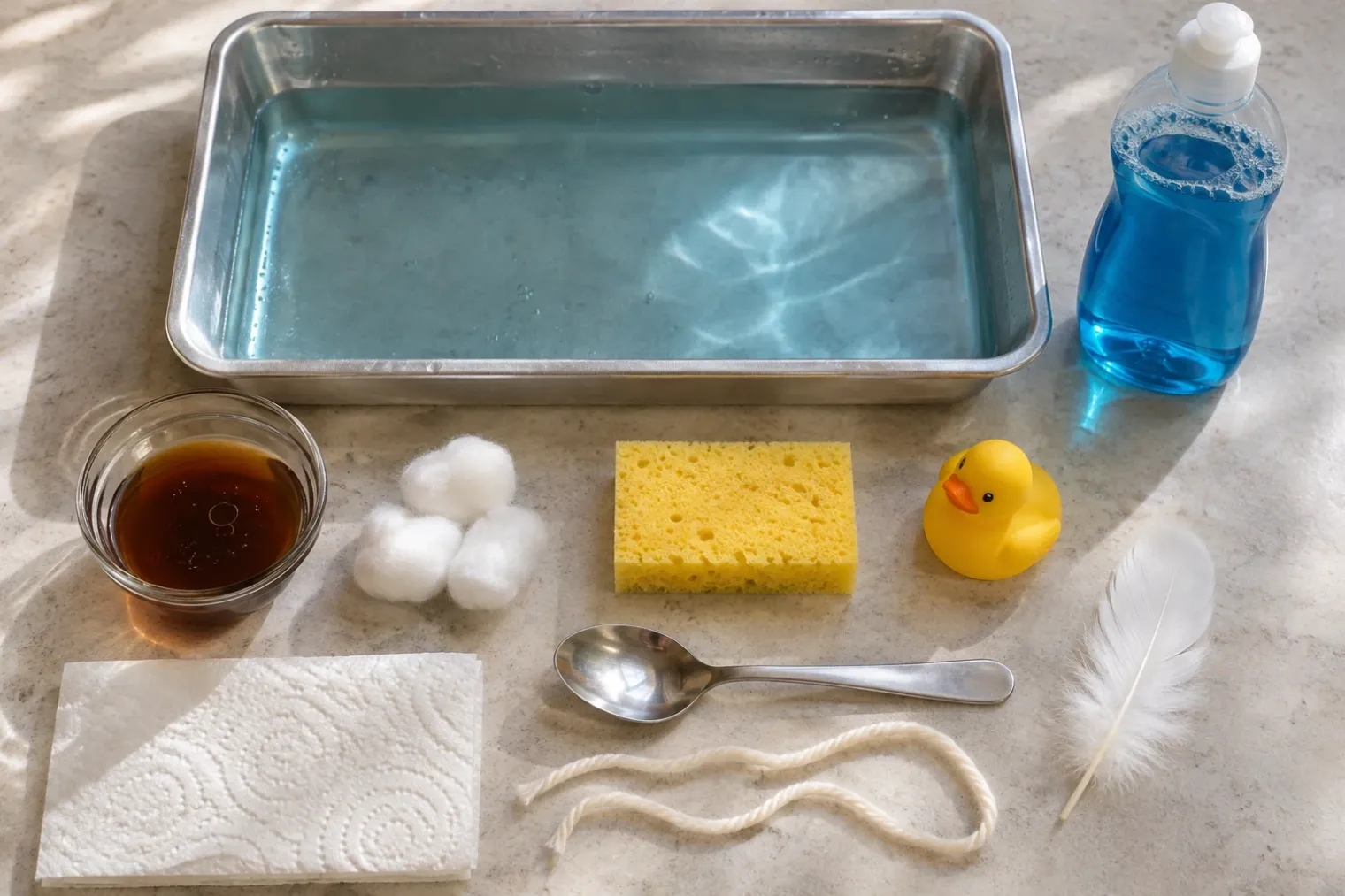
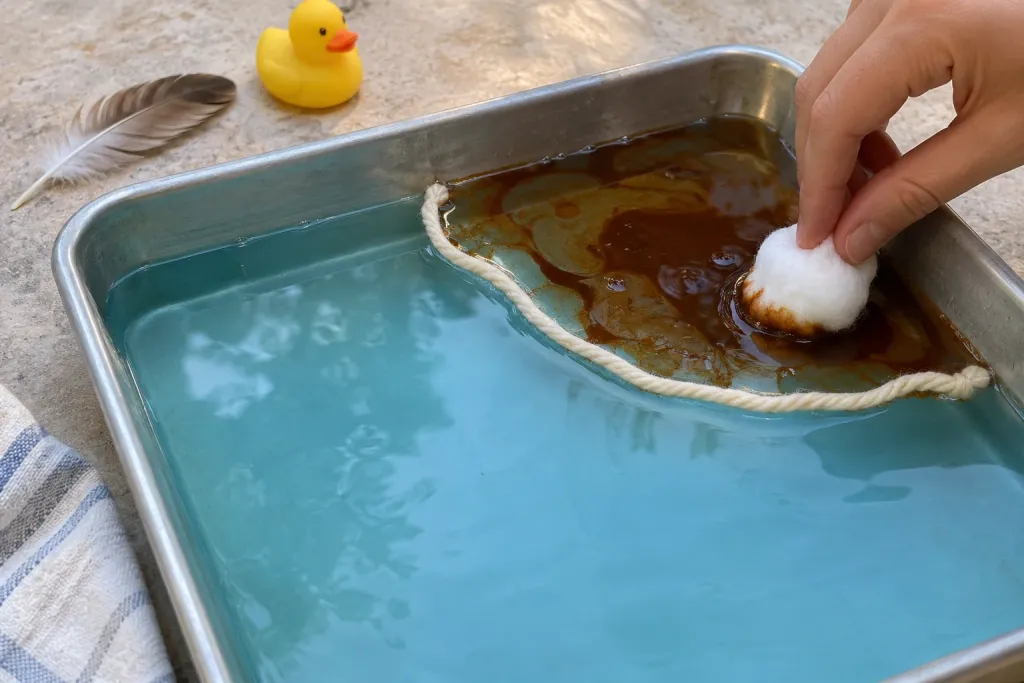
- A baking pan or plastic tubYour ocean. Fill it about halfway with water.you have this
- Vegetable oil and cocoa powderStir 1 teaspoon of cocoa into ¼ cup of oil so it looks like crude oil.you have this
- Cleanup toolsA spoon, cotton balls, a sponge, paper towel, a piece of yarn or string, and a feather.you have this
- Dish soapTo test how detergents break up oil.you have this
- A small plastic toy animal (optional)A duck or seal makes it real.you have this
- A measuring cup and a timerTo track how much oil each tool removes.you have this
Let’s make (and clean) a spill
Make the spill
Pour your chocolatey oil into the middle of the pan. Watch what it does. Does it sink or float? Does it stay in one place or spread out?
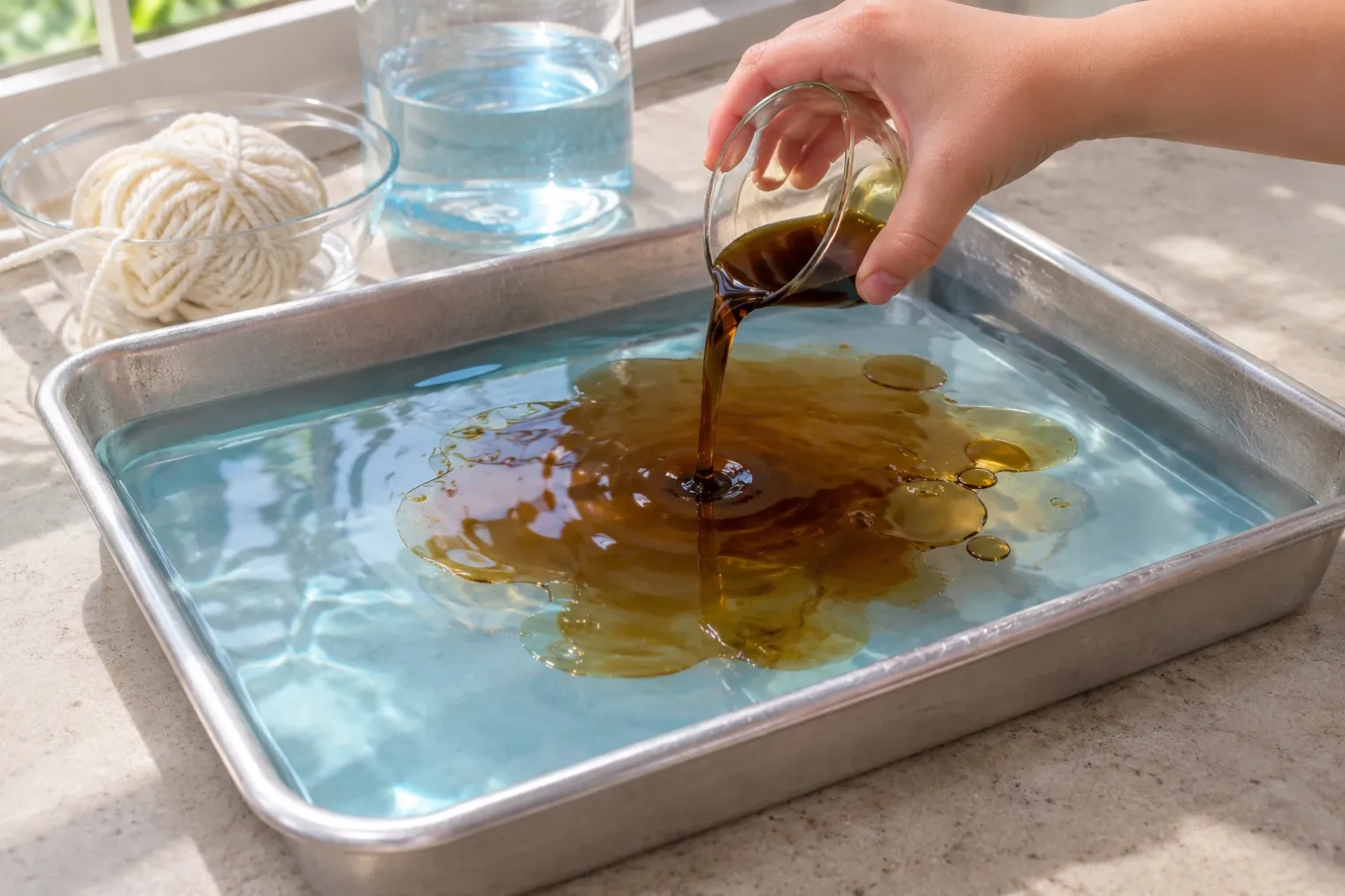
Gently wiggle the pan to make waves. See how the waves spread the oil and break it into smaller patches.
Fence it in
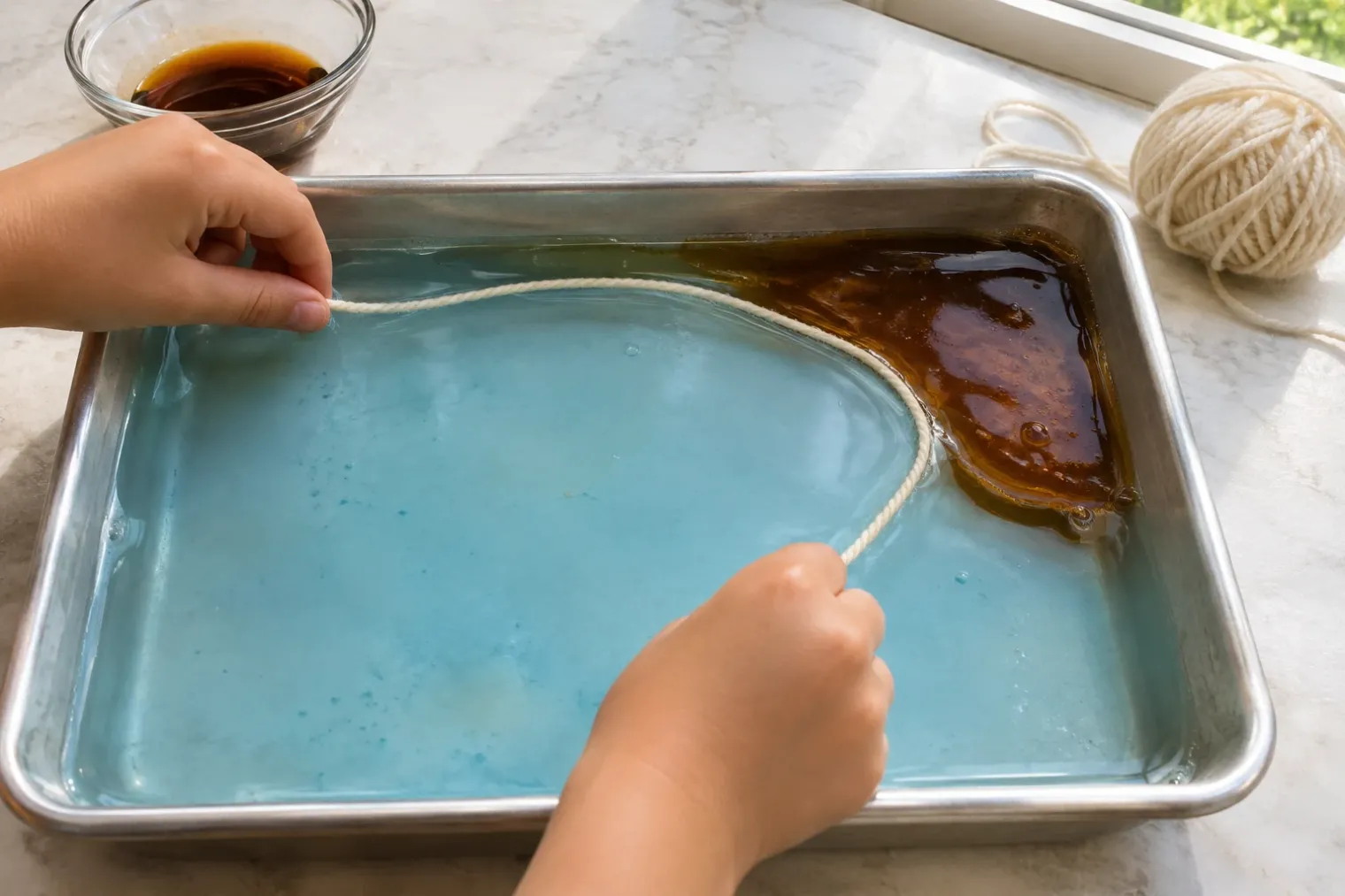
Lay a piece of yarn or string on the water and use it to push the oil into one corner. This is how real cleanup crews use floating barriers called booms.
Test your tools
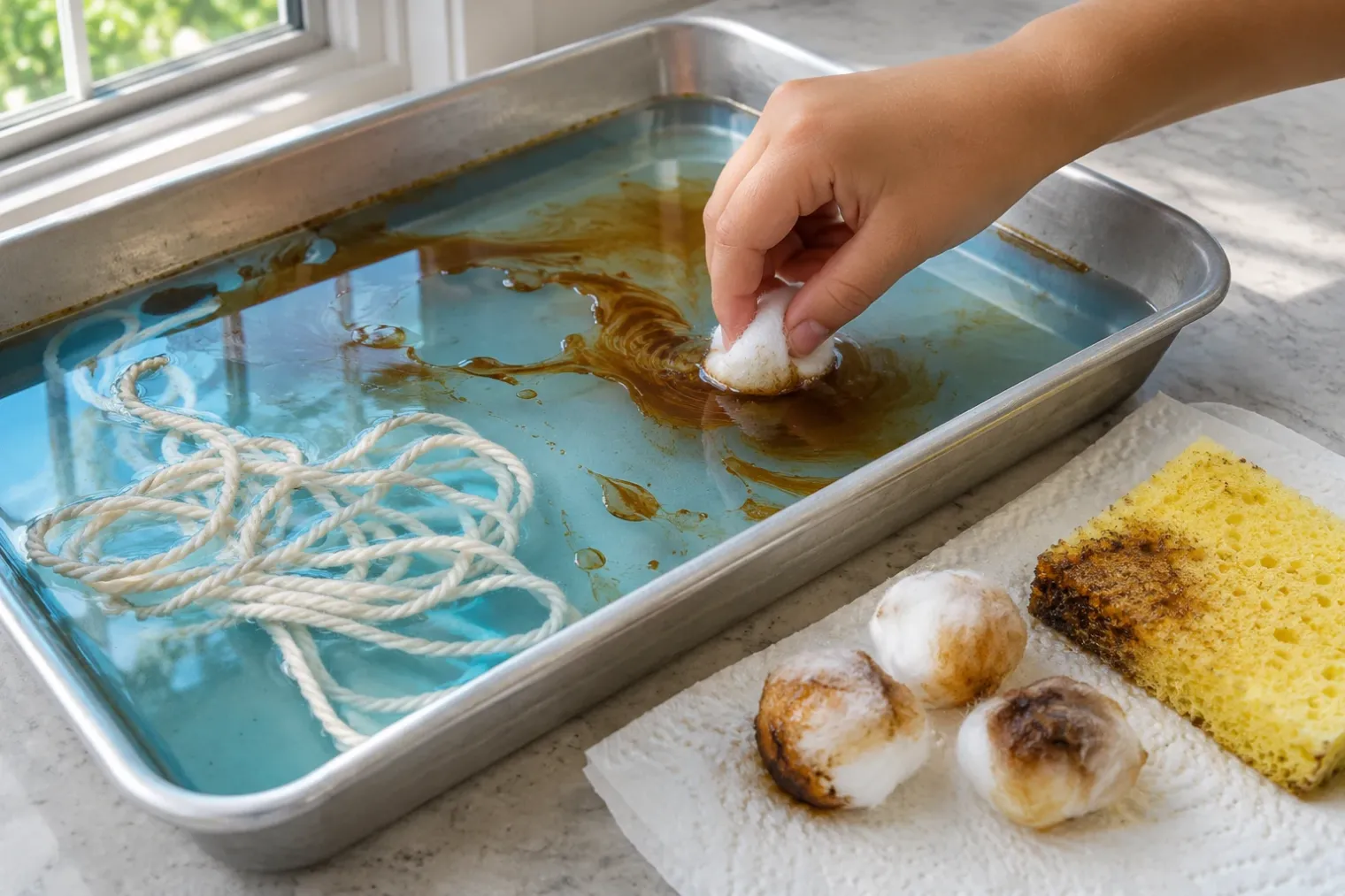
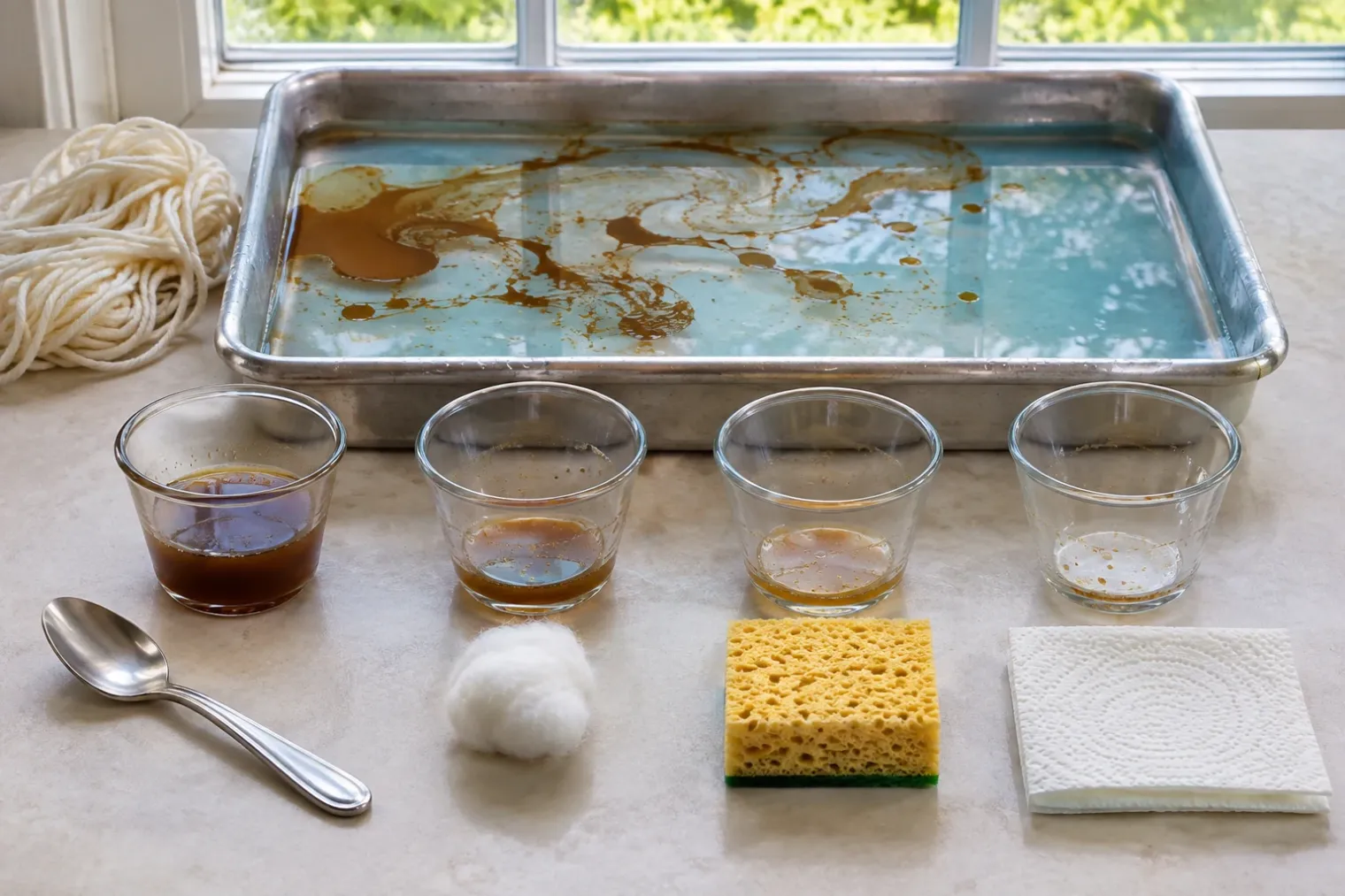
Give each tool 30 seconds. Try scooping with a spoon (like a skimmer boat), dabbing with cotton balls, and soaking with a sponge and a paper towel. Squeeze or scrape what you collect into a cup so you can compare.
Try dish soap
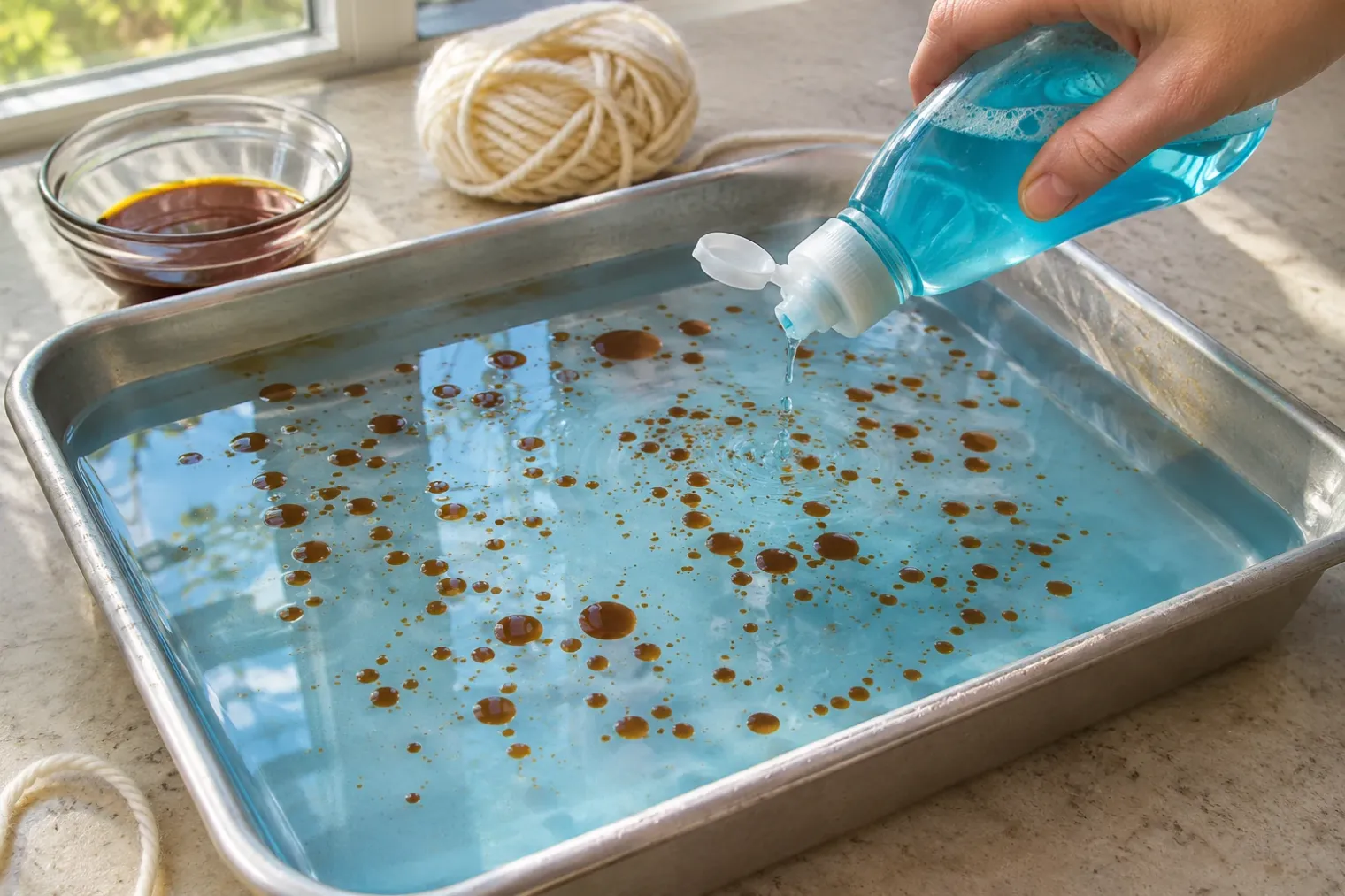
Squeeze a few drops of dish soap onto the oil. Watch the oil scatter and break into tiny droplets. Is the oil gone, or just harder to see?
The feather test
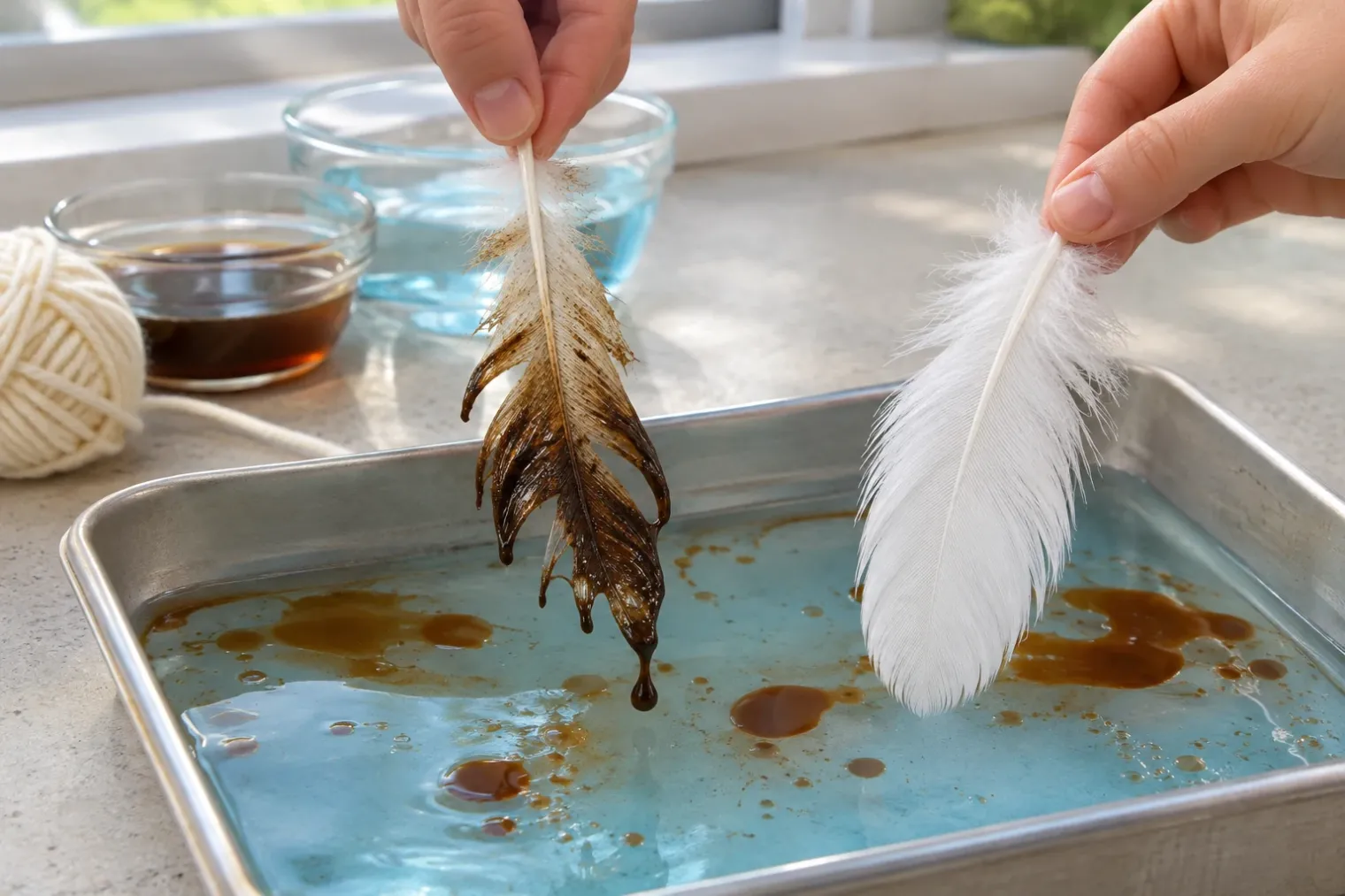
Dip a clean feather in plain water and shake it. Then dip it in the oil. What happens to the feather? Now try to clean it with water alone, and then with a drop of dish soap. Dip your toy animal too, and try to wash it off.
Score the cleanup
Rank each tool from best to worst. Look at the water: is any oil left? Most kids find that no tool gets all of it, which is exactly what happens in real spills.
What’s happening?
Oil and water don’t mix. Oil is less dense than water, so it floats on top and spreads into a thin layer called a slick. Waves and wind push the slick around, which makes it bigger and harder to catch.
Cotton and sponges work because oil sticks to their fibers. Real crews use special materials called sorbents that soak up oil but not water. Dish soap is a kind of dispersant: it breaks the oil into tiny droplets that mix into the water. The slick disappears from the surface, but the oil is still there, just spread out.
The feather test shows why spills are so dangerous for wildlife. Bird feathers are covered in tiny hooks that zip together to keep water out and warm air in. Oil sticks the feathers together, so water soaks through and birds get cold and can’t float or fly. Rescuers really do wash oiled birds with dish soap, gently, one bird at a time.
For grown-ups: a little deeper
Responders combine containment booms, mechanical skimmers, sorbents, chemical dispersants and controlled in-situ burning, and nature contributes through evaporation and microbial biodegradation. Even with all of these, only a fraction of spilled oil is typically recovered. The 2010 Deepwater Horizon blowout in the Gulf of Mexico released roughly 134 million gallons over 87 days, the largest marine oil spill in U.S. history; the 1989 Exxon Valdez spill in Alaska released about 11 million gallons and coated more than 1,000 miles of coastline. Dispersants remain debated: they reduce shoreline and surface impacts but move oil into the water column, where it can affect fish and plankton.
Make it a science fair project
- Sorbent showdownTest cotton, wool, felt, hair, hay, sawdust and paper. Measure how much oil each removes in 30 seconds.
- Calm vs. stormyClean one spill in still water and one with waves. How much harder are waves?
- Beach testPile sand at one end of the pan for a beach. Once oil reaches the sand, can you get it out?
- Cleanup budgetGive each tool a price, like the egg car project, and find the cheapest way to clean the most oil.
Keep exploring: Why Is the Ocean Salty? · DIY Water Filter · Air Pollution Facts
Questions and troubleshooting
Why does oil float on water?
Oil is less dense than water, meaning a cup of oil weighs less than a cup of water. Less dense liquids float on top of denser ones, and oil and water don’t mix.
What is the best way to clean up an oil spill?
There’s no single best way. Crews use booms to trap the oil, skimmers to scoop it, and sorbents to soak it up. Most kids find cotton balls or sponges work best in the experiment, but none get every drop.
Why does dish soap make the oil disappear?
Soap molecules grab onto oil on one end and water on the other, so they break oil into tiny droplets that spread through the water. The oil isn’t gone. It’s just mixed in where you can’t see it.
How do oil spills hurt animals?
Oil coats birds’ feathers and sea otters’ fur, so they can’t stay warm or dry. Animals can swallow oil while cleaning themselves, and spills can harm fish, shellfish and the plants they eat.