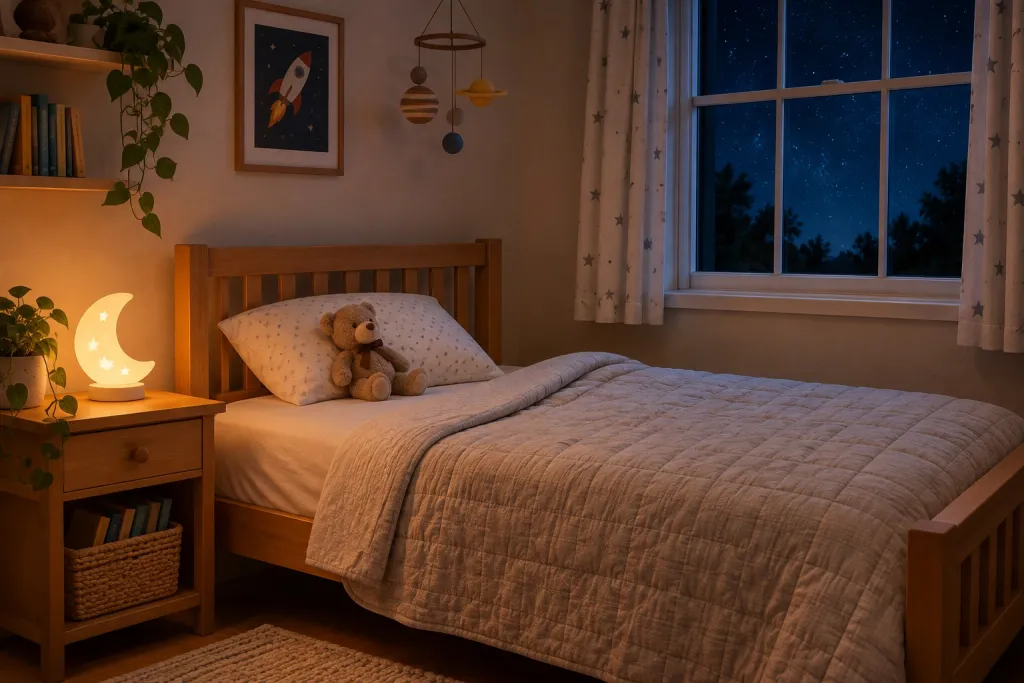
Every night, you close your eyes and spend about a third of your life asleep. It might seem like nothing is happening. But your brain and body are actually doing some of their most important work while you’re snoozing.
What sleep does for you
- Saves your memories. During sleep, your brain replays and sorts what you learned that day, moving important things into long-term storage, like saving a file. That’s why sleep helps you remember spelling words and new skills.
- Cleans your brain. Your busy brain makes waste during the day. During deep sleep, fluid washes through the brain and helps rinse that waste away.
- Helps you grow. Your body releases most of its growth hormone during deep sleep. Kids really do grow while they sleep!
- Repairs and protects. Muscles repair, and your immune system, your body’s germ fighters, gets stronger.
- Resets your mood. A good night’s sleep makes it easier to handle frustration and feel calm.
The stages of sleep
Sleep isn’t the same all night. You go through cycles that each last about 90 minutes. You start in light sleep, sink into deep sleep (when it’s hardest to wake up and when growing and cleaning happen most), then move into REM sleep. REM stands for Rapid Eye Movement, because your eyes dart around under your eyelids. That’s when most vivid dreams happen. Then the cycle starts again, four to six times a night.
Explain it like I’m 5
When you sleep, your brain is like a librarian putting away all the books you read today, and a cleaner tidying up. Your body grows and gets stronger, too. That’s why you wake up ready to play!
How much sleep do kids need?
Kids need more sleep than grown-ups, because their brains and bodies are growing so fast. Sleep experts recommend about:
- Ages 3–5: 10 to 13 hours (including naps)
- Ages 6–12: 9 to 12 hours
- Teens 13–18: 8 to 10 hours
- Adults: 7 or more hours
Screens before bed can make it harder to fall asleep, because their light tells your brain it’s still daytime. A dark, quiet room and the same bedtime every night help your body clock do its job.
Try it: the sleep memory test
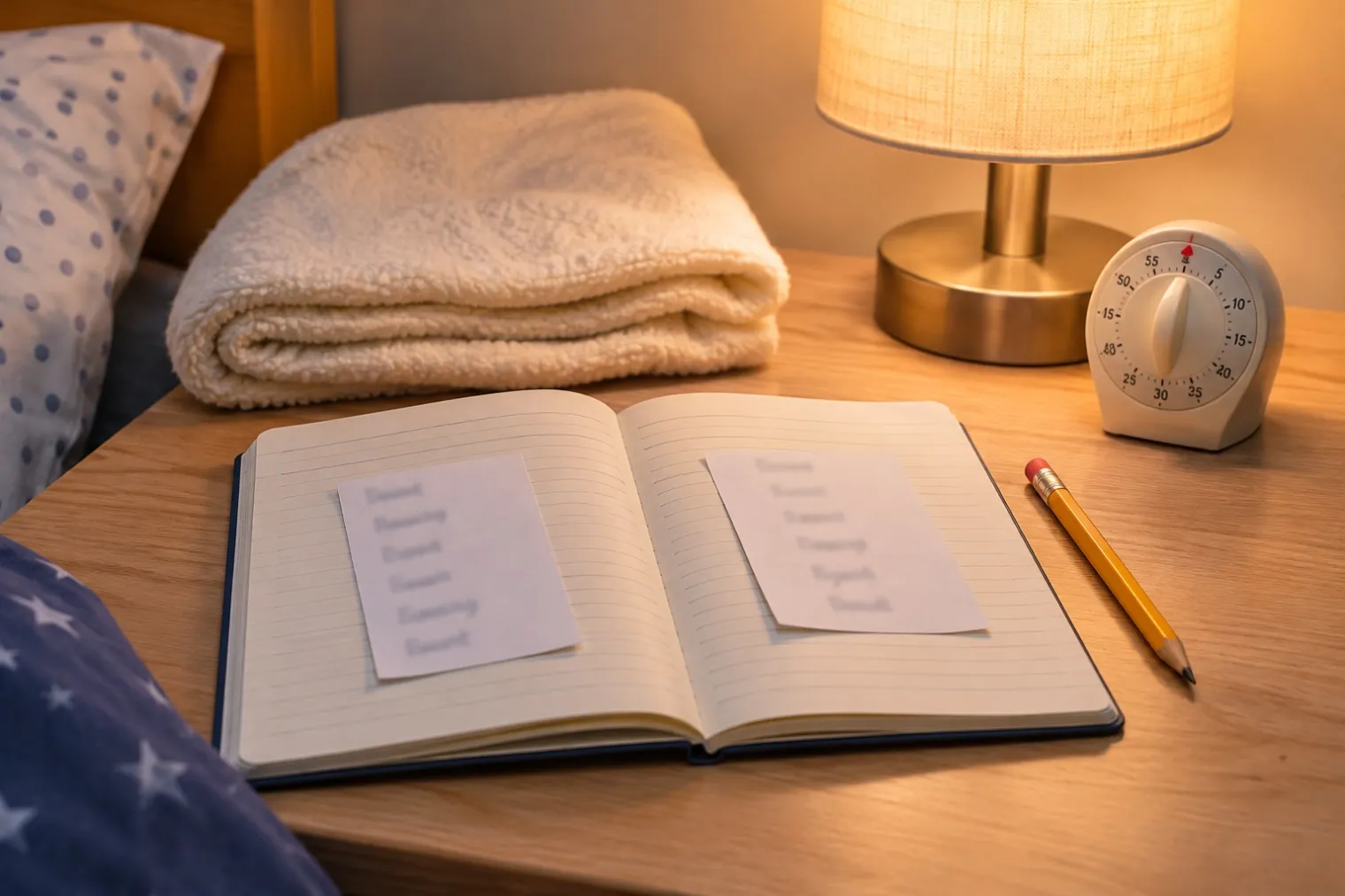
You need: a grown-up to make two lists of 12 random words (like: lamp, tiger, spoon…), a timer and paper.
- Morning, day 1: study list A for 2 minutes. Put it away. That evening (no sleep in between), write down as many words as you remember.
- Evening, day 1: study list B for 2 minutes right before bed. Put it away and go to sleep.
- Morning, day 2: write down as many words from list B as you remember.
- Compare your scores. Both waits were about 12 hours. Which list did you remember better?
What’s happening: many people remember the bedtime list better, because sleep helps lock in new memories. Try it with your whole family and compare results. Real science uses lots of people, since one test can be off.
Keep exploring: Why Do Roosters Crow? · Do Fish Sleep? · Why Do Bears Hibernate?
Words to know
- REM sleep
- The stage of sleep when your eyes move quickly and most dreams happen.
- Deep sleep
- The heaviest stage of sleep, when your body grows and repairs.
- Growth hormone
- A chemical your body makes that helps you grow.
- Memory
- Information your brain stores so you can use it later.
- Immune system
- The parts of your body that fight germs.
For grown-ups: the real science
Sleep alternates between non-REM (stages N1–N3, with N3 being slow-wave sleep) and REM sleep in cycles of roughly 90 minutes; slow-wave sleep dominates early in the night and REM lengthens toward morning. Memory consolidation involves hippocampal replay and transfer of information to the cortex, coordinated by slow oscillations, sleep spindles and sharp-wave ripples. Pulsatile growth hormone secretion peaks during slow-wave sleep.
Xie et al. (Science, 2013) reported that clearance of metabolites including β-amyloid via the glymphatic system increases during sleep in mice; the magnitude of this effect is still debated. The American Academy of Sleep Medicine recommends 10–13 hours (including naps) for ages 3–5, 9–12 hours for ages 6–12 and 8–10 hours for ages 13–18. Insufficient sleep in children is linked to attention, mood, learning and metabolic problems. Evening light, especially from screens, delays melatonin release.
Questions kids ask next
Why do we dream?
Scientists aren’t completely sure. Dreams may help the brain sort memories and practice handling feelings. Everyone dreams every night, even if they don’t remember.
Why do we yawn?
One leading idea is that yawning helps cool the brain. Yawns are also contagious: seeing someone yawn often makes you yawn too.
Do animals sleep?
Almost all do, but in different ways. Dolphins sleep with half their brain at a time, and some birds can nap while flying.
What happens if you don’t sleep?
After one short night, you’ll probably feel grumpy and have trouble focusing. Over time, too little sleep makes it harder to learn and easier to get sick.