“That star is 100 light-years away.” It sounds like it’s talking about time, but a light-year is actually a way to measure distance, just like miles or kilometers. It’s just a much, much bigger ruler.
Light is the fastest thing there is
Light travels about 186,000 miles (300,000 kilometers) every second. That’s fast enough to zip around Earth about 7½ times in one second. Nothing in the universe goes faster.
Now imagine a beam of light traveling nonstop for a whole year. The distance it covers is one light-year: about 6 trillion miles (9.5 trillion kilometers). Written out, that’s 6,000,000,000,000 miles.
Why not just use miles?
For the same reason you wouldn’t measure the distance to Grandma’s house in inches. The nearest star to us after the Sun, Proxima Centauri, is about 25 trillion miles away. That’s a hard number to picture. In light-years, it’s just 4.2. Much easier!
Explain it like I’m 5
Light is the fastest runner ever. A light-year is how far that super-fast runner could go if it ran for a whole year without stopping. That’s really, really far!
Looking at stars is looking back in time
Here’s the mind-bending part. Because light takes time to travel, you never see things exactly as they are right now. Sunlight is about 8 minutes old when it reaches you. Light from a star 100 light-years away left that star 100 years ago, before your great-grandparents were kids. When you look at the night sky, you’re seeing the past.
How far away are things in light-years?
- Proxima Centauri (nearest star after the Sun): 4.2 light-years
- Sirius (brightest star in the night sky): about 8.6 light-years
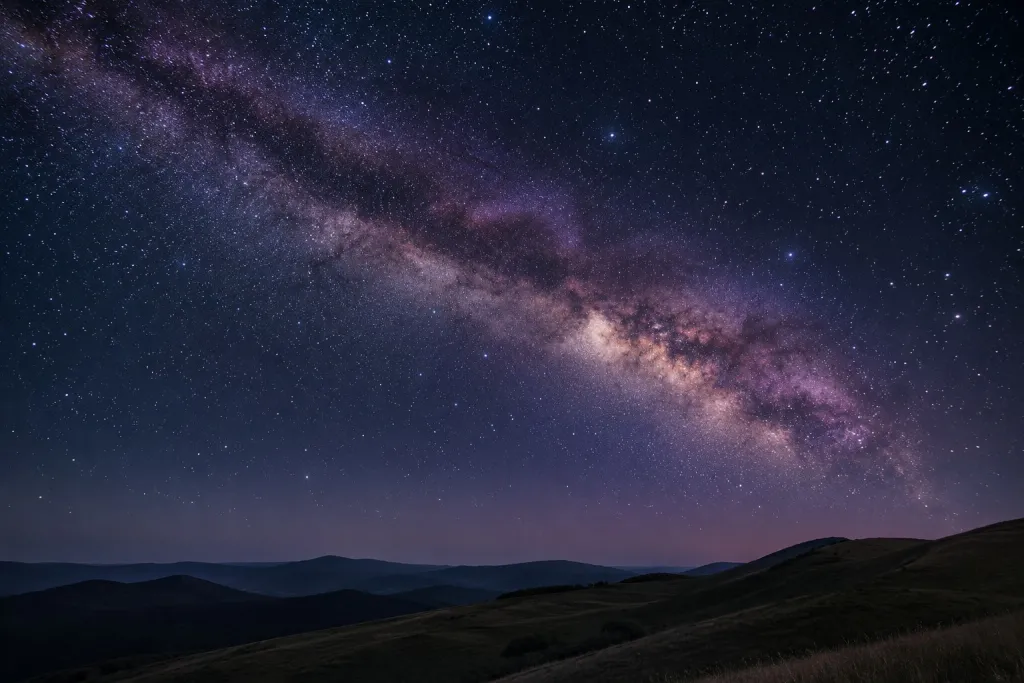
- Across our Milky Way galaxy: about 100,000 light-years
- The Andromeda Galaxy (farthest thing most people can see without a telescope): about 2.5 million light-years
Our fastest spacecraft would still need thousands of years to reach even the nearest star.
Try it: make your own “kid-second” ruler
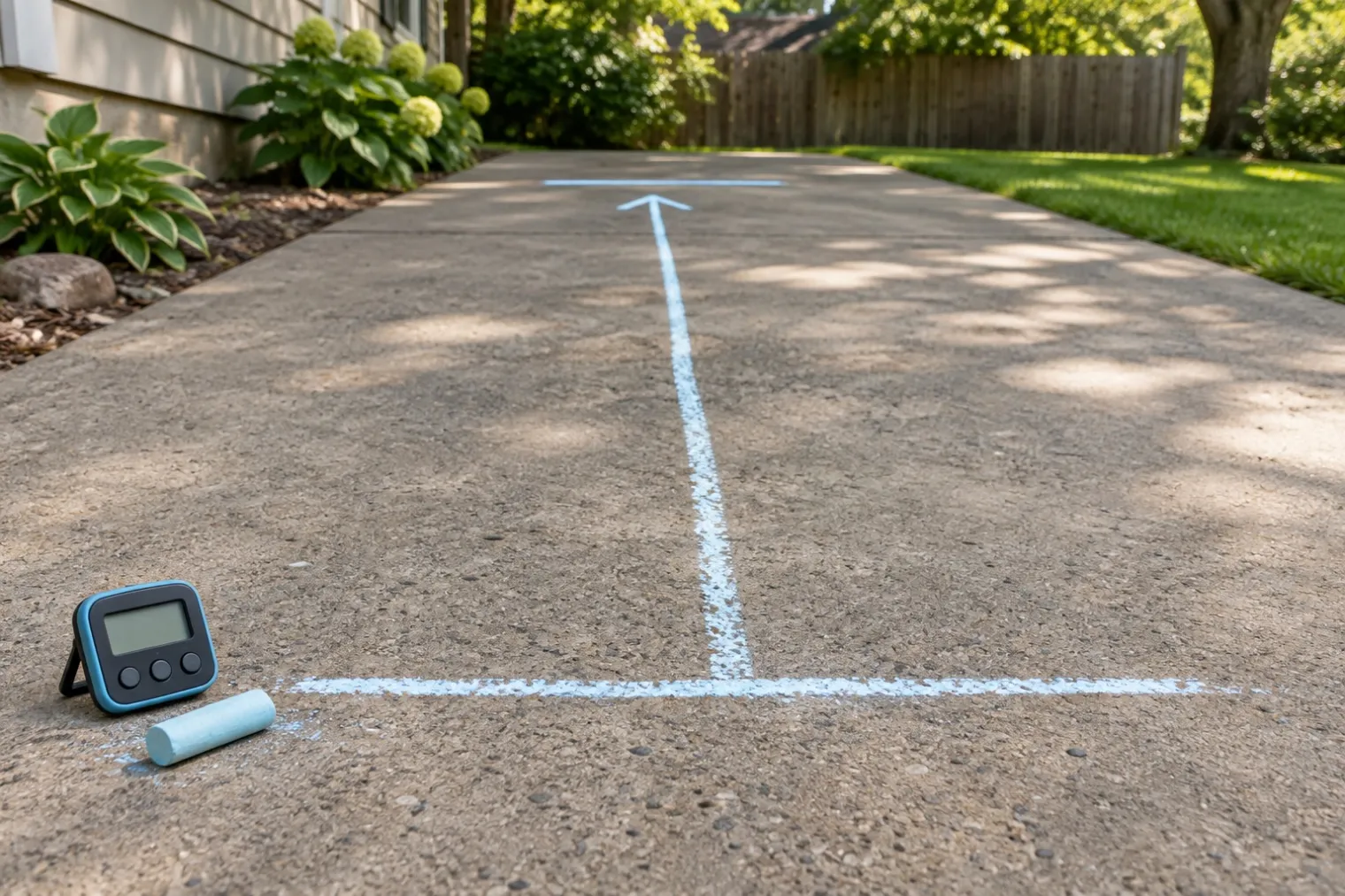
You need: a timer, chalk or a small marker like a stick, and some open space.
- Mark a starting line. A grown-up says “go” and you walk normally for 10 seconds.
- Mark where you stopped. That distance is ten “kid-seconds.”
- Now measure other things with it: “The mailbox is 3 kid-seconds away. The park is 600 kid-seconds away.”
What’s happening: you used a time of travel to describe a distance, exactly like a light-year does. The difference is that in one second, light goes about 186,000 miles, and you go about 4 feet.
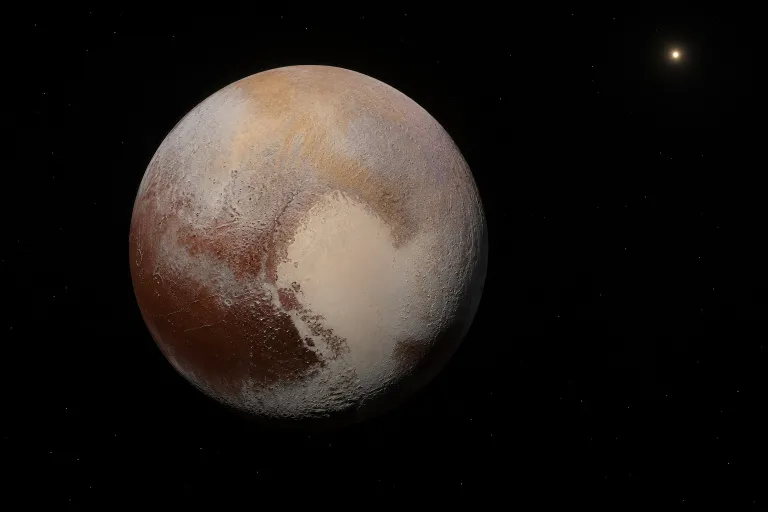
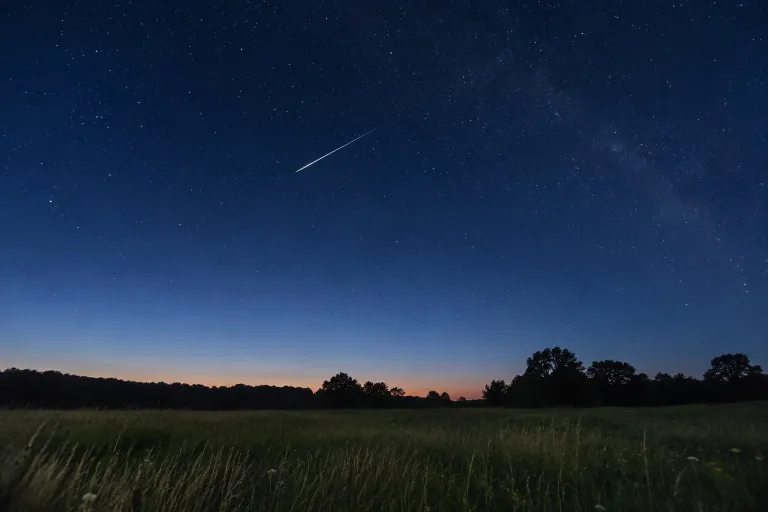
Keep exploring: Why Do Stars Twinkle? · What Is a Shooting Star? · Why Is Pluto Not a Planet?
Words to know
- Light-year
- The distance light travels in one year, about 6 trillion miles.
- Speed of light
- About 186,000 miles per second, the fastest speed possible.
- Galaxy
- A giant group of billions of stars, gas and dust. We live in the Milky Way.
- Astronomer
- A scientist who studies stars, planets and space.
For grown-ups: the real science
The speed of light in a vacuum is exactly 299,792,458 m/s by definition. The International Astronomical Union defines the light-year using the Julian year (365.25 days), giving 9,460,730,472,580.8 km, or about 5.88 trillion miles. Professional astronomers more often use the parsec (about 3.26 light-years), which comes from the parallax method of measuring stellar distances: the apparent shift of a nearby star against background stars as Earth orbits the Sun.
Light travel time means all astronomical observation is a look into the past. The James Webb Space Telescope observes galaxies whose light left them more than 13 billion years ago. Because the universe has expanded since then, those galaxies are now much farther than 13 billion light-years away.
Questions kids ask next
Is a light-year a measure of time?
No, it’s a distance. The word “year” is in there because it’s how far light goes in one year.
Could a star I see tonight already be gone?
It’s possible for very distant stars, but it’s rare. Most stars you can see are within a few thousand light-years, and stars live for millions to billions of years, so almost all of them are still shining.
How long would it take to travel one light-year?
At the speed of light, one year. In a car going 60 miles per hour, about 11 million years!
What is the farthest thing we can see?
Space telescopes have spotted galaxies whose light has been traveling for more than 13 billion years, from when the universe was very young.