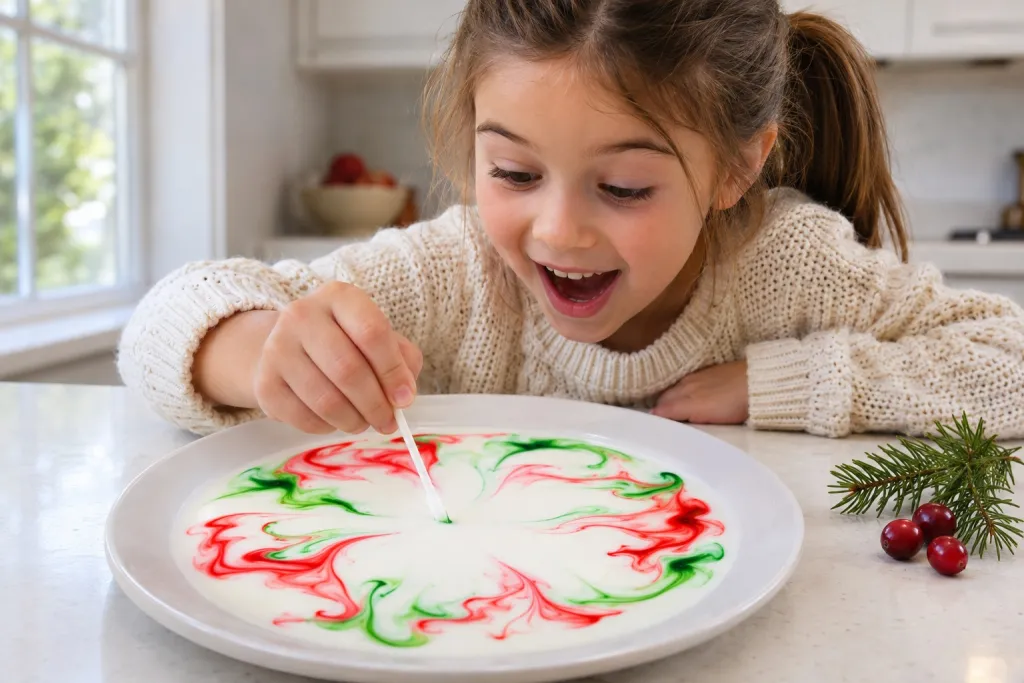
Pour a little milk on a plate, add a few drops of food coloring, then touch it with a cotton swab dipped in dish soap. The colors shoot away from the swab and swirl into wild patterns, like fireworks on a plate. Little kids gasp every time, and big kids want to know why.
In December we make it a magic milk wreath: a ring of red and green drops that bursts into a swirling holiday wreath. The science is the same either way, and it’s all about the invisible “skin” on top of the milk.
What you need
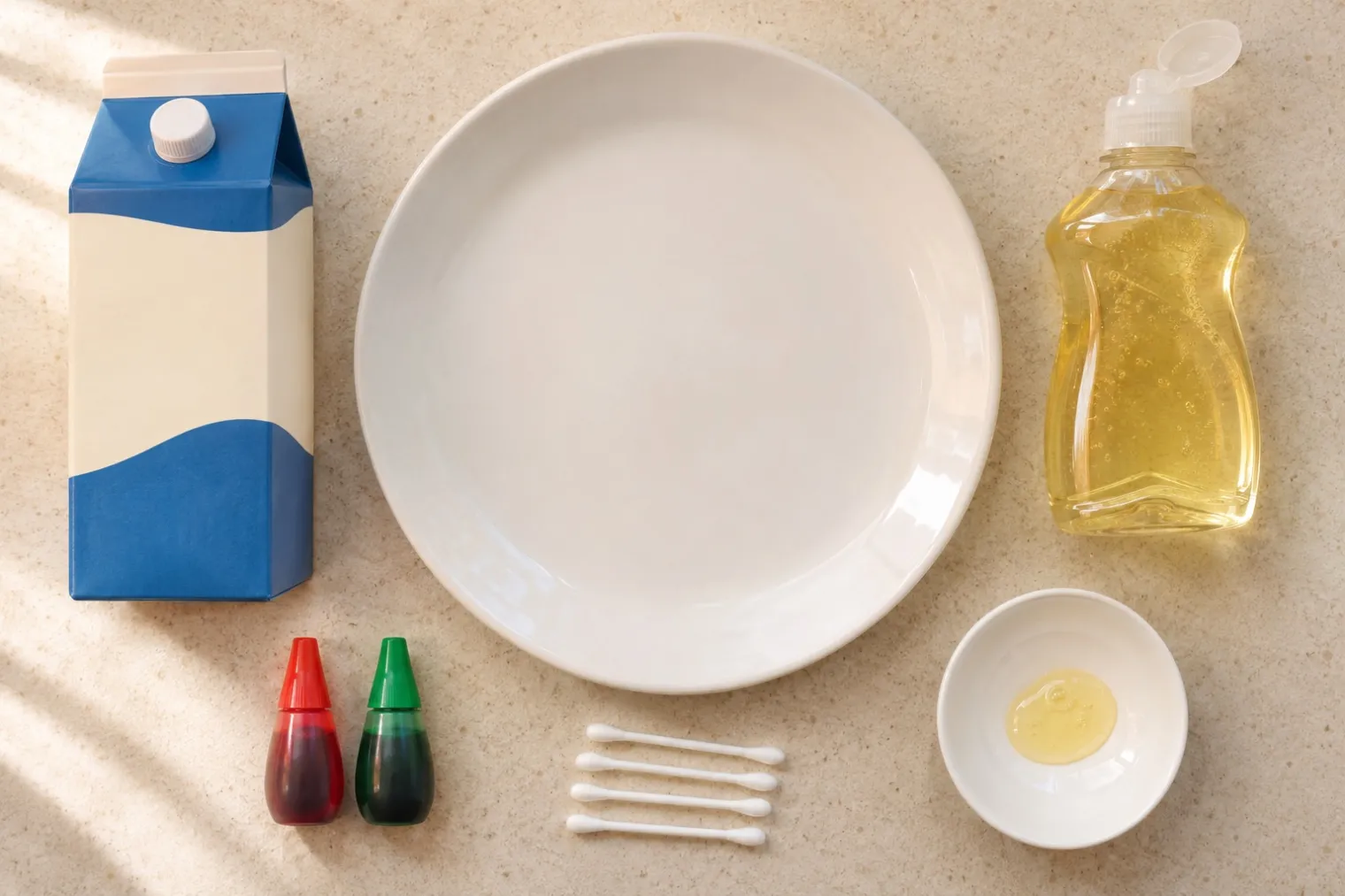
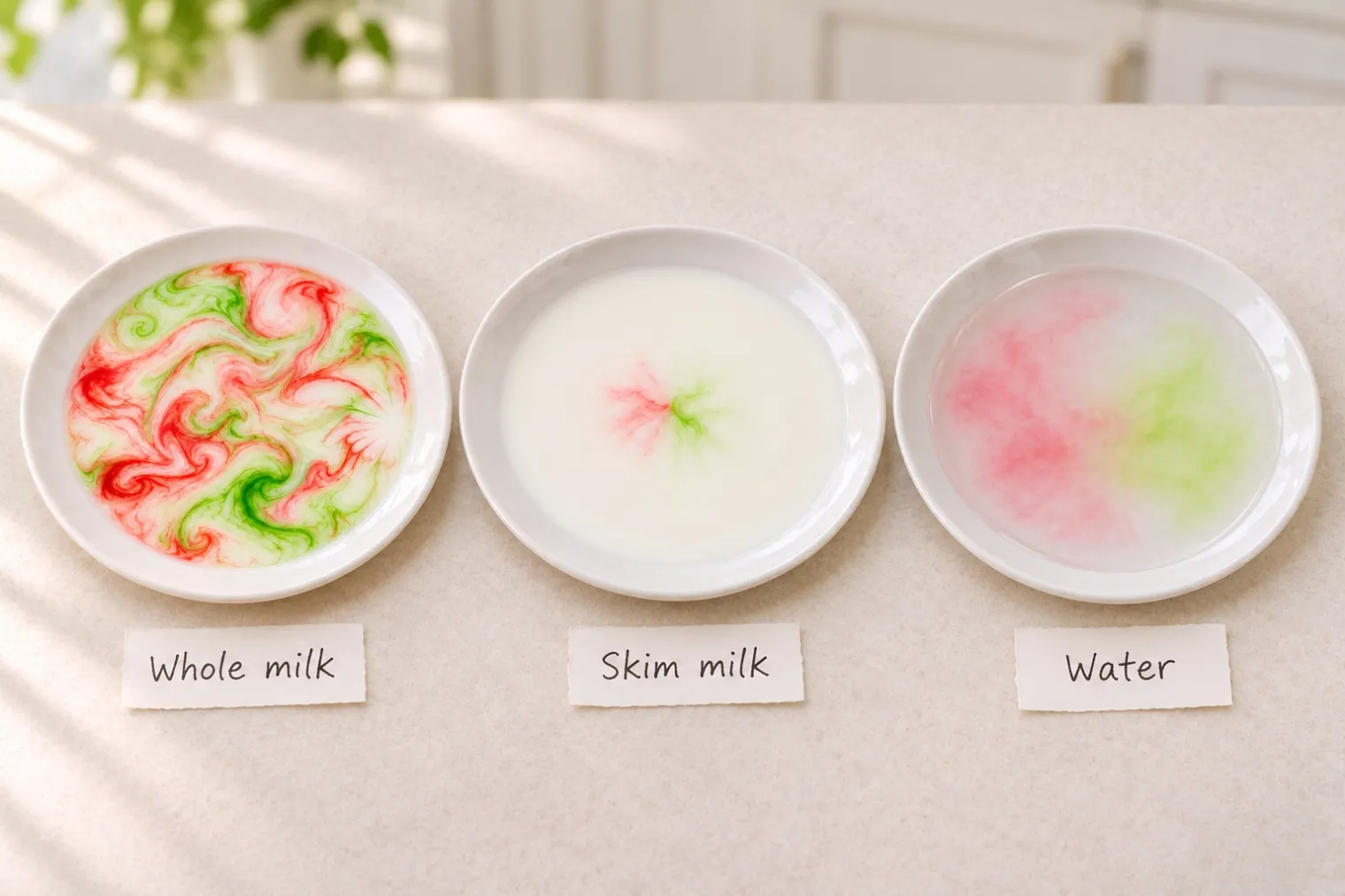
- Whole milk, about 1 cupThe fat in the milk is what makes this work, so whole milk or half-and-half is best. Skim milk barely moves.you have this
- A shallow plate or pie dishA white plate shows off the colors best.you have this
- Food coloringRed and green for a Christmas wreath, or any colors you like.you have this
- Dish soapA small squirt in a bowl or bottle cap.you have this
- Cotton swabsA few, so you can test with a plain one first.you have this
Let’s make magic milk
Pour the milk
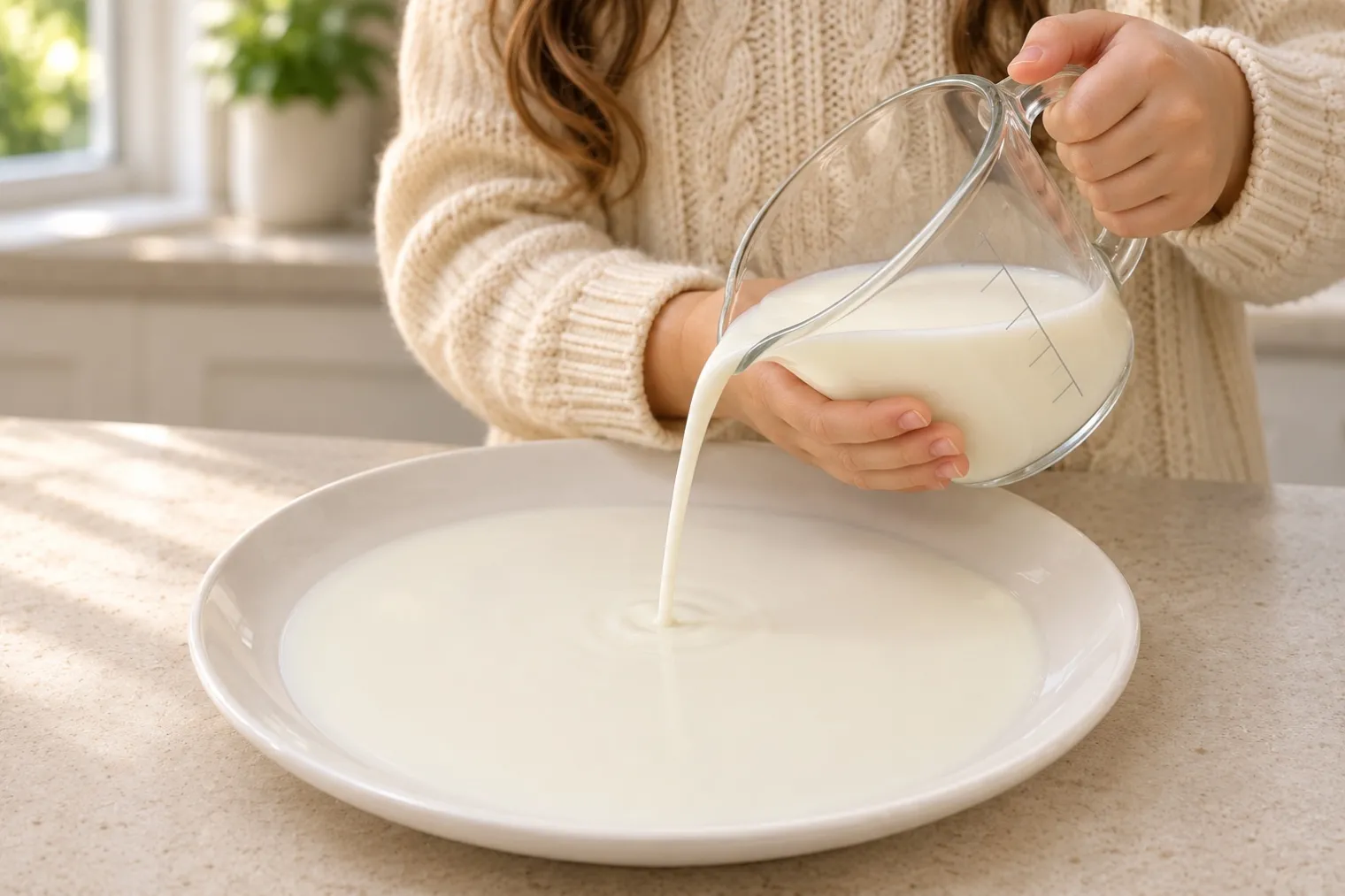
Set the plate on a flat table and pour in enough milk to cover the bottom, about half an inch deep. Let it sit for a few seconds until the surface is calm and still.
Add the color drops
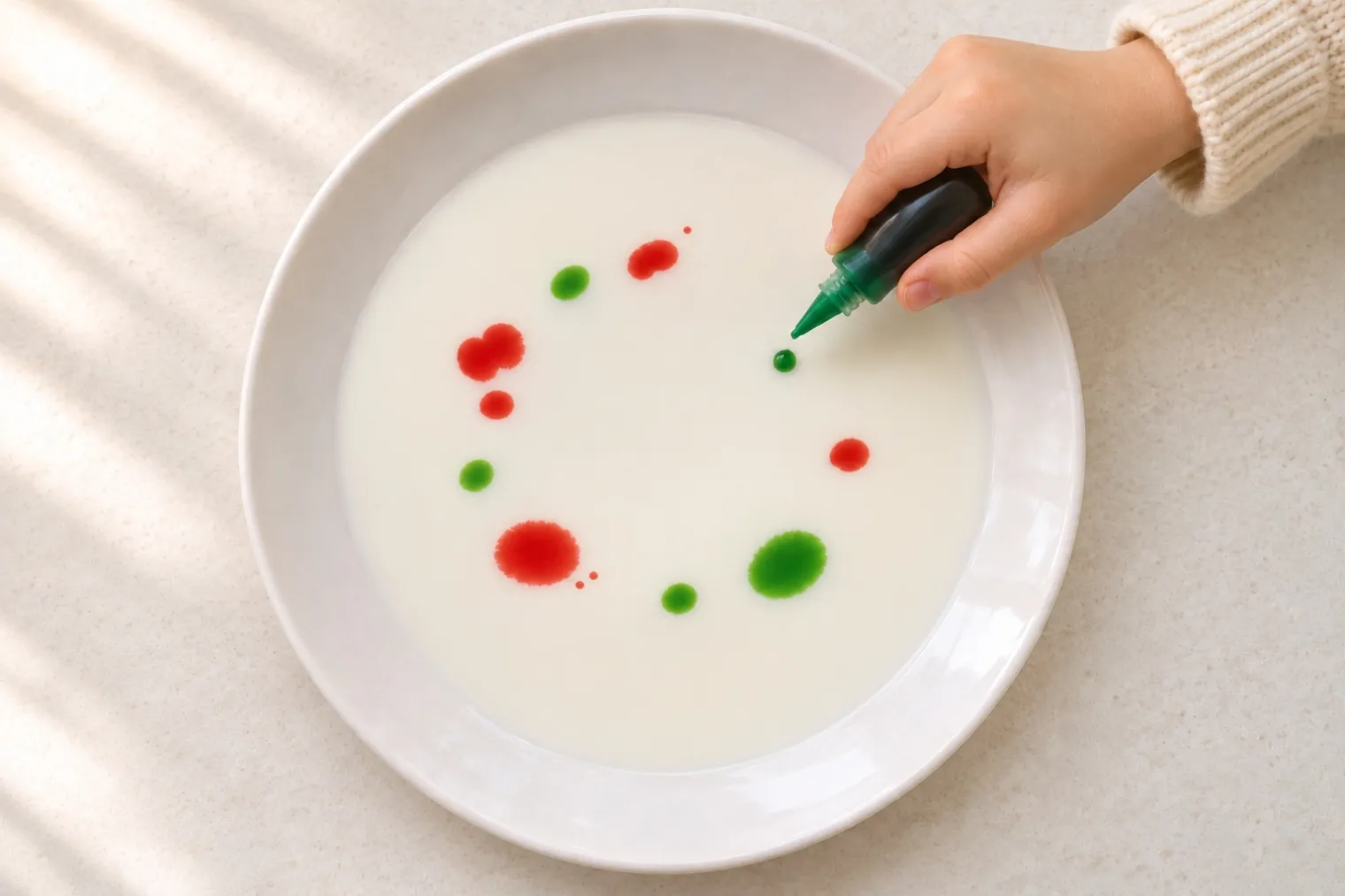
Drip food coloring onto the milk, close to the middle. For a wreath, make a ring of drops, switching between red and green. Don’t stir: the drops should just float there.
Try a plain swab first
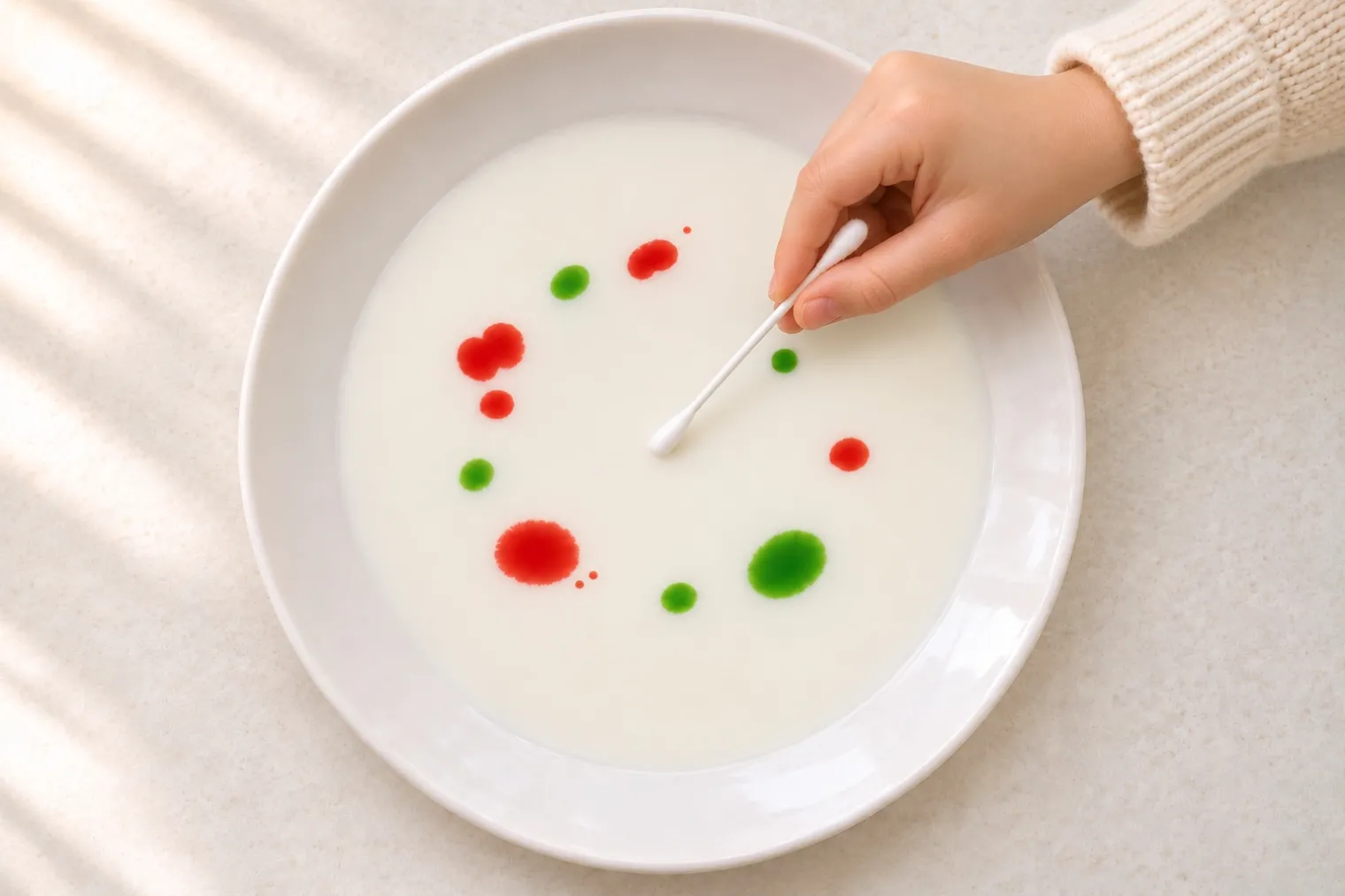
Touch a clean, dry cotton swab to the milk in the middle of the colors. Not much happens, right? That’s your control, the “before” that shows the soap is what makes the magic.
Make a prediction
Dip a new swab in dish soap. Ask: what will the colors do when the soapy swab touches the milk? Will they move toward it, away from it or not at all?
Touch and hold
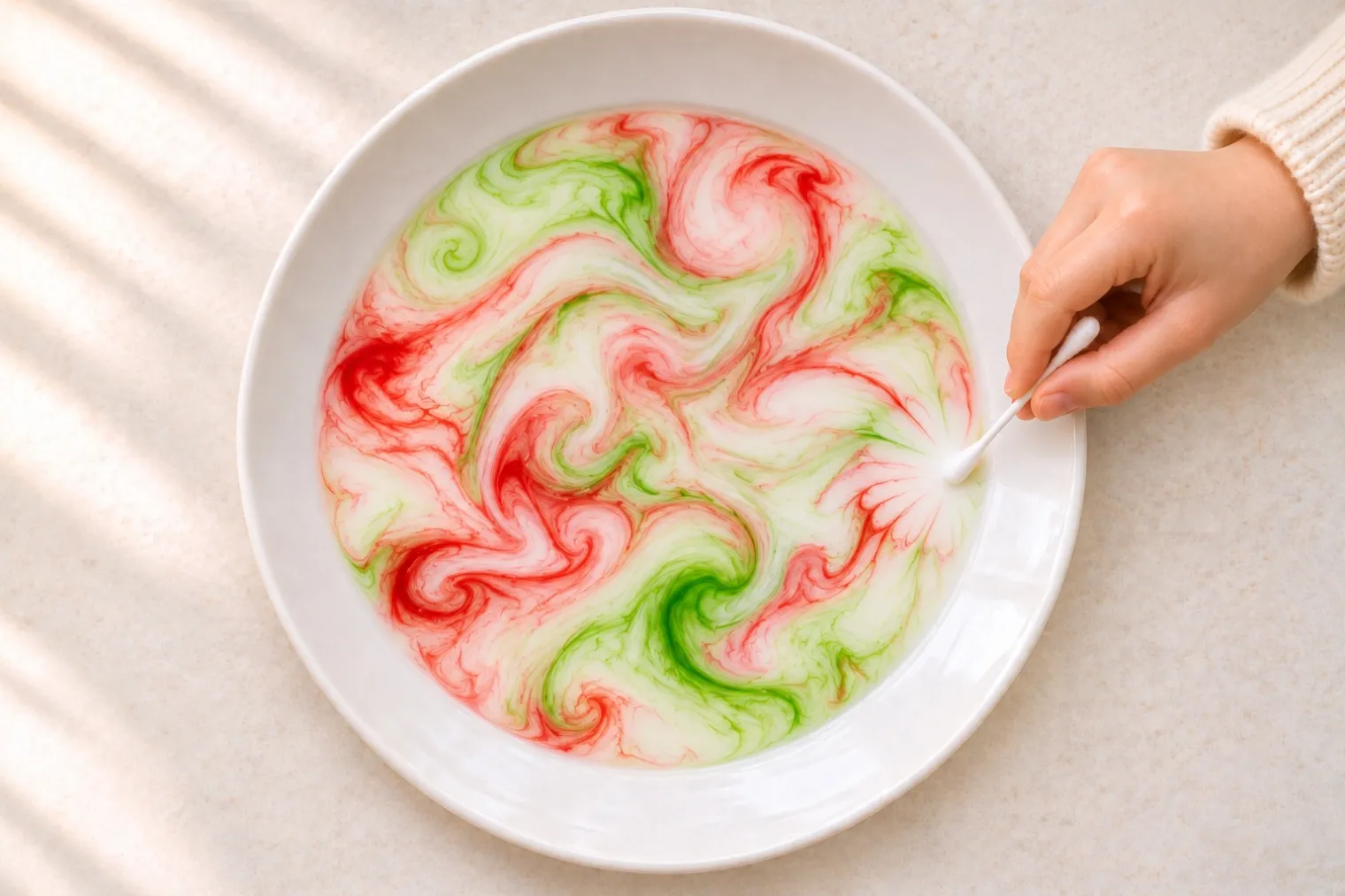
Touch the soapy swab to the milk in the middle of the colors and hold it still for 10 to 15 seconds. The colors burst away to the edges and start to swirl.
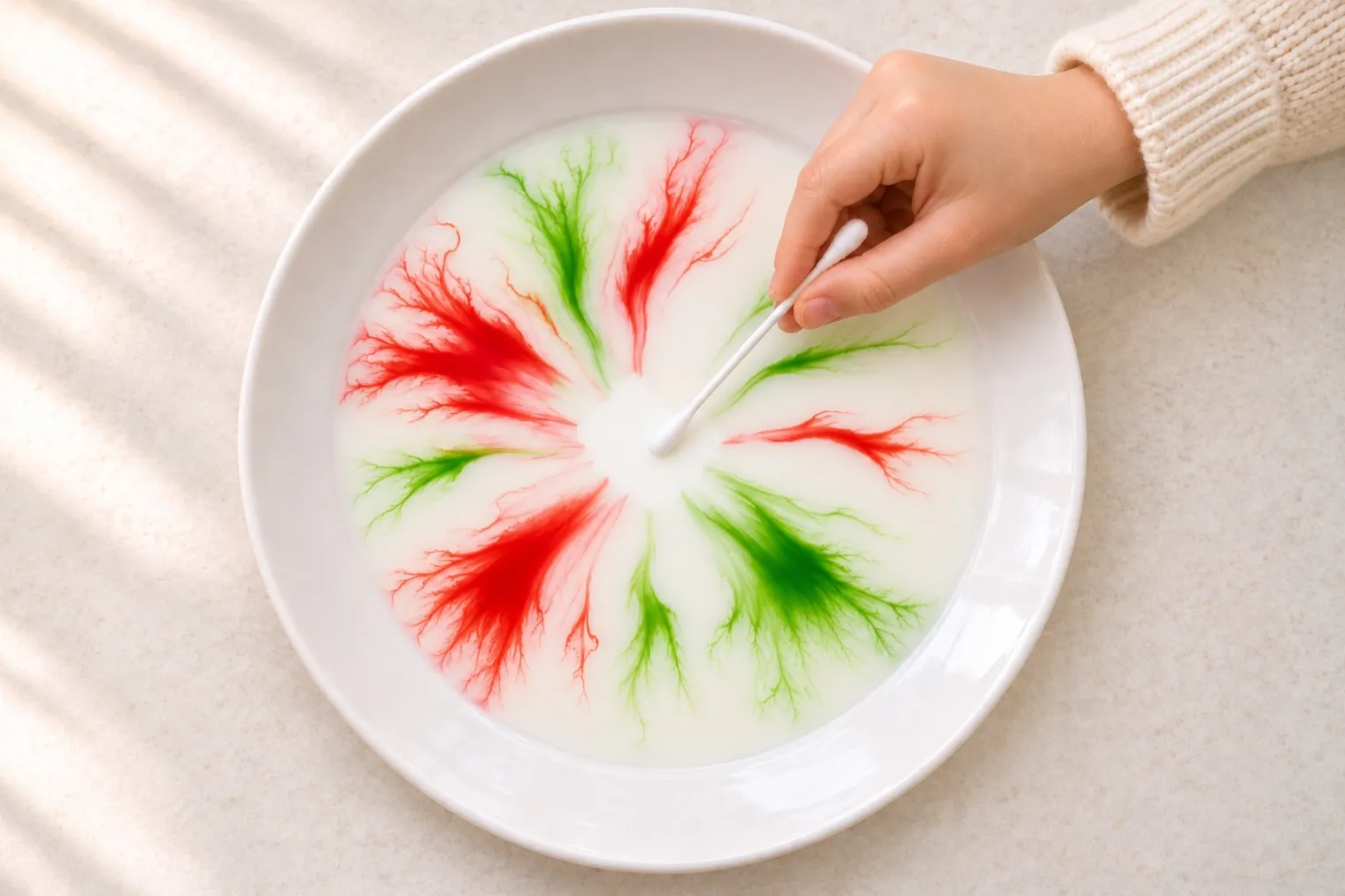
Keep watching after you lift the swab. The colors can keep twirling for a minute or more.
Keep the show going
Re-dip the swab in soap and touch new spots near the edges. Each touch starts a fresh burst. Eventually the swirling slows down and stops, and that’s part of the science too.
What’s happening?
The top of any liquid acts like a thin, stretchy skin. Scientists call this surface tension. It’s the same thing that lets a water bug walk on a pond. The food coloring floats on that skin.
Soap breaks the skin right where it touches. The rest of the skin, which is still strong, pulls away toward the edges of the plate, like a trampoline when you cut a hole in the middle. The colors ride along and shoot outward.
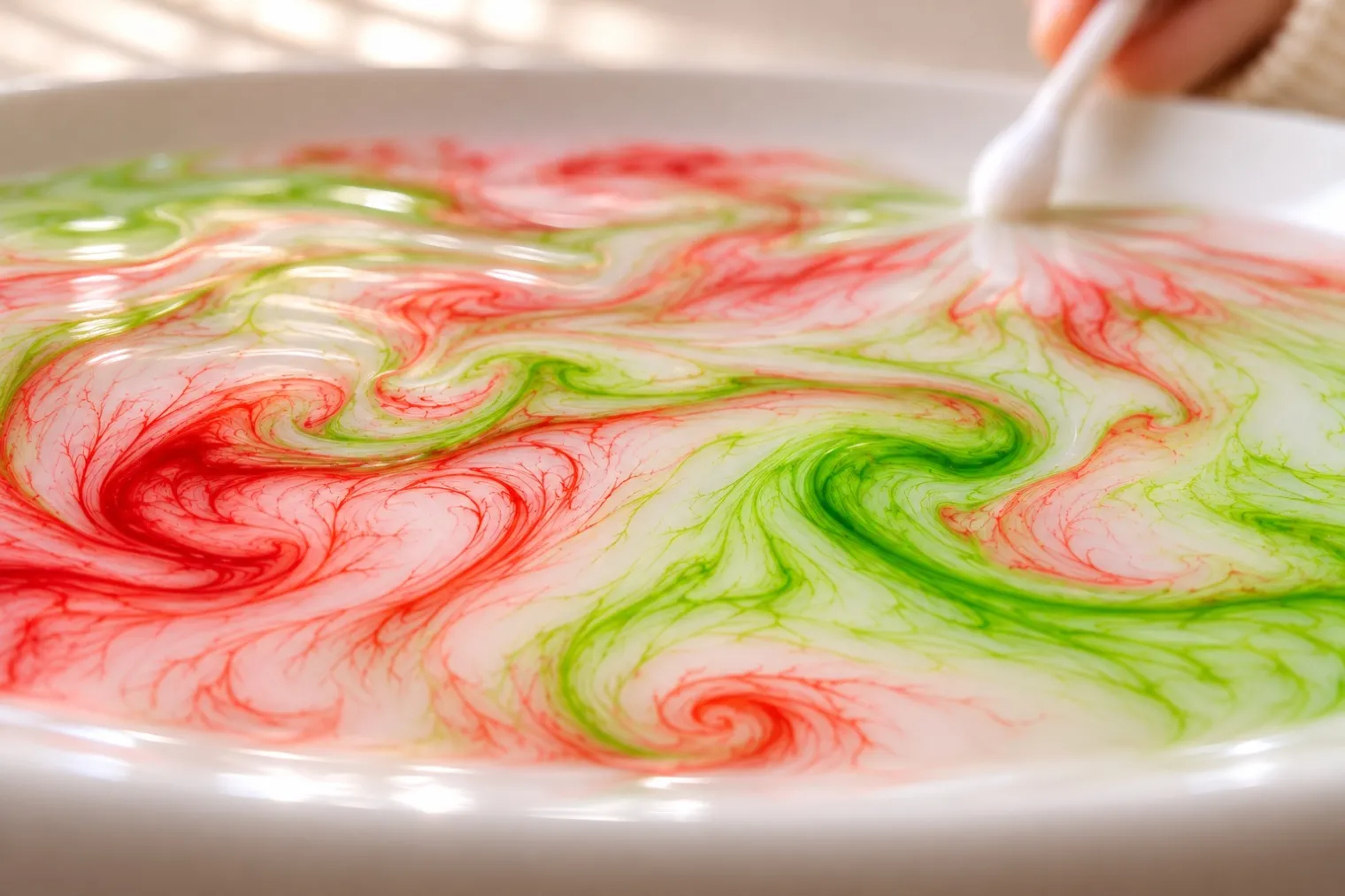
Soap also loves to grab onto fat, and milk is full of tiny fat drops. As the soap spreads through the milk and chases the fat, everything gets pushed and pulled around, and that’s what keeps the colors swirling. Once the soap has spread everywhere, the show stops.
For grown-ups: a little deeper
Dish soap is a surfactant. Each soap molecule has a water-loving (hydrophilic) end and a fat-loving (hydrophobic) end. Where soap lands, it lowers the surface tension, and the higher surface tension around it pulls the surface outward. This flow driven by a difference in surface tension is called the Marangoni effect. The longer-lasting swirls come from soap molecules clustering around fat globules and proteins in the milk, which keeps the liquid moving until the soap is evenly mixed.
Make it a real experiment
Change one thing at a time and time how long the colors keep moving.
- Whole vs. skim milkDoes milk with more fat make a bigger, longer show?
- Milk vs. waterTry the same steps on a plate of water. What’s different?
- Cold vs. warm milkDoes milk straight from the fridge swirl faster or slower than milk at room temperature?
Planning holiday science?
11 Christmas science experiments
The magic milk wreath is one of eleven easy, festive experiments, from dancing raisin reindeer to a snow volcano.
Troubleshooting
Why aren’t my colors moving?
The milk is probably low-fat. Switch to whole milk or half-and-half. Also check that the swab has a good coating of soap, and that the plate wasn’t bumped so the colors already mixed in.
Why did it stop so fast?
Too much soap spreads through the milk all at once. Use just a light coating on the swab, and touch new spots instead of dunking it in again and again.
Can we drink the milk afterward?
No. Once soap is in it, pour it down the drain. Grab a fresh glass of milk for a snack instead.
Can I do it with a big group?
Yes. Give each child a paper plate with a splash of milk and a swab. It’s cheap, quick and works well as a class party station.