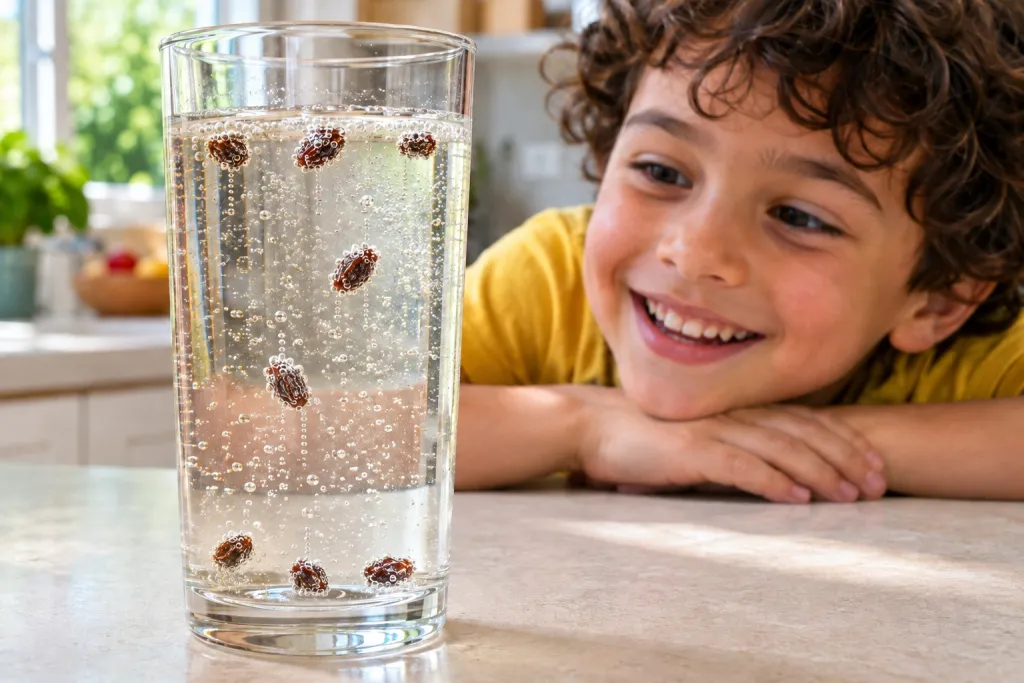
This might be the easiest experiment on the whole site, and kids love it every time. Drop a handful of raisins into a glass of clear soda and, after a minute, they start bobbing up and down like tiny dancers. Around the holidays we call them raisin reindeer.
Behind the fun is a real science idea: bubbles of gas can lift things that would normally sink.
What you need
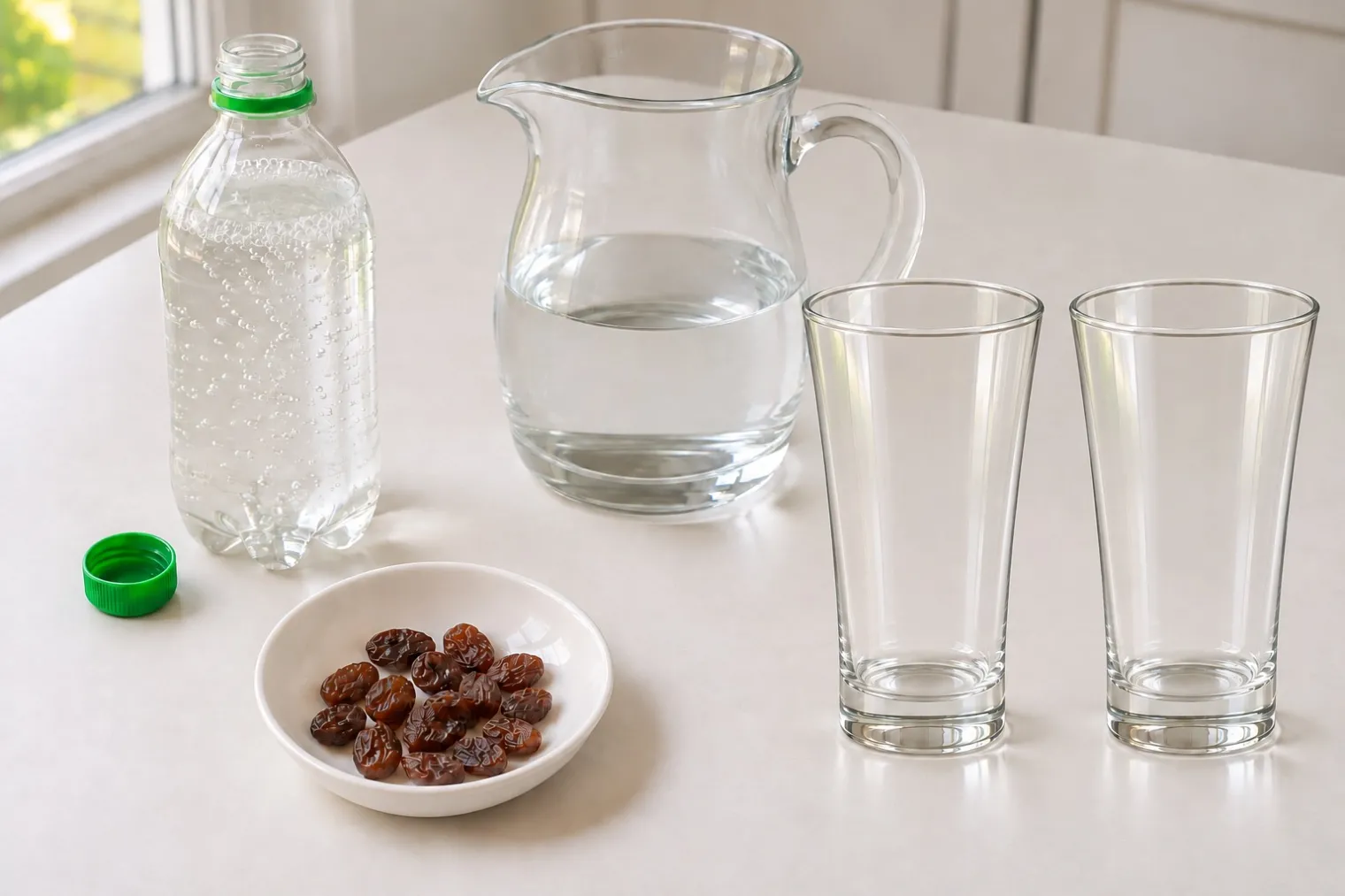
- Clear soda or sparkling waterLemon-lime soda or club soda. Clear lets you see the action, and it has to be fresh and fizzy.you have this
- A handful of raisinsFive or six per glass is plenty.you have this
- Two tall clear glassesOne for soda and one for plain water, so you can compare.you have this
- Plain tap waterFor the comparison glass.you have this
Let’s make raisins dance
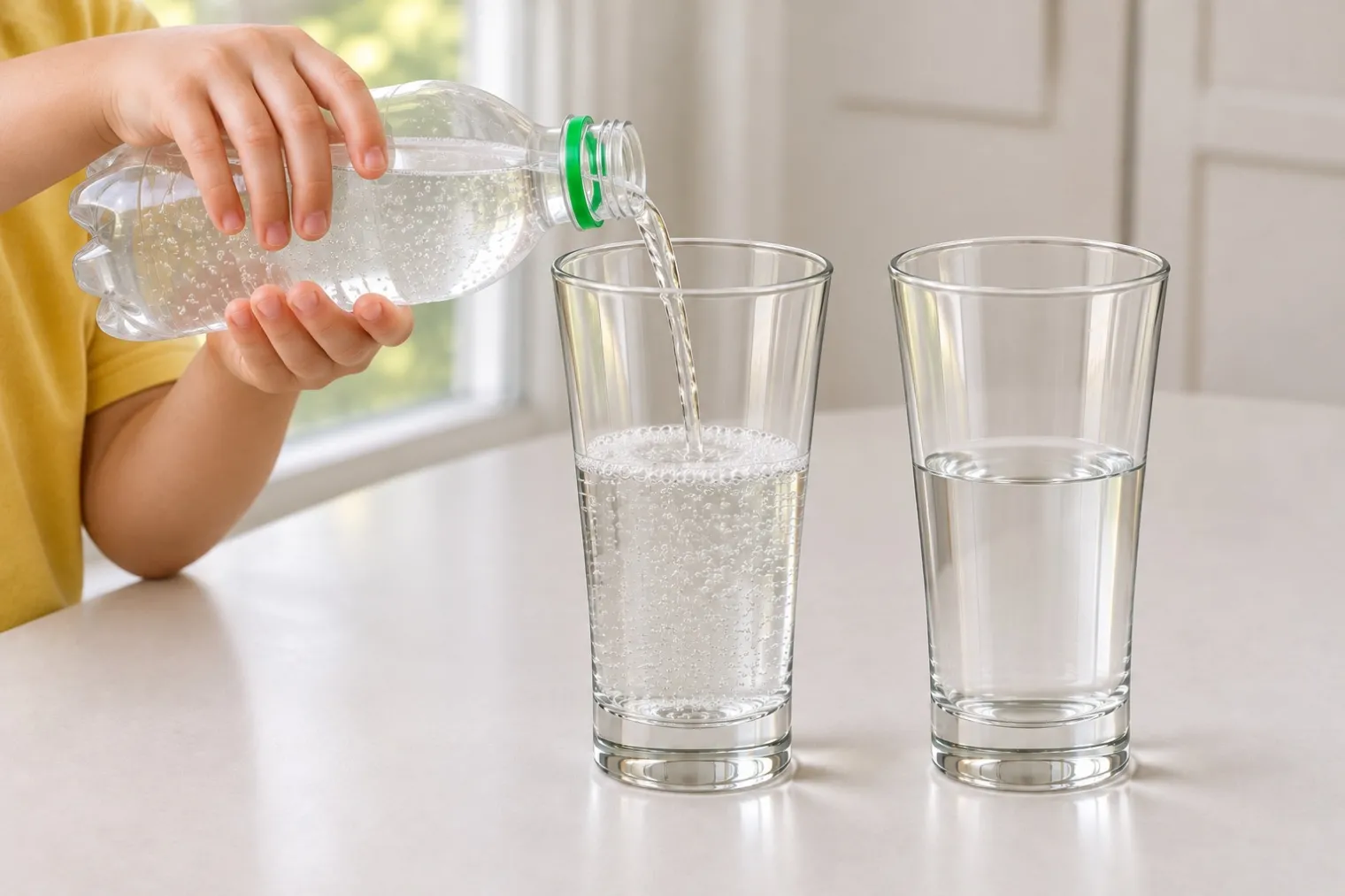
Pour the two glasses
Fill one glass about three-quarters full with soda and the other with plain water. Pour the soda slowly so you don’t lose too much fizz.
Make a prediction
Hold up a raisin and ask: will it float or sink? Will it do the same thing in both glasses? Scientists always guess first.
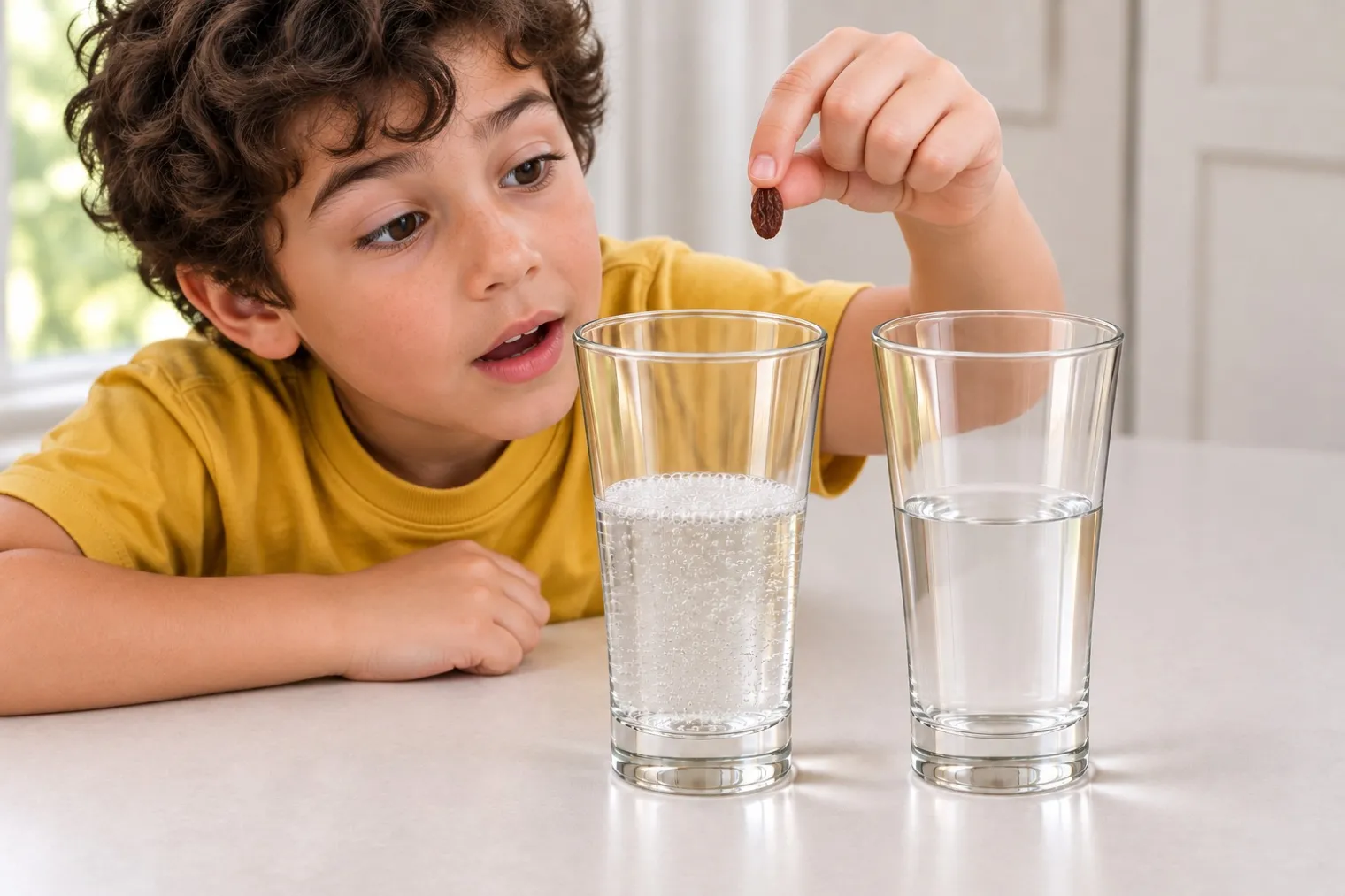
Drop in the raisins
Drop five or six raisins into each glass. At first they all sink to the bottom. Now watch the soda glass closely.
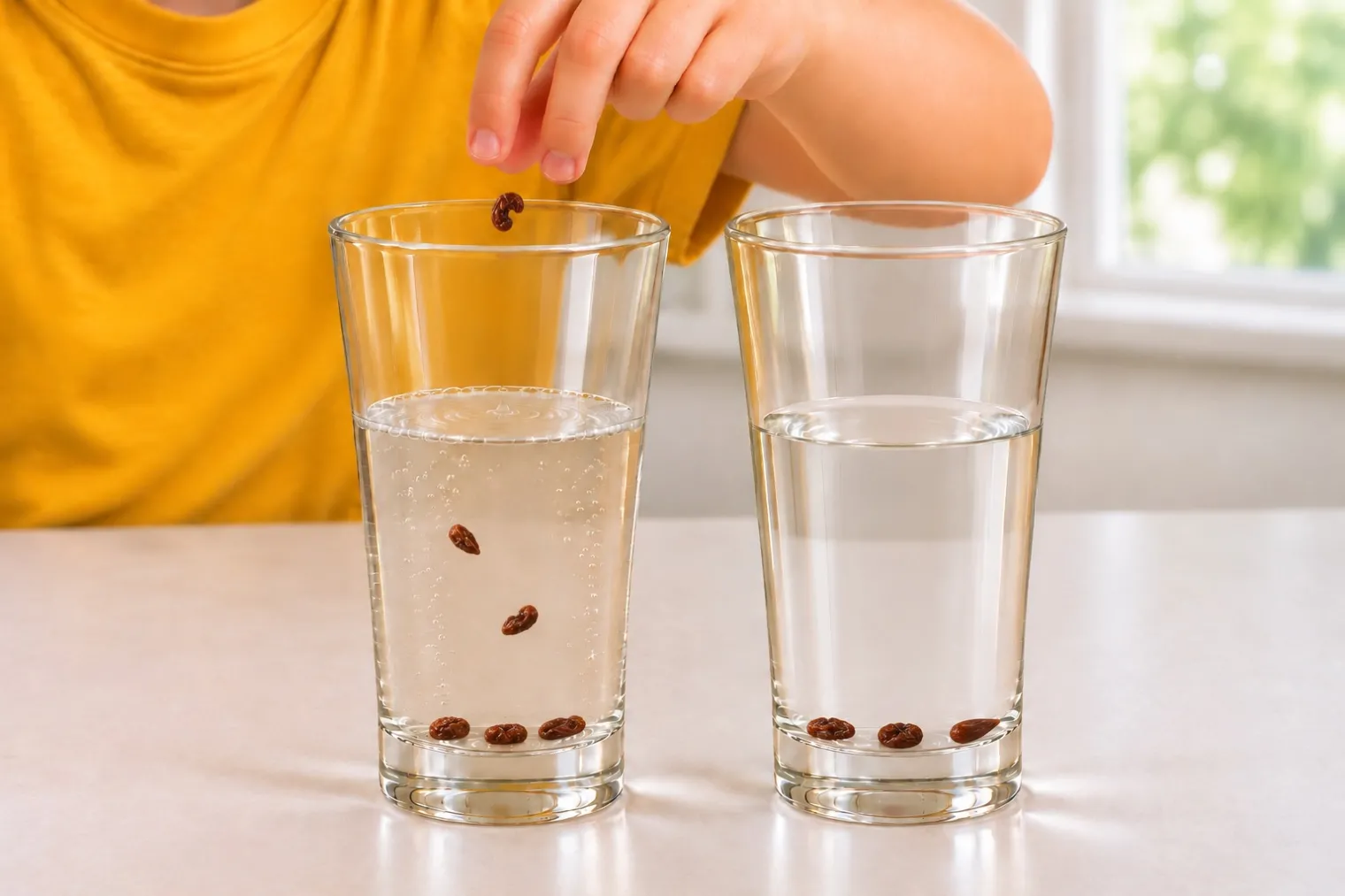
Watch them dance
After about a minute, tiny bubbles cover the raisins in the soda. One by one they float up, flip over at the top and sink again, then rise once more. The raisins in plain water just sit there.
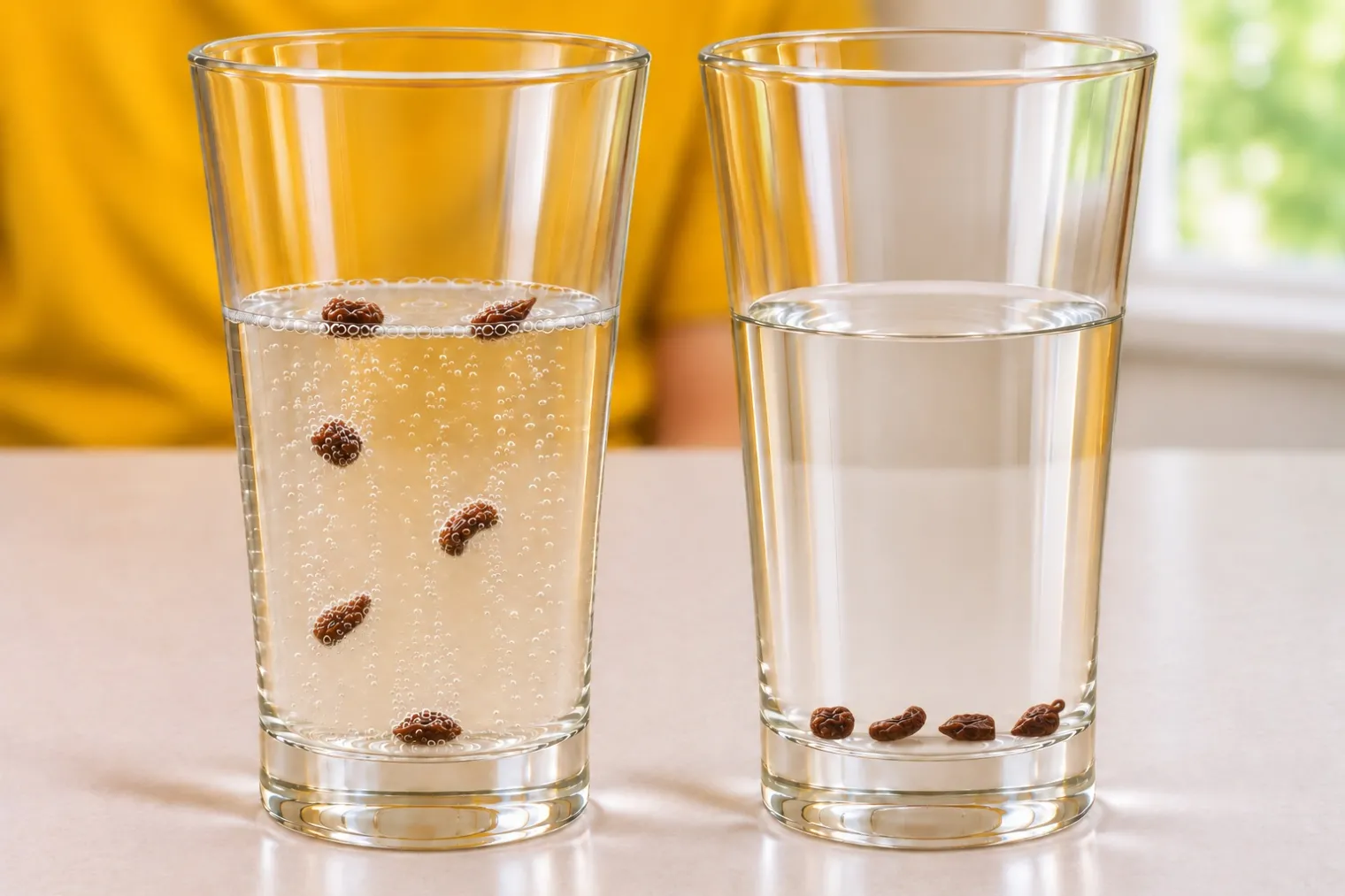
Look closely with a flashlight or magnifying glass to see the bubbles gripping the raisin’s wrinkles.
What’s happening?
Soda is full of a gas called carbon dioxide, which makes the fizz. The gas collects as bubbles on rough surfaces, and a wrinkly raisin is covered in rough spots.
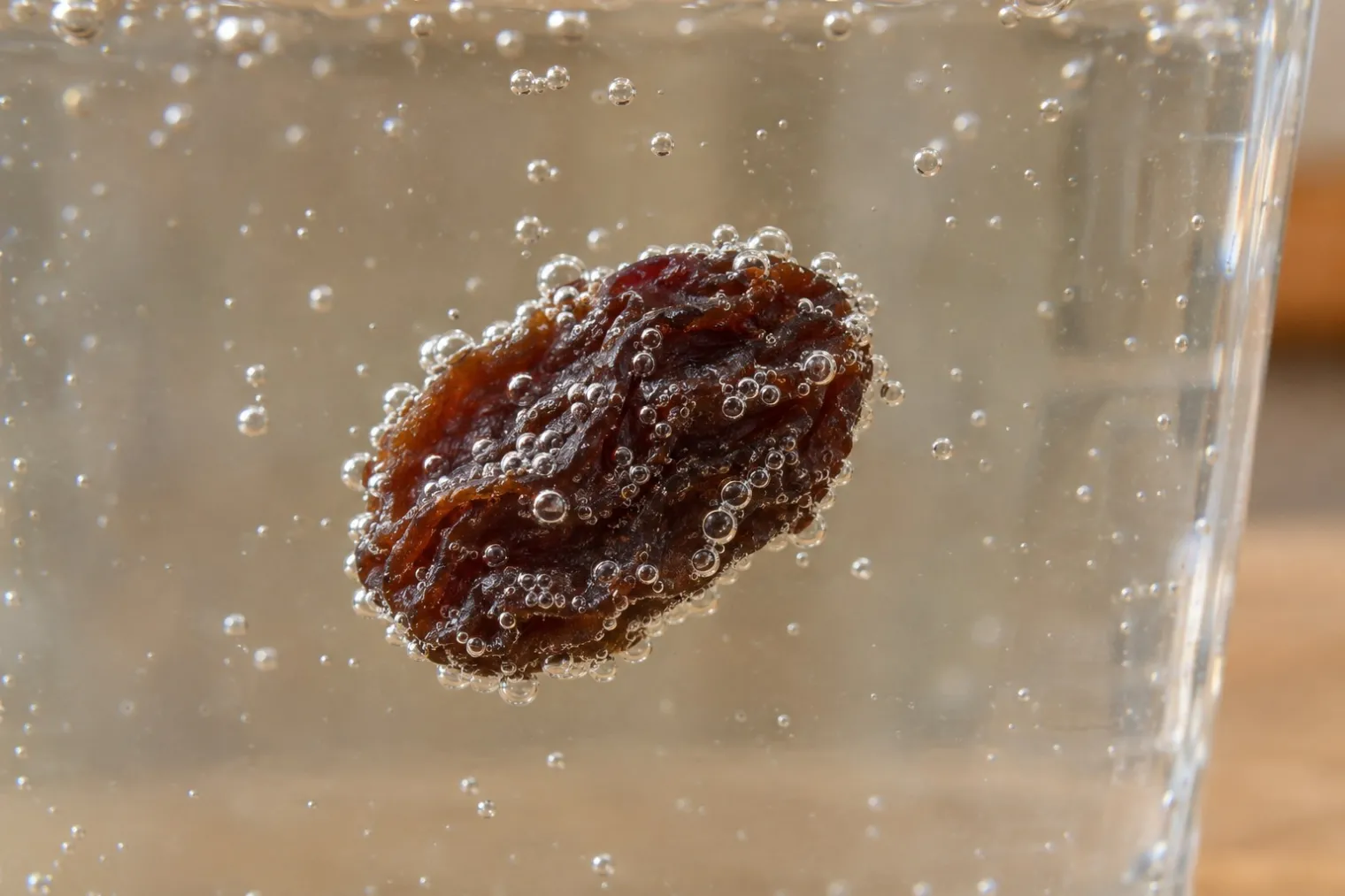
On its own, a raisin is heavier than the same amount of soda, so it sinks. But as bubbles stick to it, they act like tiny life jackets. Once enough bubbles hold on, the raisin and its bubbles together are lighter than the soda around them, and up it floats. At the top, the bubbles pop into the air, the raisin loses its life jackets and sinks back down to collect more.
For grown-ups: a little deeper
Carbonated drinks hold carbon dioxide dissolved under pressure. Once the bottle is opened, the gas comes out of solution, and it does so most easily at nucleation sites: tiny pits and edges like the folds of a raisin. The bubbles lower the raisin’s overall density below that of the liquid, so buoyancy lifts it. At the surface the bubbles burst, density rises again and the cycle repeats until the drink goes flat. It’s the same idea used to explain why a submarine or a fish’s swim bladder can rise and sink.
Make it a real experiment
Change one thing at a time and count how many times a raisin rises in two minutes.
- Soda vs. sparkling waterWhich drink makes the raisins dance faster?
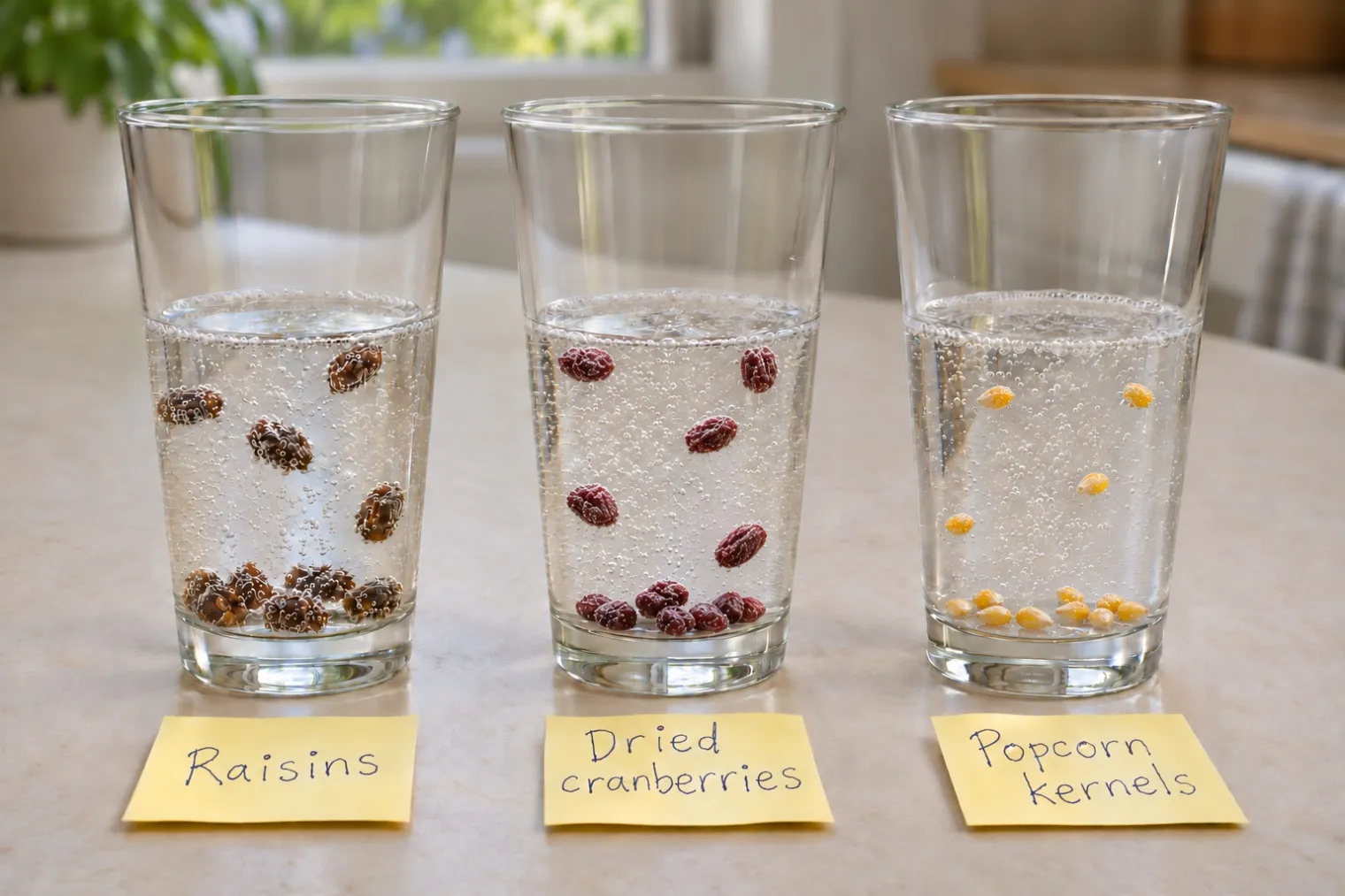
- Raisins vs. other dancersTry dried cranberries, popcorn kernels or small pasta. Which ones dance?
- Fresh vs. flatLeave a glass of soda open for an hour. Do the raisins still dance?
Planning holiday science?
10 Christmas science experiments
Raisin reindeer are one of ten easy, festive experiments, from candy canes to a snowstorm in a jar.
Troubleshooting
Why aren’t my raisins dancing?
The soda is probably getting flat. Open a fresh, cold bottle and pour it slowly. Very plump raisins can also be too heavy: cut them in half so they lift more easily.
How long will they keep dancing?
Usually 20 minutes to an hour, until the soda runs out of fizz. Add a splash of fresh soda to get them going again.
Does it work with dark soda?
Yes, any fizzy drink works. Clear soda just makes it easier to see the bubbles and the dancing.
Can kids eat the raisins afterward?
They’re just soggy, sweet raisins, so a taste is fine if everything started out clean. Most kids find them a little too squishy to enjoy.