
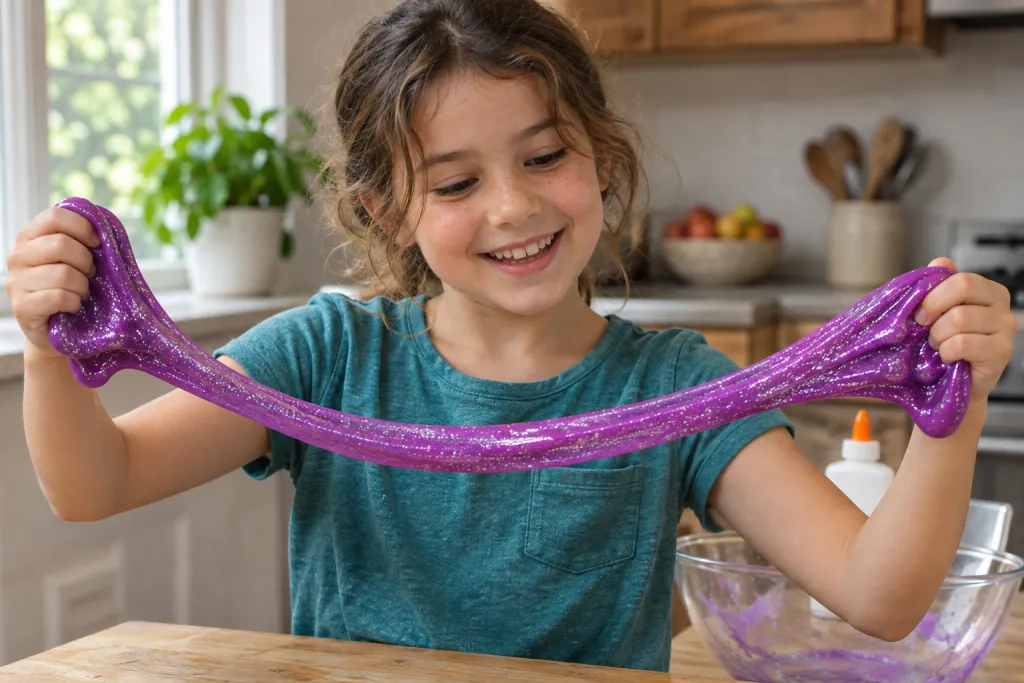
Slime is the experiment kids ask for again and again, and it’s real chemistry. Two runny liquids go into a bowl, you stir for a minute, and suddenly you’re holding something that stretches, oozes and snaps. That change happens because tiny chains inside the glue get linked together.
Below is our favorite recipe, made with contact lens solution, step by step. After it you’ll find two more classic recipes, the science behind the stretch, and fixes for slime that’s too sticky or too stiff.
Grown-up safety check
- A grown-up measures the activator. Contact solution, liquid starch and borax all contain boron compounds that make slime work. Too much can irritate skin, so measure it out for kids instead of handing over the bottle.
- Slime is not food. Keep it away from mouths and eyes, and it’s not a good choice for kids who still put things in their mouths.
- Wash hands before and after playing. If skin gets red or itchy, stop and rinse well.
What you need
For our contact solution slime. Makes one fist-sized batch.
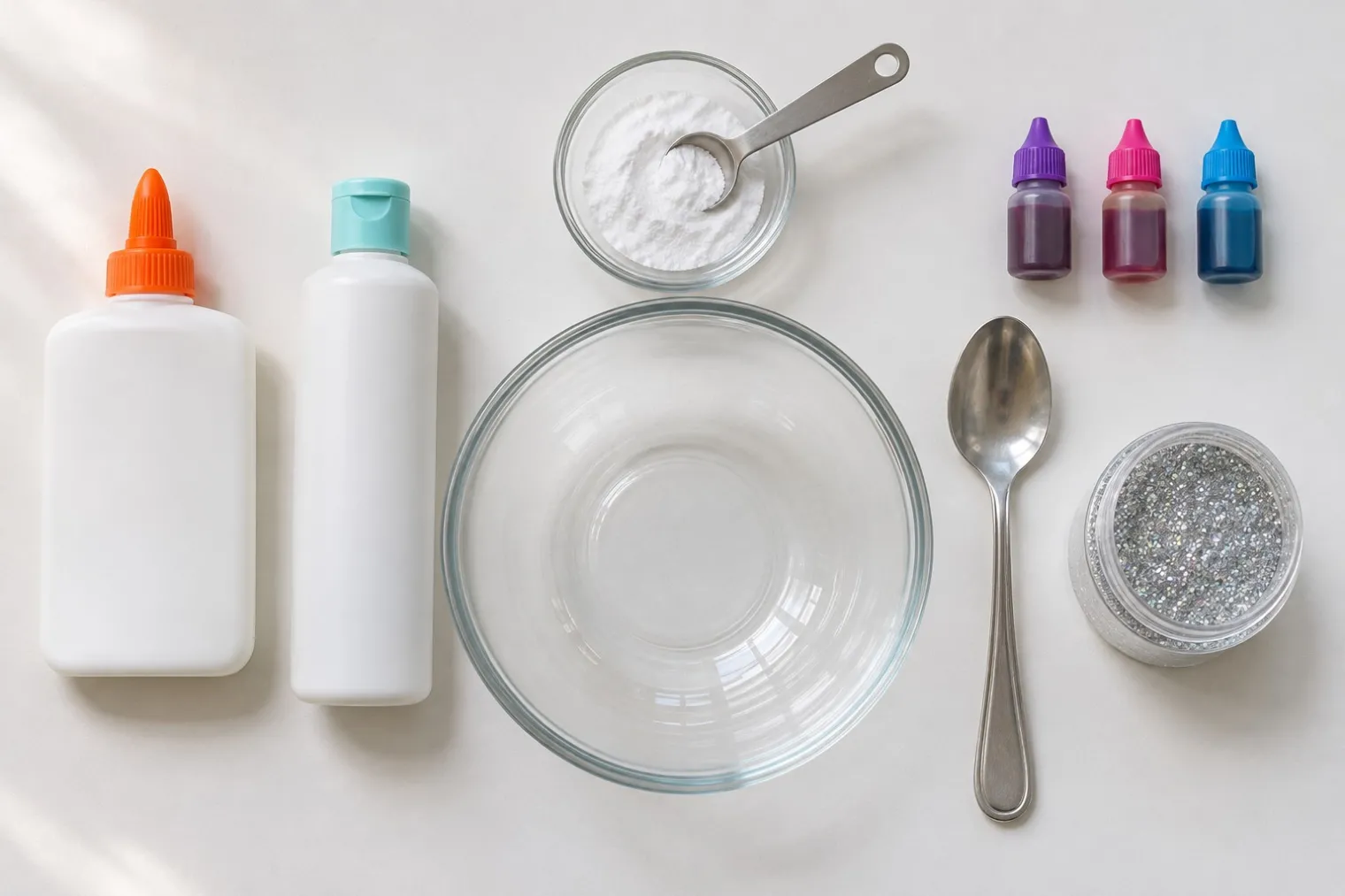
- White or clear school glue, 1/2 cup (4 oz)It has to be PVA glue, like Elmer’s. Glue sticks won’t work.
- Contact lens solution, about 1 tablespoonCheck the label for boric acid and sodium borate. Brands without them won’t make slime.
- Baking soda, 1/2 teaspoonHelps the contact solution do its job.you have this
- Water, 2 tablespoons (optional)Makes the slime softer and stretchier.you have this
- Food coloring or glitter (optional)A few drops is plenty.you have this
- Bowl, spoon and measuring spoonsPlus an airtight container to store your slime.you have this
Let’s make slime
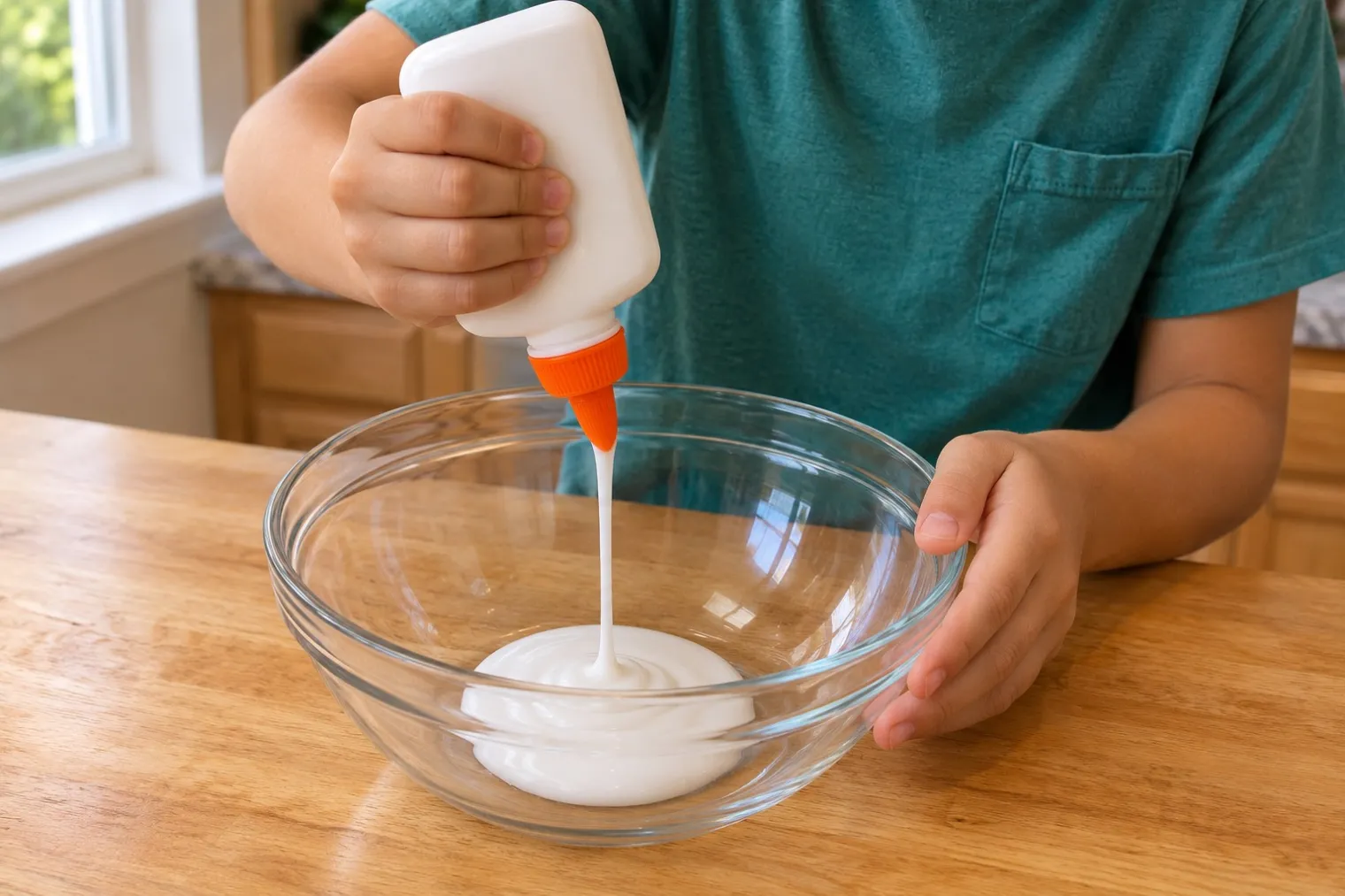
Pour in the glue
Squeeze 1/2 cup of glue into the bowl. If you want extra-stretchy slime, stir in 2 tablespoons of water now.
Add color and baking soda
Add a few drops of food coloring and any glitter, then sprinkle in 1/2 teaspoon of baking soda. Stir until the color is even all the way through.
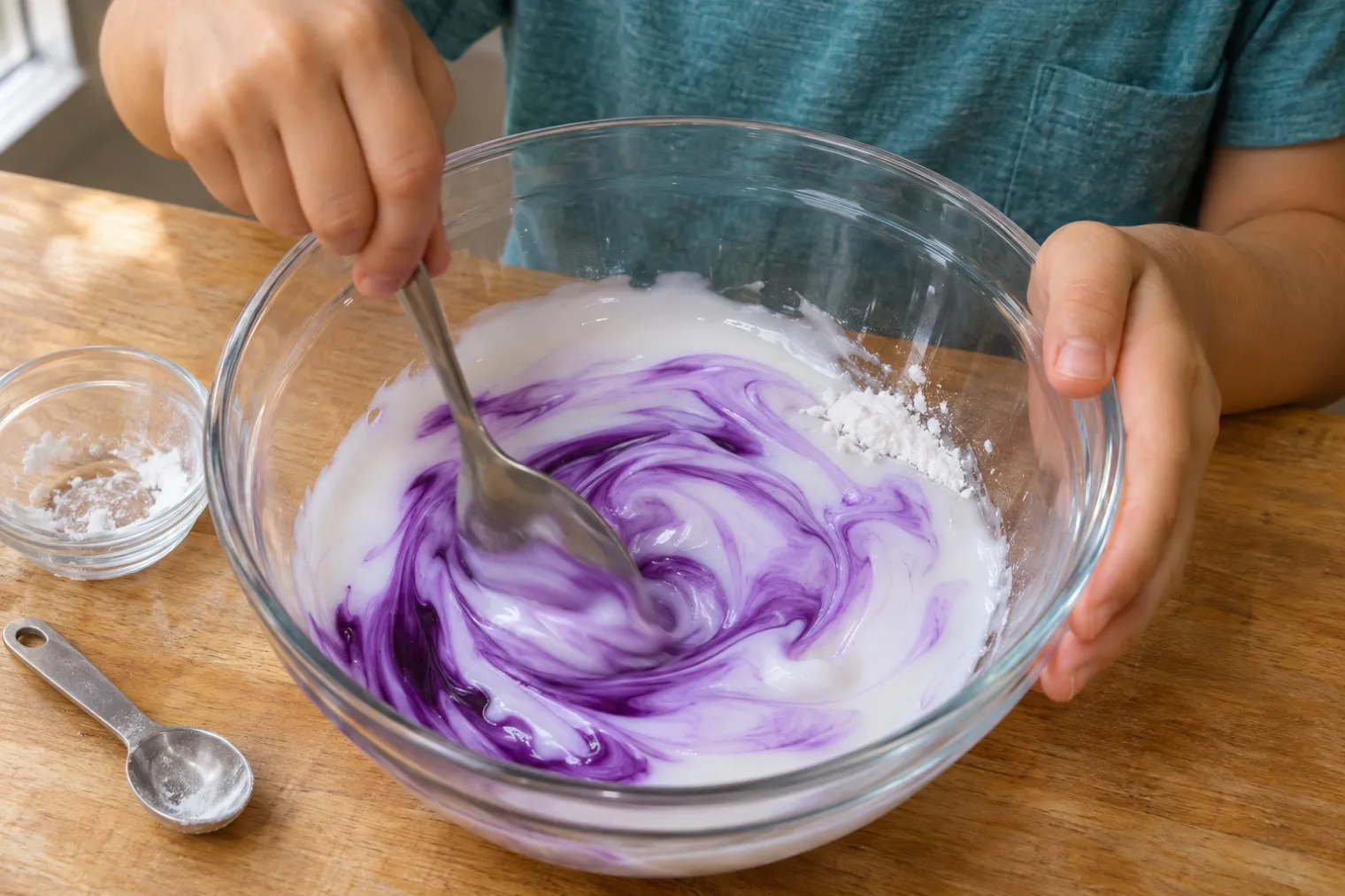
Add color before the activator. It’s much harder to mix in later.
Add the contact solution, a little at a time Adult step
Add 1/2 tablespoon of contact solution and stir. Watch the glue thicken and start pulling away from the sides of the bowl. Add the rest a few drops at a time, stirring after each squirt, until it forms a blob that follows your spoon around.
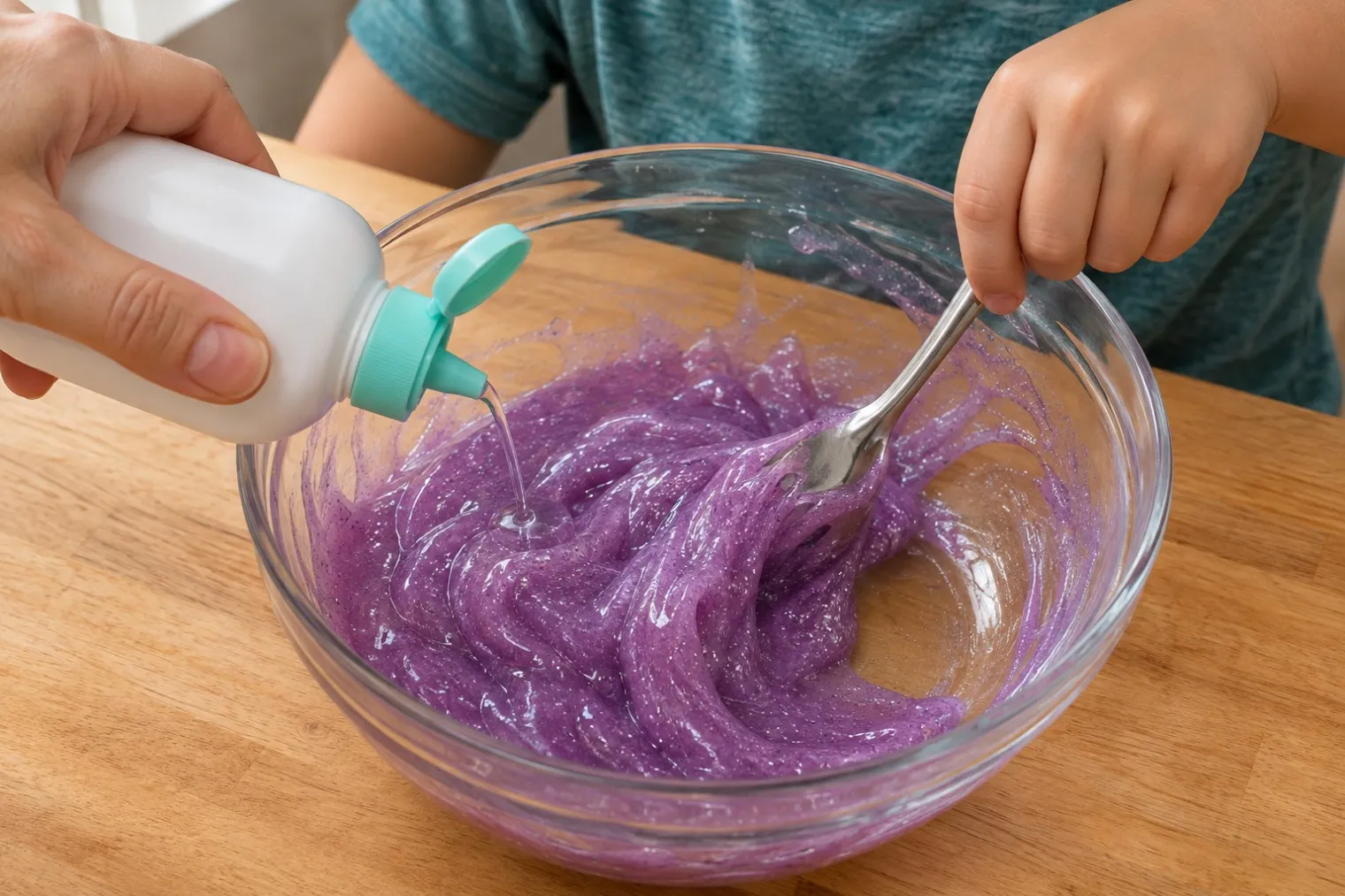
Go slowly. You can always add more activator, but you can’t take it out.
Knead it with your hands
Lift the slime out of the bowl and stretch, fold and squish it for 2 to 3 minutes. It will feel sticky at first, then turn smooth and stretchy as you work it.
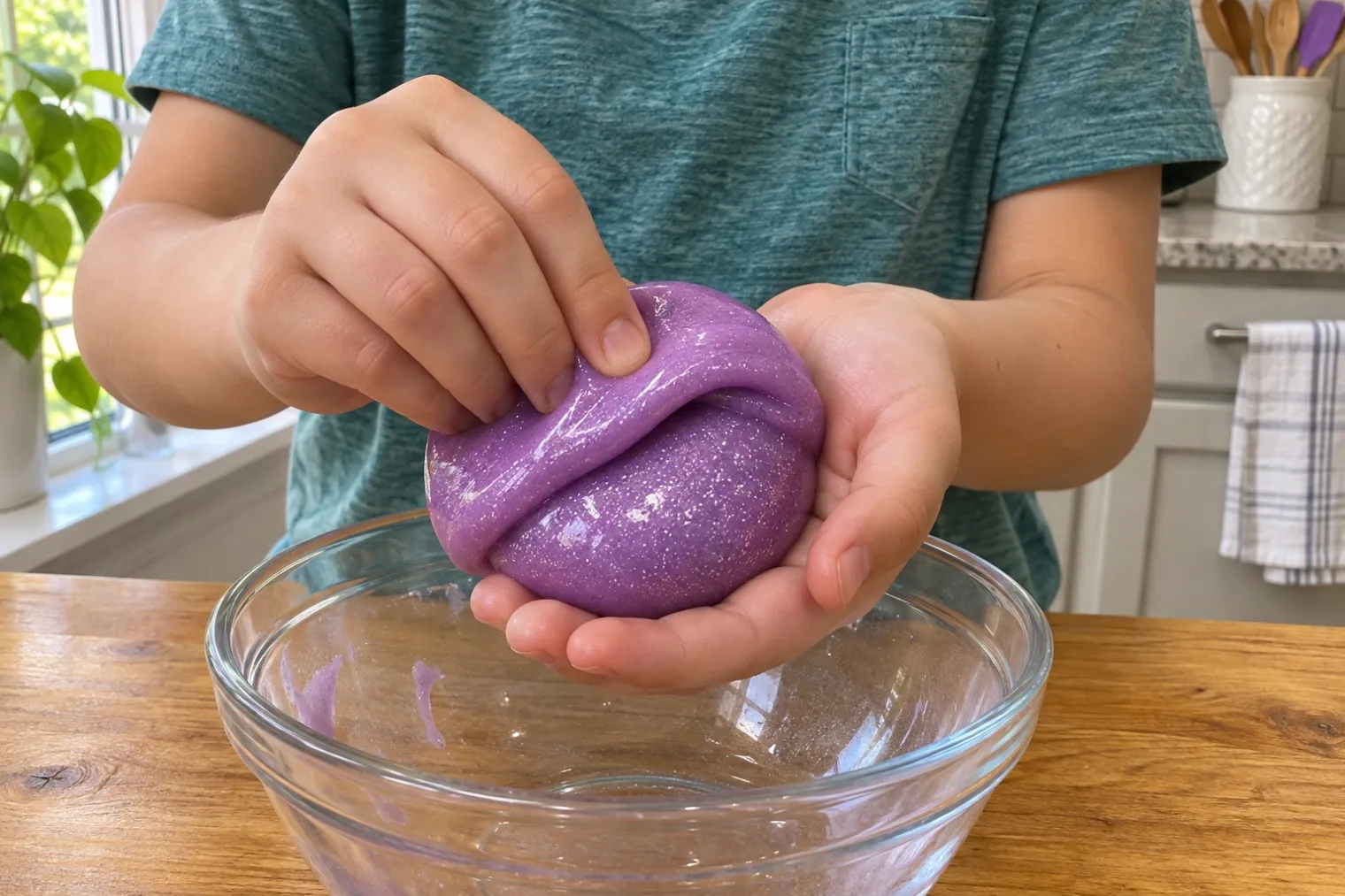
Rub a drop of contact solution on your hands first so the slime doesn’t stick to them.
Stretch, poke and play
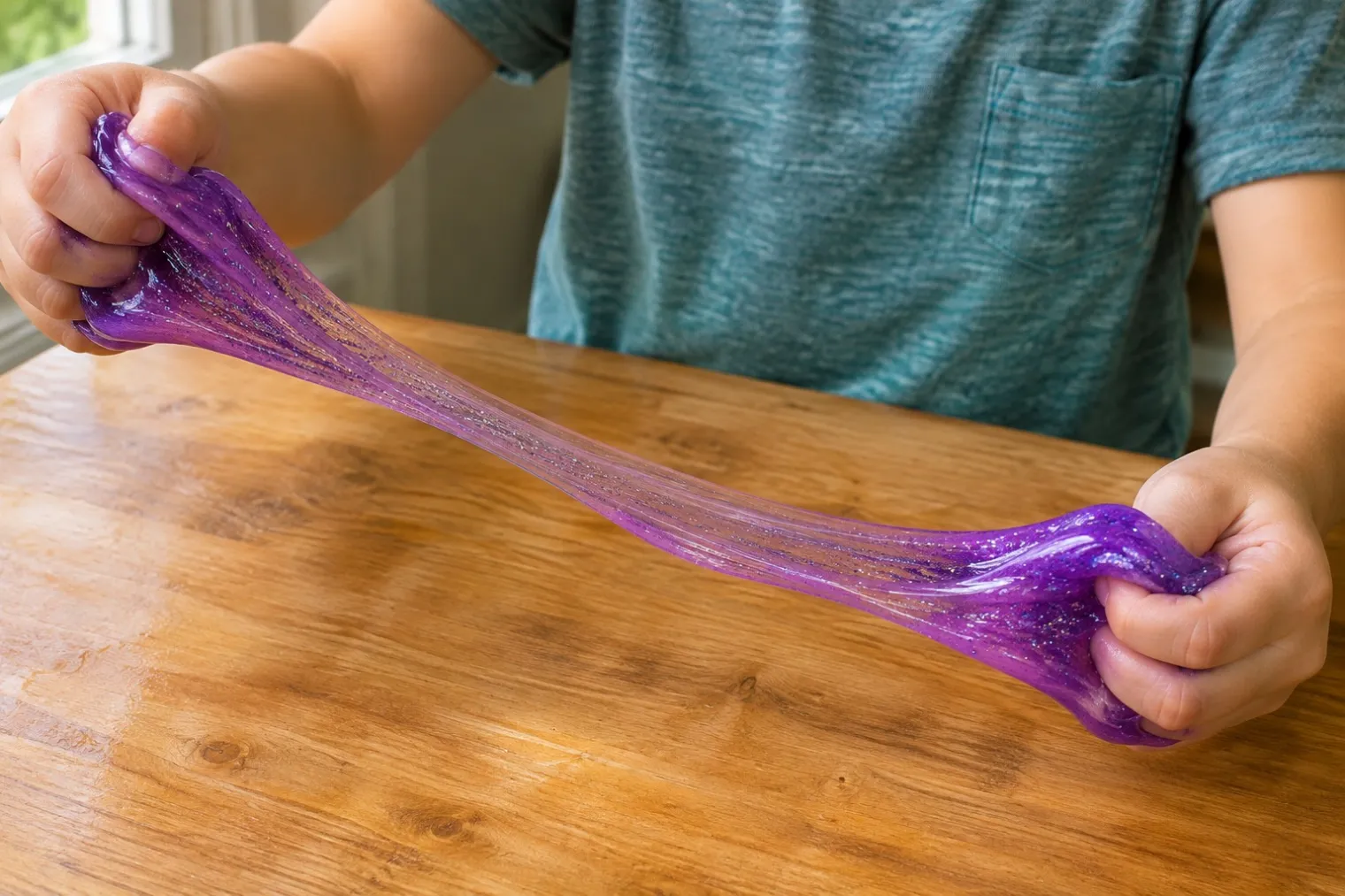
Pull it slowly and it stretches long and thin. Yank it fast and it snaps. Roll it into a ball and set it down: it slowly melts into a puddle. When you’re done, keep it in an airtight container, where it should last about a week.
Two more ways to make slime
No contact solution? Both of these classic recipes use the same glue and work the same way. Only the activator changes.
Liquid starch slime
You need: 1/2 cup school glue, about 1/4 cup liquid laundry starch (like Sta-Flo) and food coloring.
- Stir the glue and a few drops of food coloring together in a bowl.
- Add the liquid starch a tablespoon at a time, stirring well after each one.
- When it clumps into a blob, pick it up and knead it until it’s smooth. Still sticky? Dip your fingers in a little more starch and keep kneading.
Classic borax slime Adult step
You need: 1/2 cup school glue, 1/2 cup water, 1/2 teaspoon borax powder, 1 cup warm water and food coloring.
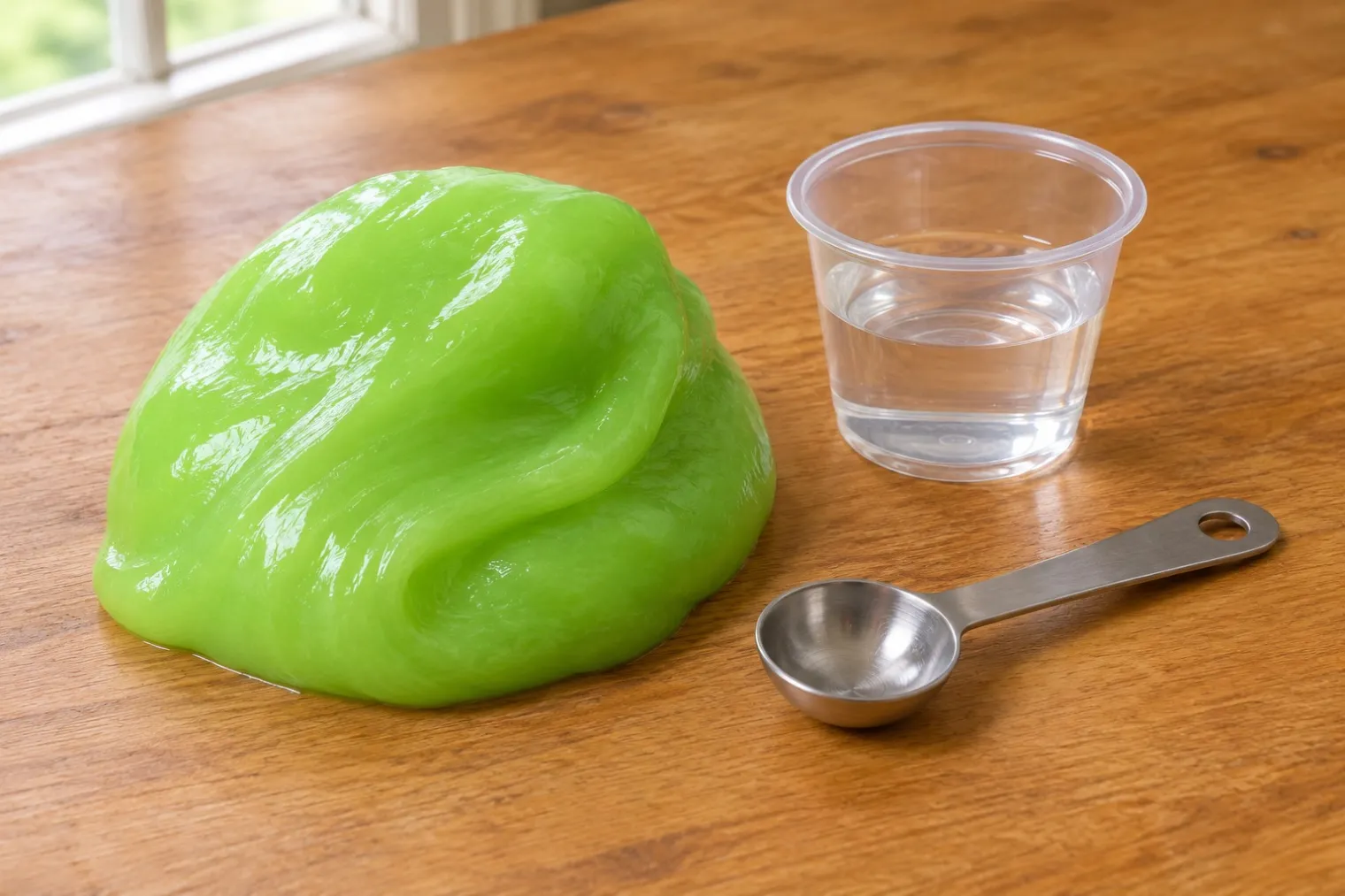
- In one bowl, stir the glue, 1/2 cup of water and the food coloring together.
- In a separate cup, a grown-up dissolves 1/2 teaspoon of borax in 1 cup of warm water. This is your activator.
- Pour the activator into the glue a tablespoon at a time, stirring as you go. Stop when it pulls together into a blob, then knead. You usually won’t need all of it.
Borax is a laundry booster. Keep the powder and leftover activator away from kids, and pour extra down the drain with running water.
What’s happening?
School glue is full of super-long, invisible chains called polymers. In the bottle they slide past each other easily, like a bowl of cooked spaghetti, so the glue pours.
The activator contains tiny pieces called borate that grab onto two chains at once and hook them together, like the rungs of a ladder. Once enough chains are linked into a big tangled net, the glue can’t pour anymore. It turns into slime.
Those links keep letting go and grabbing on again. Pull slowly and the chains have time to slide, so the slime stretches. Pull fast and they don’t, so it snaps. Something that acts like a liquid one moment and a solid the next is called a non-Newtonian fluid.
For grown-ups: a little deeper
School glue is polyvinyl acetate (PVA) with some polyvinyl alcohol, and the hydroxyl groups on those chains are what borate ions bond to. Contact solution contains boric acid and sodium borate. Baking soda raises the pH slightly, which shifts more of the boric acid into borate ions so cross-linking can happen. The cross-links are reversible hydrogen and borate-ester bonds that constantly break and re-form, which is why slime flows slowly under its own weight but resists sudden force. Liquid starch and borax solution simply supply borate ions in a different form.
Make it a real experiment
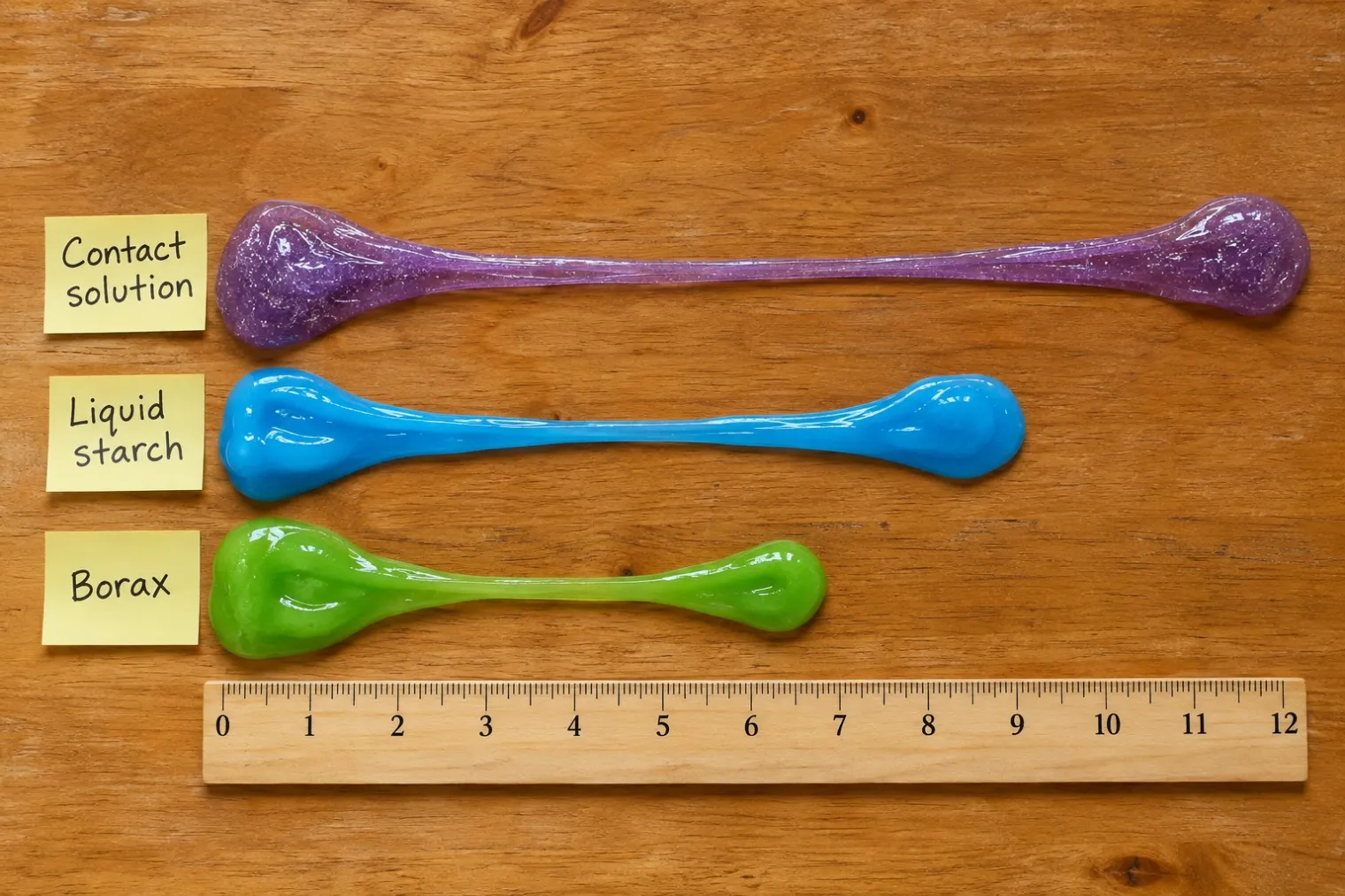
Make two or three batches, change just one thing, and test them side by side. Hold each slime against a ruler and see how far it stretches before it breaks.
- More vs. less activatorHow does the amount of activator change the stretch?
- Water vs. no waterDoes adding water make it stretchier, or just wetter?
- White vs. clear glueWhich glue makes the stretchiest slime? Which one holds a bubble?
Slime lover in the house?
More slime and goo experiments
Fluffy slime, butter slime, oobleck and more. New recipes are added all the time.
Troubleshooting
Why is my slime so sticky?
It needs a little more activator or a little more kneading. Add a few drops of contact solution, knead for another minute, and repeat until it stops sticking to your hands.
Why is my slime hard and rubbery?
Too much activator went in. Knead in a small squirt of glue, a pump of hand lotion or a teaspoon of warm water to loosen it, and add activator more slowly next time.
My glue never turned into slime. What went wrong?
Check two things: the glue must be PVA school glue, and the contact solution must list boric acid and sodium borate. Saline solution without them, or craft glue that isn’t PVA, won’t make slime.
How do I store slime, and how long does it last?
Keep it in an airtight container or zip bag at room temperature. It usually lasts about a week. Toss it if it gets dirty, smells odd or grows spots.
How do I get slime out of clothes or carpet?
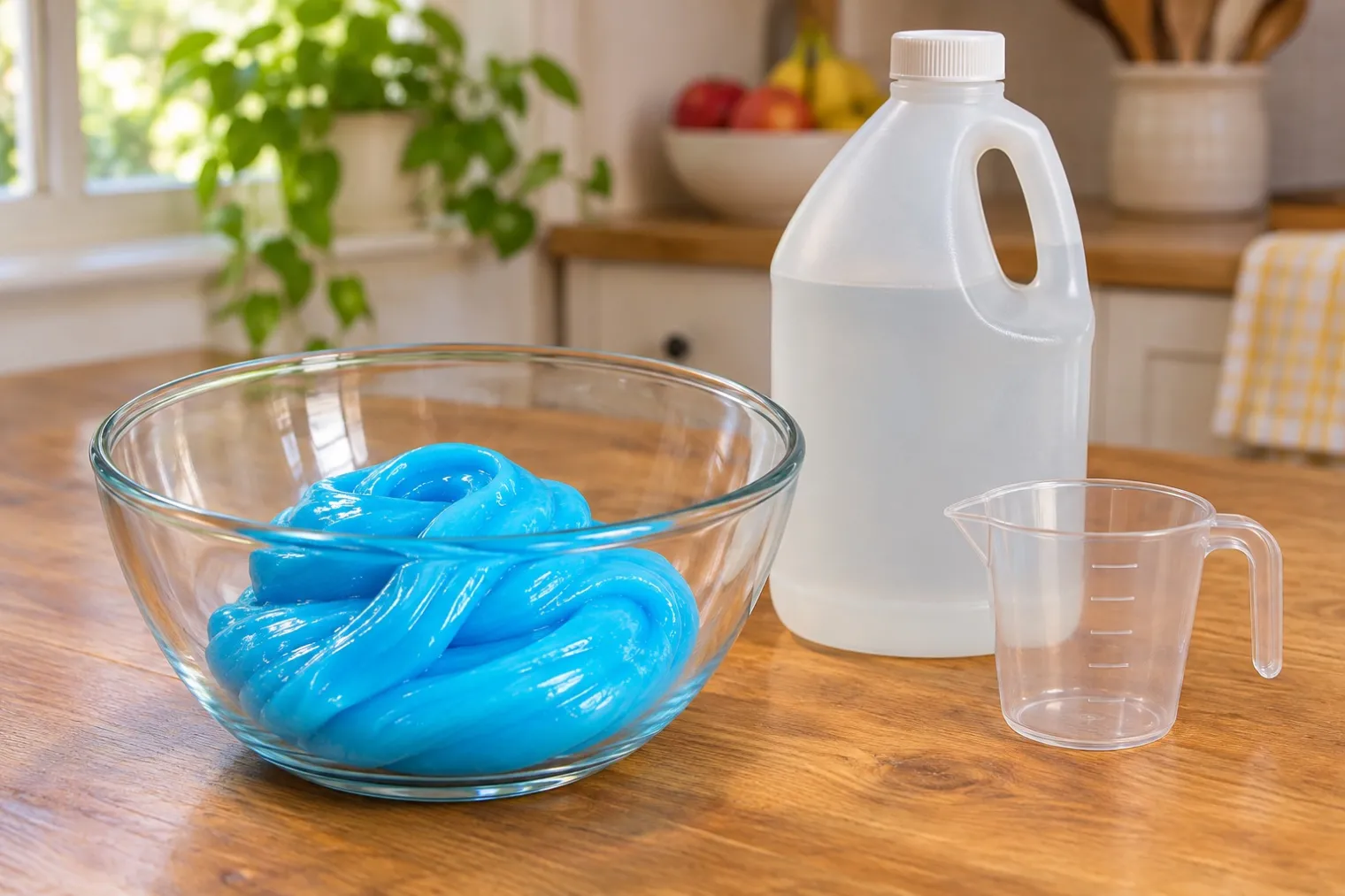
Pick off as much as you can, then soak the spot with white vinegar for a few minutes. The vinegar breaks the links in the slime so it loosens up. Scrub gently, rinse with warm water, and wash as usual.
What age is slime-making good for?
Most kids 5 and up can make slime with a grown-up measuring the activator. Kids 8 and up can usually follow the recipe on their own with supervision.